Best China Refrigerated Air Dryer Suppliers for Buyers

Choosing a refrigerated air dryer in China takes more than comparing prices. Buyers should check the rated flow, inlet temperature, pressure dew point, and operating pressure against real plant conditions. A dryer that looks adequate on a catalog page may struggle beside a hot compressor room or during a humid summer shift. Small details matter. So does service access.

As a practical reminder, fictional industry specialist Lin Wei puts it this way: “Match the dryer to the air system you actually run, not the one you hope to run.” This is an original illustrative quotation, not a sourced statement. The point is worth keeping in view when comparing Chinese suppliers. Ask for performance data at stated conditions, clear warranty terms, spare-parts availability, and evidence of relevant quality controls. Request a written confirmation of the proposed sizing. It can expose assumptions early.

This guide reviews supplier selection through a buyer’s lens: product range, technical support, customization, delivery, and after-sales service. We also consider what questions to ask before requesting a quotation. Not every low-priced option is poor, and not every polished brochure proves dependable performance. That uncertainty is real. A careful comparison should weigh operating costs and support alongside the purchase price, while acknowledging that public information may not answer every question.
Best China Refrigerated Air Dryer Suppliers for Buyers

What Defines a Reliable China Refrigerated Air Dryer Supplier

Best China Refrigerated Air Dryer Suppliers for Buyers

A reliable China refrigerated air dryer supplier proves performance under clear operating conditions. Ask for pressure dew point, flow rate, inlet temperature, ambient temperature, and pressure-drop data. A brochure alone is weak evidence. ISO 8573-1 helps buyers match air quality with production needs, while a typical general-purpose dryer targets a pressure dew point near +3°C.

The U.S. Department of Energy reports that compressed air systems can consume about 10% of industrial electricity. Its compressed-air guidance also identifies leaks as a potential source of 20–30% capacity loss. Therefore, supplier expertise must extend beyond the dryer cabinet. Engineers should check drain design, heat-exchanger cleaning access, refrigerant documentation, and control stability during low-load periods. Small details matter.

Request factory test records and a sample inspection report. Look for flow testing, alarm verification, insulation checks, and serial-number traceability. The Compressed Air and Gas Institute recommends using standardized performance data when comparing equipment. Service capability matters too. Can the supplier provide spare valves, sensors, and troubleshooting guidance within a practical timeframe?

A supplier may still disappoint after passing a paper review. Real workshops have dust, heat, voltage variation, and irregular demand. I have seen buyers focus on purchase price, then discover expensive pressure loss later. That mistake is easy to repeat. Require witnessed testing when the application is critical, and compare actual energy use against the stated rating. Reliability is demonstrated in details, not promised in slogans.
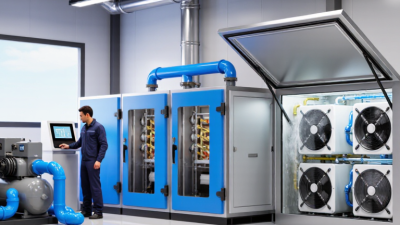
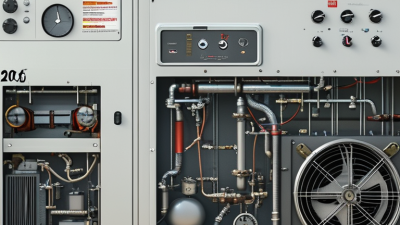
Key Product Types and Technical Features Buyers Should Compare

Refrigerated air dryers are not one-size-fits-all. Buyers should compare standard-temperature models with high-inlet-temperature types, especially when a compressor room runs hot. A high-temperature unit may reduce the load on pre-cooling equipment. But check its rated inlet temperature, not just the product label. Small details matter.

Cycling dryers adjust cooling output as demand changes, while non-cycling models run more steadily. The better choice depends on how much compressed air your plant uses across a shift. Compare rated flow at your actual inlet temperature and working pressure. Also review pressure dew point, pressure drop, and power consumption. A dryer rated for 10°C pressure dew point may suit general plant air, but sensitive processes can need drier air. Ask for test conditions. Numbers without conditions are hard to trust.

Cooling method matters too. Air-cooled units need clear space around the condenser; dust-covered fins can weaken heat transfer. Water-cooled models require a dependable cooling-water supply. Check the automatic drain, filter compatibility, and service access. Imagine a technician reaching behind pipes to clean a drain. Not ideal. Supplier documents should state operating limits, maintenance intervals, and spare-part availability. A tidy catalogue can still leave gaps, so request a written selection basis for your site. The right match may not be the largest model.

How to Evaluate Supplier Quality, Certifications, and Production Capacity

Best China Refrigerated Air Dryer Suppliers for Buyers

Choosing a China refrigerated air dryer supplier requires more than comparing catalog prices. Start with documented performance. Ask for inlet temperature, working pressure, flow rate, outlet pressure dew point, and power consumption. A serious supplier should provide test conditions, not only attractive numbers. Request serial-number traceability for compressors, heat exchangers, controllers, and refrigerant components. Small details matter. During a factory visit, inspect assembly benches, leak-testing equipment, calibration labels, and finished-unit storage. Clean wiring and consistent labeling often reveal stronger process control. Still, appearance can mislead.

Evaluate certifications against your destination market and machine configuration. ISO 9001 can indicate a controlled quality system, but it does not guarantee dryer performance. Check certificate scope, issuing body, validity, and production site. For electrical safety, ask for applicable conformity documents and laboratory reports, including CE-related files where relevant. Pressure-related parts may require additional regional compliance. Do not accept copied certificates. Verify model numbers, test dates, and component ratings. Ask how nonconforming units are recorded and corrected. A supplier sharing failure data may be more trustworthy than one promising zero defects.

Production capacity should be measured, not claimed. Review monthly output, key component inventory, assembly lead time, and peak-season delivery records. Request a sample production plan for your order size. Confirm whether testing occurs on every unit or by batch. A witnessed run test can expose unstable dew points or excessive noise. Also assess engineering support, spare parts availability, warranty response, and remote troubleshooting procedures. I would begin with a small pilot order before scaling. That choice costs more initially. It may prevent an expensive mistake.

Pricing, Customization, Export Services, and Delivery Considerations

Pricing for a refrigerated air dryer depends on more than its purchase price. Buyers should compare capacity, inlet temperature, operating pressure, and expected dew point. A unit sized only from average demand may struggle during production peaks. Ask suppliers to state what their quotation includes, such as filters, spare parts, packaging, and commissioning support. A low quote can leave important costs unclear.

Customization may cover voltage, control interfaces, pipe connections, or corrosion-resistant materials. Share your site conditions early. For example, a crowded compressor room may require different connections than an open installation area. Request drawings and confirm dimensions before approving production. Small details matter. Not every requested modification is practical, and some changes can extend lead times. We have seen specifications revised late; it is worth checking them twice.

For export orders, clarify the shipping term, packing method, documents supplied, and responsibility for freight arrangements. Ask how the dryer will be protected against moisture and impact during transit. Confirm the production schedule, inspection date, and estimated delivery window in writing. Allow extra time for port handling and inland transport. Dates can slip. Buyers should also check whether remote technical guidance and replacement parts are available after arrival, especially when local service support is limited.

Best China Refrigerated Air Dryer Suppliers for Buyers - Pricing, Customization, Export Services, and Delivery Considerations

Buyer’s comparison guide. Specifications, prices, lead times, and shipping arrangements vary by supplier and configuration; confirm them in a written quotation.

Evaluation dimension Typical options or information to request Buyer considerations
Dryer type Refrigerated, non-cycling or cycling design Refrigerated dryers are commonly used for general industrial compressed-air applications. Confirm suitability for the required air quality and ambient conditions.
Pressure dew point Ask for the guaranteed pressure dew point at stated inlet conditions; approximately +3°C is a common design target for refrigerated dryers. Do not compare dew-point claims without checking the test conditions and applicable performance standard. Refrigerated dryers are not intended for applications requiring very low dew points.
Rated capacity Request flow capacity in a stated unit, such as m³/min or scfm, together with the reference conditions. Capacity can be affected by inlet temperature, ambient temperature, operating pressure, and required dew point. Check correction factors for the actual installation.
Working pressure and connections Specify operating pressure, maximum allowable pressure, inlet/outlet connection size, and preferred thread or flange standard. Verify that the pressure rating and connections match the air system and destination-market requirements.
Pricing structure Request an itemized quotation for the dryer, filters, automatic drain, spare parts, packaging, and any requested certification or testing. Price depends on capacity, compressor and heat-exchanger design, refrigerant, controls, materials, order quantity, and trade terms. Compare quotations on the same scope and Incoterm.
Customization Possible requests include voltage and frequency, control language, connection type, drain arrangement, enclosure, color, and private-label documentation or packaging. Confirm feasibility, minimum order quantity, extra cost, design approval process, and whether customization affects the production schedule or warranty.
Energy and operating costs Request rated power, operating conditions, refrigerant information, and maintenance requirements. Compare energy use at equivalent capacity and operating conditions. Consider filter-element replacement, condensate disposal, and service access over the equipment’s life.
Quality and documentation Ask for the datasheet, wiring diagram, user manual, inspection records, warranty terms, and applicable conformity documents for the destination market. Check that certificates and test reports apply to the quoted model and market. Agree on any pre-shipment inspection or performance test before ordering.
Export services Clarify export packing, commercial invoice, packing list, certificate of origin availability, and support with freight documentation. Document requirements vary by destination and shipment. Confirm responsibility for customs clearance, duties, insurance, and any required import approvals.
Lead time and delivery Request separate estimates for production, inspection, packing, and transit, plus the named delivery point under the agreed Incoterm. Lead time and transit duration depend on availability, customization, booking, route, and customs procedures. Treat estimates as provisional until confirmed in the order contract.
Supplier verification Request the legal business details, manufacturing or quality-process information, recent product references, and a video or live inspection of the relevant model. Verify documents independently where practical, confirm payment and warranty terms in writing, and consider a third-party inspection for significant orders.

Before purchase, provide suppliers with the required flow, inlet pressure and temperature, ambient temperature, target pressure dew point, power supply, destination, and preferred delivery terms so quotations can be compared on a consistent basis.

A Step-by-Step Process for Choosing the Right Supplier

Choosing a refrigerated air dryer supplier starts with the actual operating conditions, not the largest capacity on a brochure. Record peak airflow, inlet temperature, working pressure, and the highest room temperature near the compressor. Then specify the required pressure dew point; refrigerated dryers commonly target about 3°C (37°F), but that may not suit every process. Check the supplier’s performance data at your conditions, including pressure drop and power use. Small mismatches matter.

Ask for a written selection sheet and confirm how the supplier handles condensate drainage, filters, alarms, and replacement parts. The U.S. Department of Energy’s Improving Compressed Air System Performance guide notes that compressed-air systems can consume around 10% of industrial electricity, making avoidable pressure loss and inefficient operation worth examining. Request references from facilities with similar flow and ambient conditions. Look closely.

Compare service response times, commissioning support, and warranty exclusions—not just purchase price. Ask what happens if actual inlet temperatures exceed the stated rating, and whether performance is verified after installation. A clear answer is useful; vague assurances are not. One limitation is easy to miss: published ratings may assume stable conditions, while a production floor rarely behaves perfectly. Leave a reasonable capacity margin, but avoid oversizing without a calculated basis.

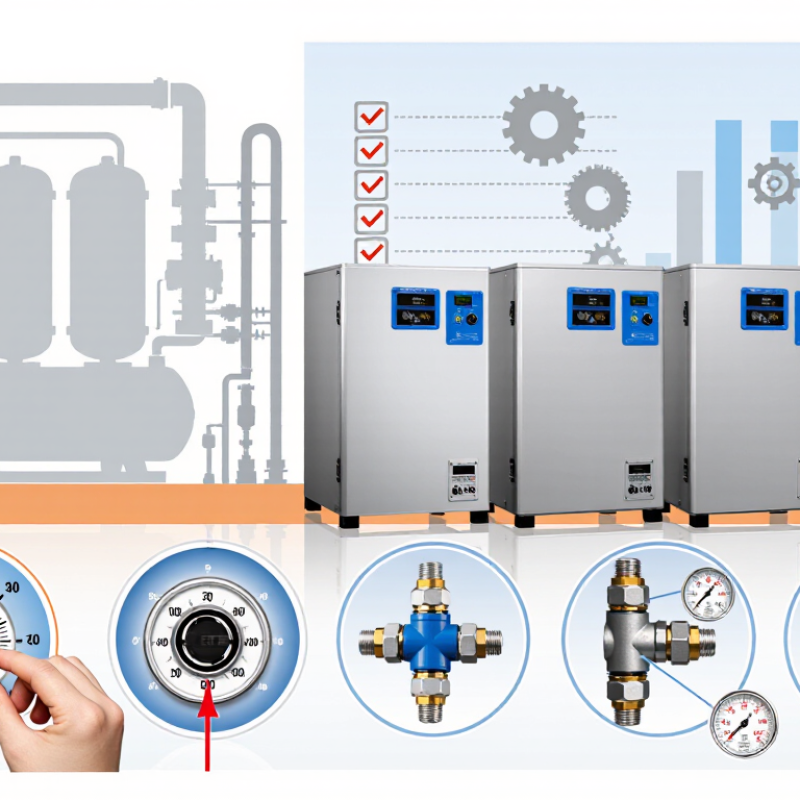
Best China Refrigerated Air Dryer Suppliers for Buyers: A Step-by-Step Selection Guide

Use the required pressure dew point to compare supplier specifications, system compatibility, energy performance, documentation, and after-sales support.

The chart uses the maximum pressure dew point values for compressed-air water-content classes defined in ISO 8573-1:2010. A refrigerated air dryer commonly targets approximately +3°C pressure dew point, corresponding to Water Class 4. Buyers should confirm the required class, inlet conditions, flow capacity, pressure loss, test method, certificates, warranty, and spare-parts availability before selecting a supplier.

Members of