Choosing a refrigerated air dryer is a practical decision about moisture control, energy use, and production reliability. Compressed air may look clean at the outlet, yet it can carry water vapor into filters, valves, tools, and finished products. The U.S. Department of Energy reports that compressed air systems can consume about 10% of industrial electricity. Its compressed air guidance also notes that leaks may waste 20% to 30% of compressor output. The choice matters.
A refrigerated air dryer cools compressed air, condenses moisture, and removes liquid water before distribution. ISO 7183 provides recognized testing and performance principles for compressed-air dryers. Meanwhile, the Compressed Air and Gas Institute encourages buyers to compare verified flow, pressure dew point, power demand, and operating conditions. These measures are more useful than a large brochure capacity. A dryer rated for 1,000 cubic feet per minute may perform differently at 40°C inlet temperature, fluctuating pressure, or heavy summer humidity. Details matter.
This guide examines pressure dew point, flow capacity, inlet temperature, ambient conditions, refrigerant design, drainage, maintenance, and lifecycle cost. It also considers placement beside a compressor room, where heat and dust can reduce performance. A 7°C pressure dew point may suit general factory air, but sensitive processes may require desiccant technology instead. No selection method is perfect. Real operating data remains essential. Buyers should record compressor output, shift patterns, ambient temperature, and moisture problems before choosing a refrigerated air dryer. That small audit can prevent oversized equipment, unstable air quality, and unnecessary energy costs.
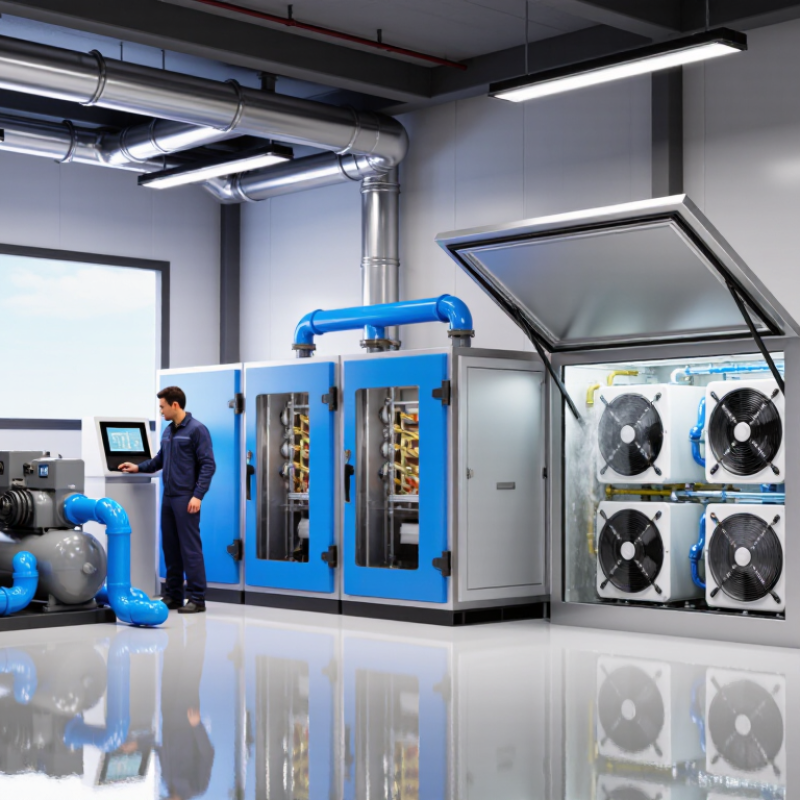
A refrigerated air dryer removes moisture by cooling compressed air below its dew point. Warm, wet air enters an air-to-air heat exchanger first. It meets outgoing cold, dry air there. This reduces the cooling load. The air then passes through a refrigerant-cooled heat exchanger, where water vapor condenses into liquid. A drain removes that water before air leaves the dryer.
The process sounds simple. Control matters more. Most refrigerated dryers target a pressure dew point near +3°C, or +38°F, according to performance guidance from the Compressed Air and Gas Institute. ISO 7183 also defines testing methods for dryer capacity, pressure loss, and dew-point performance. These figures help compare equipment under similar conditions. A unit sized only for average flow may fail during production peaks. That mistake is common.
Check inlet temperature, ambient temperature, operating pressure, and required flow. A hotter compressor-room environment can reduce drying capacity. A blocked condenser can raise energy use and trigger shutdowns. The U.S. Department of Energy reports that compressed air can consume about 10% of industrial electricity, while leaks may waste 20–30% of compressor output. Dryer selection cannot repair a leaking system. It should, however, limit pressure loss and avoid unnecessary overcooling. Drain reliability deserves attention too. A failed drain can send liquid water downstream. That detail is easy to overlook.
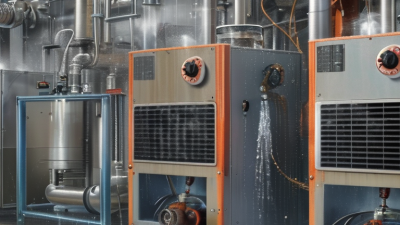
A refrigerated air dryer cools compressed air to approximately 3°C, causing water vapor to condense and drain away. The dry air is then reheated before leaving the dryer to reduce external pipe condensation.
Representative engineering profile: inlet air is commonly around 35°C, the air is cooled near the refrigerated dryer's pressure dew point of 3°C, and the outlet air is reheated to approximately 20°C. Actual temperatures vary with load, ambient conditions, and system design.
Choosing a refrigerated air dryer starts with your air system, not the pipe connection. Match dryer capacity to actual compressed air flow, measured in m³/min or CFM. Use the highest expected demand, not the average shown on a quiet shift.
Production tools may start together and create a short, sharp flow spike. Peak demand matters. Check inlet air temperature, ambient temperature, operating pressure, and required pressure dew point. These conditions can reduce a dryer’s rated capacity significantly.
A rating at 7 bar, 35°C inlet air, and 25°C ambient may not fit your workshop. If your compressor room reaches 40°C, calculate again using the harsher condition.
Pressure drop also deserves attention; a restricted dryer can make downstream equipment work harder. Keep a small capacity margin for filter loading, seasonal heat, and moderate production growth. Do not oversize blindly. An oversized dryer may cost more and operate inefficiently during light demand. Yet an undersized unit can send moisture toward valves, cylinders, and control lines.
Before ordering, record flow at several times, including compressor loading and the busiest production cycle. Compare these readings with the dryer’s corrected performance data, not only its headline rating.
Confirm the drain suits your environment and can remove condensate without constant manual attention. Leave service clearance around the unit, especially near the condenser and drain assembly.
Real installations are rarely perfect. I would recheck the calculation after one month of operation. That review may reveal hidden peaks, excessive heat, or a capacity assumption that looked reasonable on paper.
How to Choose a Refrigerated Air Dryer?
Choosing the right pressure dew point begins with understanding the air’s coldest exposure point. A +3°C pressure dew point suits many general manufacturing systems. However, it may not protect outdoor lines, cold workshops, or sensitive instruments. Condensation can appear inside a pipe that passes through an unheated area. That detail is often missed during equipment selection. Check the lowest surrounding temperature, not only the compressor room temperature. Measure dew point under normal operating pressure and airflow.
Dryer capacity should match actual demand, inlet temperature, and available cooling conditions. A unit running near its limit may produce unstable results during summer peaks. Oversizing is not always harmless; it can increase purchase and operating costs. Pressure drop also matters. Even a small loss can affect pneumatic tools at distant workstations. In field assessments, I have found that design data is sometimes optimistic. Recheck flow readings before making a final decision. The safest choice is based on measured conditions, not a catalogue number alone.
Tips: Record the lowest line temperature. Confirm the required dew point with equipment suppliers. Inspect drains and dew-point sensors regularly. Keep a small safety margin. But do not choose the coldest possible rating without a real process need.
| Application | Typical Required Pressure Dew Point | Recommended Dryer Type | Why This Dew Point Is Suitable | Main Selection Considerations |
|---|---|---|---|---|
| General plant air and pneumatic tools | +3°C to +10°C | Standard refrigerated air dryer | Usually prevents liquid water from forming in indoor compressed-air distribution systems operating above the selected dew point. | Check minimum ambient temperature, pipe routing, air demand, and whether the distribution system passes through colder areas. |
| Indoor manufacturing air | +3°C to +5°C | Refrigerated dryer with stable dew-point control | Provides a practical balance between moisture control, energy consumption, and purchase cost for many indoor processes. | Size for actual flow and operating conditions rather than compressor nameplate capacity alone. |
| Outdoor air lines or cold environments | Below the lowest downstream pipe temperature | Low-dew-point refrigerated dryer, or desiccant dryer when necessary | A conventional +3°C pressure dew point may not be sufficient if compressed air or piping can cool below that temperature. | Compare the dryer pressure dew point with the lowest actual air and pipe temperature, including winter conditions. |
| Control instruments and automation | Approximately +3°C, subject to site conditions | Refrigerated dryer with filtration and reliable condensate removal | Helps reduce moisture-related valve sticking, corrosion, and control-system malfunctions in protected indoor installations. | Use suitable coalescing filtration and ensure automatic drains remain functional and correctly maintained. |
| Spray painting and surface finishing | Typically +3°C or lower, according to the coating process | Refrigerated dryer with high-efficiency filtration; desiccant dryer for stricter requirements | Lower moisture content helps reduce defects such as blushing, loss of finish quality, and moisture-related surface problems. | Confirm the coating supplier's air-quality requirements and install appropriate oil and particulate filtration. |
| Food and beverage production air | Commonly +3°C or lower; process-specific | Refrigerated dryer for suitable indoor areas; desiccant dryer for colder or critical points | Controls water vapor while allowing the dryer to operate efficiently where the air system remains above freezing conditions. | Define whether the air contacts the product, follow applicable hygiene requirements, and verify filtration specifications. |
| Pharmaceutical and laboratory processes | Process-specific; often below 0°C for critical applications | Refrigerated dryer only when validated; desiccant dryer for very dry air | Some processes require a moisture level lower than a standard refrigerated dryer can consistently provide. | Base the selection on documented process limits, validation requirements, air purity, and monitoring needs. |
| Electronics and moisture-sensitive assembly | Often below 0°C, depending on the process | Desiccant dryer or a validated low-dew-point system | Very dry compressed air may be needed to minimize condensation and moisture-related process defects. | Evaluate required dew point, pressure stability, particle control, oil vapor control, and monitoring. |
| Breathing-air or medical-air related systems | Defined by the applicable air-quality standard | Dryer and treatment system selected through a standards-based design | Dew point is only one part of the required air quality; moisture, oil, particles, and other contaminants must also be controlled. | Do not select the dryer from dew point alone. Verify the applicable local regulations, testing, alarms, and maintenance program. |
Choosing a refrigerated air dryer should begin with operating costs, not the purchase price. I once compared two units by capacity alone and missed their energy profiles. That mistake became expensive during long production shifts.
Check the dryer’s power demand at your actual compressed-air flow. A unit running far below capacity may waste energy through fixed-speed refrigeration. Cycling controls can reduce consumption when demand changes.
Ask for performance data at your inlet temperature, ambient temperature, and pressure. Laboratory figures may not match a hot compressor room. Small differences matter over thousands of operating hours.
Maintenance also affects reliability and cost. Inspect the condenser regularly, especially where dust collects on cooling fins. A blocked condenser raises power use and can trigger shutdowns. Automatic drains should remove water without continuously losing compressed air. Test them during routine service.
Replace pre-filters according to pressure drop, not habit. Excessive pressure loss forces the compressor to work harder.
I still find this decision imperfect because production demand rarely stays stable. Therefore, compare annual energy use, service intervals, spare parts, and downtime risk together. A properly sized dryer with modest energy demand may cost more initially, yet protect tools, piping, and finished products more consistently.
Installation requirements often decide whether a refrigerated air dryer performs reliably. Check the compressor room’s ambient temperature, ventilation, inlet air temperature, and available service clearance. A hot, crowded room can raise condenser temperature and reduce drying capacity. Verify the rated pressure and flow at actual operating conditions, not only at peak compressor output. The U.S. Department of Energy reports that compressed-air leaks can waste 20–30% of compressor output. Therefore, sizing only for today’s demand may create unnecessary energy costs tomorrow. Pressure drop matters too. A dryer that adds excessive resistance forces the compressor to work harder.
Long-term reliability depends on more than the advertised dew point. Select a unit with accessible condensers, protected sensors, dependable automatic drains, and clear alarm signals. ISO 8573-1 provides the framework for compressed-air purity classes, but the correct class depends on the application. Food processing, instrumentation, and general manufacturing do not share identical requirements.
CAGI performance data sheets can help compare flow, pressure loss, power use, and dew-point performance under consistent conditions. Still, published figures may not reflect a dusty workshop or unstable load. That gap deserves attention.
Tips: Measure air demand for several production shifts. Leave space for cleaning and repairs. Test the drain regularly. Record pressure and dew-point trends. A small data logger can reveal problems before operators notice wet air. One practical mistake is choosing the smallest acceptable model. It may save capital today, but restricted airflow and poor maintenance can shorten its useful life.
Please share your email with us to see your results.