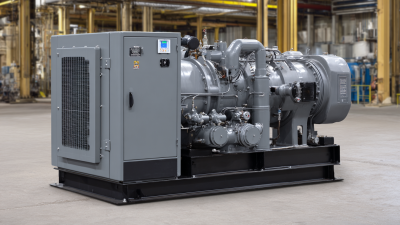
Choosing the best air dryer for compressor systems in 2026 requires more than comparing product prices. Each dryer technology handles moisture differently, affecting energy use, air quality, maintenance, and equipment life. Refrigerated dryers remain common for general manufacturing, while desiccant dryers serve applications requiring very low dew points. Membrane and deliquescent models may suit smaller systems or remote installations. The right choice depends on operating pressure, flow rate, ambient temperature, and the required ISO air-quality class.
In practical compressor rooms, moisture often appears as rust inside pipework, cloudy pneumatic oil, or water collecting beneath a filter bowl. These details reveal problems that a catalog may not show. A reliable evaluation should examine pressure dew point, pressure drop, regeneration demand, oil carryover, drain performance, and service access. Manufacturer test data matters, but field conditions can change results. A dryer rated for one airflow may perform poorly when temperatures rise or demand fluctuates.
There is no universal winner.
This guide compares the top types of air dryer for compressor applications and explains where each design performs best. It considers real operating conditions, not only laboratory claims. Energy consumption deserves attention because a desiccant dryer can require substantial purge air. Refrigerated models may offer lower running costs but cannot meet every low-dew-point requirement. Membrane systems are compact, yet their flow limitations can be overlooked. The final recommendation should balance technical requirements, lifecycle cost, reliability, and future production needs. Some decisions remain imperfect. Careful measurement is still better than confident guessing.
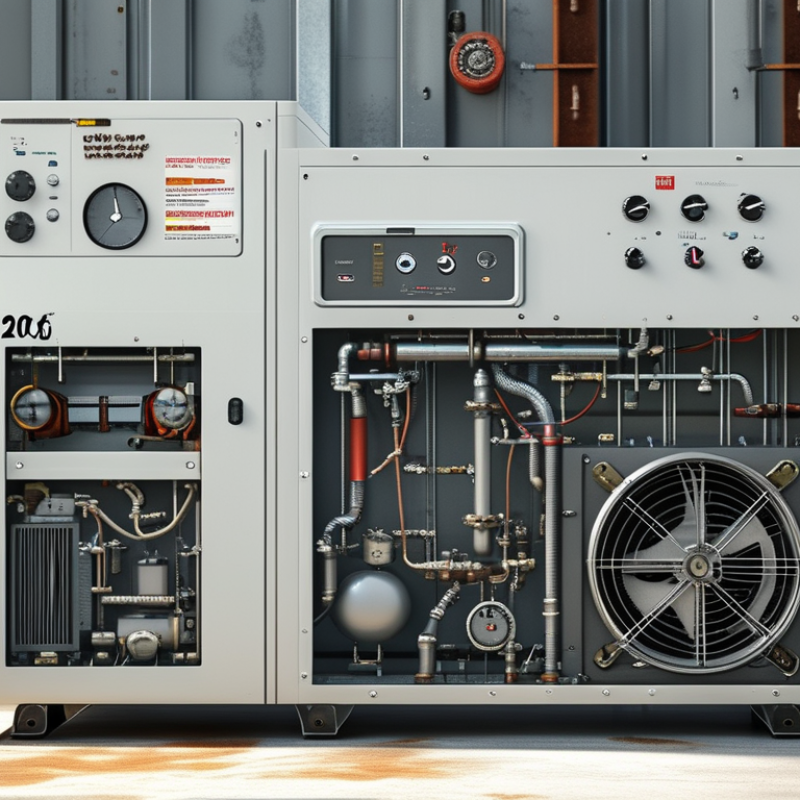
An air dryer for a compressor removes water vapor from compressed air before it reaches tools, pipes, or production equipment. When air is compressed, moisture becomes concentrated inside the system. As the air cools, that vapor can turn into liquid water. Rust, frozen lines, blocked valves, and damaged pneumatic tools may follow.
Common dryer types include refrigerated, desiccant, and membrane dryers. A refrigerated dryer cools compressed air and removes condensed water. It suits general workshop air and many factory applications.
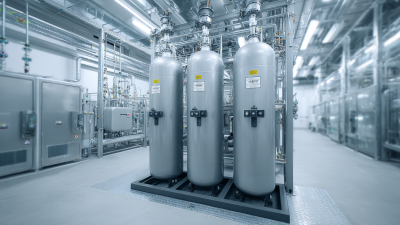
A desiccant dryer uses absorbent material to reach much lower dew points. It is useful for outdoor lines, sensitive instruments, and cold environments. A membrane dryer is compact and has no moving parts, but it may consume more compressed air than expected.
The best choice depends on pressure, flow rate, ambient temperature, and required dew point. Bigger is not always better. An oversized dryer can increase energy costs, while an undersized unit may leave moisture behind. In practical inspections, drain problems are often mistaken for dryer failure. This is worth checking.
Tips: Check the compressor’s actual flow, not only its motor size. Install a water separator before the dryer. Drain filters regularly. Measure pressure loss across the system. Leave room for maintenance. Personally, I would also inspect the air lines after installation, because poor pipe layout can quietly reduce an otherwise suitable dryer’s performance.
Compressed air dryers remove water vapor before it reaches tools, valves, and production lines. Refrigerated dryers cool air near 3°C, condense moisture, and drain it automatically. They suit general factory air, but freezing conditions can expose their limits. Desiccant dryers pass air through adsorbent material, often producing pressure dew points below -40°C. They protect paint, electronics, and outdoor piping, yet their purge air can reduce available capacity. Membrane dryers separate water vapor through selective hollow fibers. They are compact and quiet, although flow capacity may be modest. Deliquescent dryers use a moisture-absorbing chemical bed. They need regular refilling and provide less precise dew-point control.
The U.S. Department of Energy’s Compressed Air Sourcebook reports that compressed air may consume 10–15% of a plant’s electricity. Compressed Air Challenge guidance also indicates that leaks can waste 20–30% of compressor output. Dryer selection therefore affects energy use, not only air quality. In my field experience, a refrigerated unit is often the practical default. However, that choice can be wrong near washdown areas or winter pipework. Check inlet temperature, pressure, flow, ambient humidity, and required ISO 8573-1 air class. A small sizing mistake becomes expensive.
Tips: Measure pressure dew point at the critical tool, not only at the dryer outlet. Compare purge loss, drain reliability, maintenance time, and lifetime energy. The cheapest purchase is rarely the cheapest system.
Choosing the best compressor air dryer depends on performance, operating cost, and maintenance discipline. Refrigerated dryers usually deliver around a 3°C pressure dew point. They suit general factory air, pneumatic tools, and indoor production lines. Adsorption dryers can reach -40°C or lower. They protect instruments in cold or moisture-sensitive environments. Membrane dryers are compact and quiet, but their purge-air demand can reduce usable output.
The U.S. Department of Energy reports that compressed air may consume about 10% of industrial electricity. Its technical sourcebook also notes that leaks can waste 20–30% of compressor capacity. Dryer energy deserves equal attention. Refrigerated units normally need less operating energy than heated adsorption systems. Adsorption models, however, provide stronger moisture control. The cheapest purchase price can become expensive after years of purge loss and filter replacement.
Maintenance changes the real cost. Refrigerated dryers need condenser cleaning, drain inspections, and refrigerant-system checks. Adsorption dryers need desiccant replacement, pre-filter protection, and valve inspections. CAGI performance-verification data sheets help compare flow, pressure drop, and energy use under stated conditions. ISO 8573-1 defines air-quality classes, but the required class must match the process. A workshop may not need -40°C air. I have seen systems over-specified, then poorly maintained. That mistake is surprisingly common. Check inlet temperature, pressure, ambient conditions, dew point, and seasonal load before selecting the dryer.
2026 Top Types of Air Dryer for Compressor Which Is Best?
How to Choose the Best Air Dryer for Your Application
Choosing an air dryer starts with the required pressure dew point, not the purchase price. ISO 8573-1 classifies compressed-air quality by particles, water, and oil. A workshop running pneumatic tools may need only a refrigerated dryer, often delivering about +3°C pressure dew point. It is compact and usually consumes less energy. Moisture-sensitive processes need more protection.
Desiccant dryers can reach -40°C or lower, making them suitable for outdoor lines, instrumentation, and cold environments. However, regeneration may consume 15–20% of compressed air, depending on the design. Membrane dryers suit small, remote applications, but their flow capacity can be limited. Check the real inlet temperature, pressure, and seasonal humidity. Catalog ratings can look better than field conditions.
Energy deserves careful attention. U.S. Department of Energy guidance reports that compressed-air leaks can waste 20–30% of compressor output. An oversized dryer adds unnecessary pressure loss and operating cost. I have seen selection decisions based only on maximum flow. That is risky. Measure average flow, peak demand, target dew point, filtration needs, and maintenance access. Then compare lifecycle cost, not just the quotation. The best dryer is the one that protects the process without continuously wasting air. It may not be the most powerful model.
| Air Dryer Type | Typical Pressure Dew Point | Typical Inlet Temperature | Energy and Air Consumption | Initial Cost Level | Maintenance Needs | Main Advantages | Main Limitations | Best-Fit Applications | Overall Suitability |
|---|---|---|---|---|---|---|---|---|---|
| Refrigerated Dryer | Approximately +3°C to +10°C (+37°F to +50°F) |
Usually up to approximately 50°C (122°F), depending on the design |
Uses electrical power for refrigeration. Typical power demand is about 0.5%–3% of compressor rated power, depending on load and dryer design. No continuous purge-air loss. | Low to medium | Clean the condenser, inspect drains, check refrigerant circuit performance, and replace filters as required. | Reliable, compact, easy to operate, and suitable for most general compressed-air systems. | Cannot normally provide sub-zero pressure dew points. Performance may decrease in hot or humid environments without adequate aftercooling. | General manufacturing, workshops, pneumatic tools, packaging, assembly, and plant utility air. | Best general-purpose choice |
| Cycling Refrigerated Dryer | Approximately +3°C to +10°C (+37°F to +50°F) |
Commonly up to approximately 50°C (122°F), subject to the model |
Uses thermal storage or variable-capacity control to reduce compressor cycling. Energy use can be lower than a fixed-speed refrigerated dryer at partial load. | Medium | Requires condenser cleaning, drain inspection, temperature checks, and routine filter maintenance. | Improved part-load efficiency and stable dew point under changing air demand. | Higher purchase price and greater control-system complexity than basic non-cycling units. | Facilities with variable compressed-air demand and long operating hours. | Best for variable loads |
| Heatless Desiccant Dryer | Typically −40°C (−40°F); approximately −70°C is possible with suitable configuration |
Often limited to approximately 40°C–50°C (104°F–122°F), depending on the desiccant and design |
Uses compressed air for regeneration. A typical purge loss is approximately 12%–18% of rated dryer flow, although actual values vary by operating pressure and design. | Medium to high | Replace or service desiccant when performance declines, inspect switching valves, check filters, and prevent liquid-water carryover. | Provides very low dew points without an external heat source and is suitable for cold or moisture-sensitive processes. | Purge-air loss increases compressor operating cost. Desiccant can be damaged by oil or liquid water, so pretreatment is important. | Outdoor piping, instrumentation, control systems, pharmaceutical processes, electronics, and cold-climate applications. | Best for very dry air without an external heat source |
| Heated Desiccant Dryer | Typically −40°C (−40°F); lower values may be available with an appropriate design |
Often limited to approximately 40°C–50°C (104°F–122°F) |
Uses an electric heater or another heat source for regeneration. Purge-air consumption may be approximately 0%–5%, depending on the design and operating mode. | High | Inspect heaters, valves, filters, desiccant condition, temperature controls, and regeneration airflow. | Lower purge-air loss than heatless designs and better efficiency for high-flow, continuously operating systems. | Higher equipment complexity and electrical or thermal energy demand. Installation may require additional controls and ventilation. | Large industrial systems, continuous production, high flow rates, and applications where compressed-air loss is expensive. | Best for high-flow continuous operation |
| Blower-Purge Desiccant Dryer | Typically −40°C (−40°F); approximately −70°C may be achievable with suitable sizing |
Often limited to approximately 40°C–50°C (104°F–122°F) |
Uses a blower and heater for regeneration, so purge-air loss can be close to zero. Electrical consumption is higher than a heatless design but may reduce total operating cost at high flow. | High | Inspect blower, heater, valves, filters, sensors, and desiccant. Regularly verify regeneration temperature and cycle timing. | Very low compressed-air loss and efficient operation for large, steady air demand. | Higher purchase cost, more components, and greater space requirements than simpler dryer types. | Large factories, centralized air systems, and applications with high annual compressor operating hours. | Best for minimizing purge loss |
| Membrane Dryer | Commonly −20°C to −40°C (−4°F to −40°F), depending on design and purge setting |
Often approximately 40°C–60°C (104°F–140°F), subject to the membrane specification |
Has no moving parts and normally requires no electrical power. It uses a portion of dried compressed air as purge gas; the amount varies with the required dew point and flow. | Medium | Replace pre-filters, control oil and liquid-water carryover, and inspect the membrane module and drains. | Compact, quiet, low-maintenance, and suitable for remote or point-of-use installation. | Limited flow capacity, purge-air loss, and sensitivity to oil, aerosols, and liquid water upstream. | Point-of-use instrumentation, laboratories, transportation systems, small pneumatic panels, and remote equipment. | Best for compact point-of-use drying |
| Deliquescent Dryer | Usually approximately +10°C to +20°C (+50°F to +68°F), depending on ambient and operating conditions |
Generally requires suitable upstream cooling and liquid-water separation | Uses no electrical power and no purge air. Moisture is absorbed by a consumable hygroscopic material, which gradually dissolves and must be replenished. | Low | Refill or replace absorbent material, drain collected liquid, inspect the vessel, and monitor pressure drop. | Simple, durable, and useful where electricity is unavailable or where a low installation cost is important. | Consumable operating cost, possible carryover of dissolved material, and limited dew-point performance. It is unsuitable for very dry air requirements. | Remote locations, temporary installations, outdoor utility air, and basic moisture control. | Best for simple low-demand systems |
Note: The performance ranges shown are typical engineering values rather than guaranteed ratings. Actual results depend on flow rate, operating pressure, ambient conditions, inlet temperature, pre-filtration, drain performance, maintenance, and the required compressed-air quality class under ISO 8573-1.
Which Compressor Air Dryer Is Best for Each Operating Need?
Selecting a compressor air dryer depends on air quality, climate, flow demand, and maintenance access. A refrigerated dryer fits general plant air, including pneumatic tools, packaging lines, and workshops. It cools compressed air until water condenses and drains away. Its pressure dew point commonly sits near +3°C. Energy use is modest. However, hot intake air, poor ventilation, or sudden demand can reduce its protection. Good for routine air.
Desiccant dryers suit instruments, outdoor lines, and controlled processes needing very dry air. They can reach a -40°C pressure dew point, and some systems go lower. That protection requires dry media, prefiltration, and planned regeneration. Heatless models consume purge air, while heated models need more equipment and electrical power. Membrane dryers work well at remote points with low flow and limited space. They have no moving parts, but capacity and inlet air quality matter. Small footprint, real trade-off.
For heavy-duty, noncritical service, a deliquescent dryer may be acceptable. It is simple, yet moisture removal changes as tablets dissolve. Residue control still matters. Choose by required dew point, flow rate, inlet temperature, pressure, and acceptable maintenance. Oil carryover can damage desiccant or membrane elements, so coalescing filtration deserves attention. Field inspections often reveal failures caused by an undersized drain or ignored filter. That detail is easy to miss.
Please share your email with us to see your results.