Choosing the right butterfly valve begins with the process, not the catalog page. In water treatment, HVAC, food processing, and industrial pipelines, operators need reliable shutoff, modest weight, and practical maintenance access. A butterfly valve often meets these needs through a quarter-turn disc, compact body, and relatively low installation cost. The visible detail matters: a DN300 valve can weigh far less than a comparable gate valve, reducing flange loads and handling effort.
Industry data supports this practical preference. Grand View Research reported continued growth in the global industrial valves market, driven by water infrastructure, energy projects, and process automation. MarketsandMarkets also identifies quarter-turn valves, including butterfly valve designs, as important solutions for modern flow-control systems. Yet market growth does not guarantee correct selection. Pressure class, temperature, fluid chemistry, cavitation risk, and actuator torque still determine performance.
John V. Ballun, a recognized valve specialist and author of The Valve Primer, stated, “Valve selection must begin with the service conditions, not the valve itself.” That principle remains useful on a noisy plant floor, where a leaking seat or undersized actuator quickly becomes an operational problem. A butterfly valve can provide fast isolation and dependable throttling, but only when its disc, liner, and actuator match the application. Sometimes, engineers choose it too quickly. That deserves reflection. The lowest purchase price may hide higher cycling costs, premature seal wear, or difficult inspection work. This article examines why butterfly valves remain popular, where they perform best, and when another valve design may be safer or more precise.
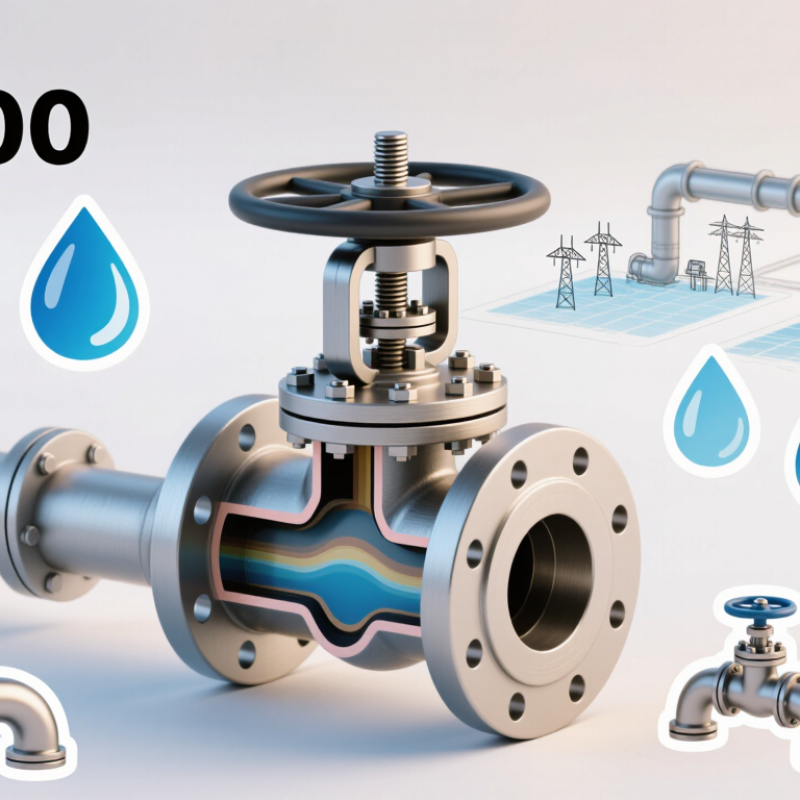
A butterfly valve controls flow with a circular disc mounted on a rotating shaft. The disc turns inside the pipe, usually through 90 degrees. When the disc aligns with the pipeline, fluid passes freely. When it turns across the passage, flow stops. Partial rotation creates throttling, although control accuracy depends on the disc design, seat, actuator, and flow conditions.
Its structure is simple. A body, disc, stem, and resilient or metal seat do most of the work. This compact arrangement reduces weight, installation space, and operating effort. The U.S. Department of Energy’s Pumping System Assessment Tool guidance notes that pumping systems can consume 25–50% of industrial facility electricity. A valve with suitable pressure loss can therefore support practical energy management. The impact is real, but it is often overstated.
The 2023 Industrial Valves Market analysis by MarketsandMarkets projected growth from about USD 78 billion in 2023 to over USD 98 billion by 2028. That expansion reflects demand across water, process, and energy systems. Butterfly valves suit large pipe diameters particularly well. They are not perfect. Poor sizing may cause cavitation, vibration, or unstable throttling. Operators should verify pressure, temperature, media compatibility, leakage class, and actuator torque before selection. Field experience matters here. A cheap, convenient valve can become an expensive maintenance problem.

A butterfly valve uses a rotating disc mounted on a shaft to regulate flow. Its quarter-turn operation enables fast shutoff, compact installation, and efficient control in large pipelines.
The chart shows the normalized geometric clear opening calculated from the disc position using 1 − cos(θ). At 0°, the disc is closed; at 90°, it is fully open. This represents the available projected opening area and is not a substitute for a valve-specific flow coefficient (Cv) curve.
The disc rotates through 90°, allowing rapid opening and closing.
The lightweight wafer-style body requires less space than many multi-turn valve designs.
The disc position can be adjusted to control flow in water, air, and other compatible services.
A butterfly valve controls flow by rotating a disc around a central shaft. Its quarter-turn action enables quick, repeatable adjustment. The compact body also reduces installation space and weight. In practical systems, this can simplify pipeline support and actuator selection.
Disc geometry strongly affects control accuracy. A streamlined disc creates less turbulence at moderate openings. Shaft alignment also matters, because small mechanical play can cause unstable positioning. Resilient seats provide reliable shutoff for many water and air services. For higher temperatures or demanding chemicals, engineered metal seats may be more suitable. The choice depends on pressure, temperature, and media compatibility.
Good control requires more than the valve body. A properly sized actuator, positioner, and feedback signal help maintain steady disc movement. Oversizing is a common mistake. It may produce poor control near the closed position, where tiny movements cause large flow changes. That assumption can be wrong.
Flow characteristics also change with valve angle. A disc may offer limited precision at very low openings, especially in high-pressure service. Engineers should review flow coefficients, pressure loss, and cavitation risk before approval. Field testing can reveal behavior that calculations miss. Small installation details matter. Unbalanced piping loads, incorrect alignment, or worn seals can reduce control performance over time.
Butterfly valves fit diverse piping applications because they control flow with a compact, quarter-turn mechanism. In a treatment plant, an operator can open the disc quickly during a flushing cycle. In a chilled-water line, the same design saves space around crowded equipment. Field experience shows that this small footprint simplifies access for inspection. It also reduces weight on large pipe supports. Still, compact does not mean universally suitable.
For clean water, a resilient seat may provide dependable shutoff and economical maintenance. For hotter or more demanding service, a metal-seated or lined design may be more appropriate. Engineers should verify pressure, temperature, fluid compatibility, and required leakage performance. A valve that looks correct on paper may fail early when abrasive particles enter the seat area. That detail is easy to miss. It deserves attention during specification and commissioning.
These valves can regulate flow, but prolonged throttling may create turbulence, noise, or premature wear. Correct disc orientation also matters, especially near pumps, elbows, and reducers. A short, straight pipe section can improve operating stability. During maintenance, teams should inspect the shaft, seat, fasteners, and actuator connection. The tempting mistake is choosing by diameter alone. Application data must guide the decision, even when the installation seems simple.
Butterfly valves suit large pipelines because they are compact, lightweight, and quick to operate. Their quarter-turn action also supports emergency isolation.
However, low purchase cost can hide control limitations. A centered disc remains inside the flow path. It can create turbulence, noise, and pressure loss, especially near full closure. Precise throttling is often difficult.
The U.S. Department of Energy’s Improving Pumping System Performance sourcebook reports that pumping systems may consume 25% to 50% of industrial electricity. Poor valve selection can increase this burden. A practical field lesson is simple: check the operating point, not only the pipe diameter. Review pressure drop, flow range, cavitation risk, actuator torque, and water-hammer exposure.
A valve that works at 60% opening may perform poorly at 15%. That detail is easy to miss.
Liner material also deserves careful attention. Temperature, chemicals, suspended solids, and repeated cycling can shorten service life. API 609 and ISO 5752 provide useful design and dimensional references, but they do not replace application testing.
The WHO and UNICEF Joint Monitoring Programme reported that 2.2 billion people lacked safely managed drinking water in 2022. Reliability therefore matters beyond the equipment room.
In my view, selection should include maintenance access, isolation needs, and failure consequences. I would still challenge the common assumption that every low-pressure water line needs a butterfly valve. Sometimes, a different control valve is the less expensive mistake.
Choosing a butterfly valve starts with the fluid, not the pipe size. Confirm whether the medium is water, air, chemicals, slurry, or another process fluid. Check its temperature, pressure, viscosity, and possible solids. A valve suitable for clean water may fail quickly in abrasive service. I have seen operators overlook this detail during rushed replacements.
Match the valve body and disc materials to the process. Stainless steel resists many corrosive fluids, while lined designs may suit more demanding conditions. The seat material also matters because heat, chemicals, and frequent cycling can cause swelling or leakage. Consider wafer, lug, or flanged connections. Measure the existing pipe carefully. A small alignment error can stress the body and reduce service life.
Select the correct pressure rating and control method. Manual handles work for occasional isolation, but pneumatic or electric actuators support frequent adjustment. For reliable throttling, verify the valve’s control range and torque requirements. Do not choose by diameter alone. Large valves can still perform poorly when the disc, actuator, or flow pattern is mismatched. Installation space deserves attention too, especially near pumps, elbows, and electrical equipment. Leave room for inspection and actuator removal. One practical lesson is easy to miss: a technically suitable valve may remain unsuitable when maintenance access is ignored.
Please share your email with us to see your results.