Why Choose an Open Display Fridge for Your Store?
An Open Display Fridge can make chilled products easier to notice without asking shoppers to open a door. In a grocery aisle, drinks at eye level or ready-to-eat items near a lunch counter can catch attention. That simple access may support browsing and help staff keep popular products visible. Visibility matters. Yet a bright display only helps when products remain cold, orderly, and easy to reach. Compare usable shelf area, temperature performance, lighting, noise, and cleaning needs before choosing a model. A case that looks spacious in a showroom may feel cramped once cartons and price labels are in place. Little details count.
The right Open Display Fridge depends on the products, room layout, and daily service routine. A unit beside a sunny window may face different heat conditions from one in a controlled interior. Check the manufacturer’s operating range and installation guidance before buying. Ask how the case performs under your store’s expected conditions. Also consider how often staff will restock shelves and clean spills. Crowded shelves can hide labels, while blocked airflow may affect product temperature. Staff should monitor temperatures and follow the equipment guidance consistently. There is a trade-off. An open front can improve access, but energy use may be higher than with a comparable closed case. Actual results vary by design, room conditions, and use. Compare technical data, warranty terms, and service support rather than relying on appearance alone. Still, no specification sheet predicts every busy Saturday. That is worth remembering.
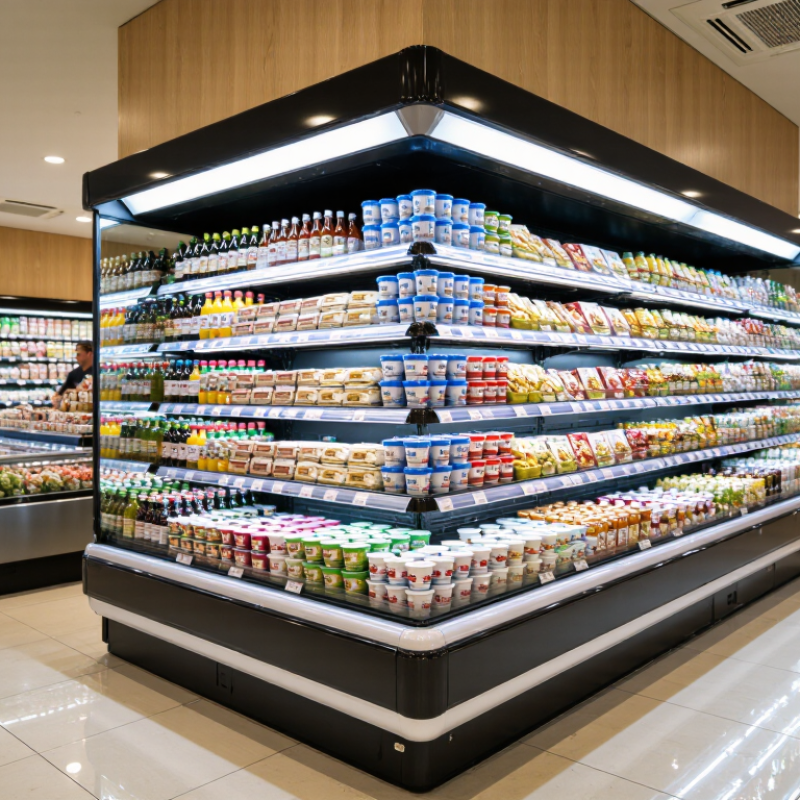
What Is an Open Display Fridge?
An open display fridge is a commercial refrigerator with an uncovered front, allowing shoppers to reach chilled products directly. Fans move cold air through the cabinet and create an air curtain across the opening. Shelves and lighting keep items visible, while the refrigeration system works to maintain a suitable temperature. You may see these units in supermarkets, cafés, and convenience stores displaying drinks, dairy products, or ready-to-eat foods.
Unlike a closed cabinet, an open unit is affected by warm air, nearby heat sources, and frequent customer movement. Its performance depends on correct installation, regular cleaning, and clear airflow around the shelves. A crowded cabinet can block circulation. That detail is easy to miss. Staff should check the unit’s temperature display and follow the equipment maker’s guidance for stocking and maintenance. An open front can make products easier to see, but it may also use more energy than a comparable closed unit.
Tips: Keep products within the marked loading line, and avoid placing warm items inside. Check temperatures routinely, especially during busy periods. Watch for fogging or unevenly chilled shelves; either may signal blocked airflow or a maintenance issue.
How Does an Open Display Fridge Keep Products Cool?
An open display fridge keeps products cool by continuously moving refrigerated air around the cabinet. A fan pushes chilled air through narrow outlets, forming a curtain across the open front. The air flows down past the products and returns through a grille near the base. It is then cooled again by the evaporator coil. A steady loop. The curtain slows warm shop air from entering, but it cannot seal the cabinet completely.
In practice, airflow makes a visible difference. A stack of drinks placed over a return grille can disrupt circulation, while warm air from a nearby doorway may challenge the unit. Keep products within the marked load line and avoid blocking vents. The cabinet’s thermostat controls cooling, and sensors help staff check conditions. Still, the displayed air temperature may not match the temperature inside every item, especially during busy periods.
Defrost cycles are also part of normal operation. They remove frost from the cooling coil, which helps maintain airflow and cooling performance. Store temperature, humidity, product loading, and regular maintenance all affect results. An open case is convenient for quick access, though it generally works harder than a closed-door cabinet. That trade-off is easy to overlook. It deserves attention.
What Benefits Does It Offer Retail Stores?
An open display fridge makes chilled products visible before shoppers reach the aisle. Clear sightlines can help customers compare drinks, dairy, and ready-to-eat foods quickly. Easy access also suits busy stores, where shoppers may pick up an item while passing. Staff can face labels forward and spot low stock without opening doors. Small details matter: bright lighting, readable price tags, and neatly aligned bottles make the case easier to shop.
There is an energy trade-off. The U.S. Environmental Protection Agency’s ENERGY STAR guidance notes that refrigeration can use up to 40% of a grocery store’s energy. That makes case design and maintenance more than cosmetic choices. The U.S. Department of Energy’s commercial refrigeration guidance also highlights the importance of airflow and correct product loading for temperature performance. Keep products below marked load limits, and avoid blocking the air curtain with cartons. A doorless case may improve access, but it can also release cold air into the aisle. Not ideal. Check temperatures, defrost cycles, and energy use after installation; store layout and customer traffic can change the result. Open cases are useful, but they are not automatically the best fit for every chilled product or shop.
Which Stores and Products Suit Open Display Fridges?
Open display fridges suit stores where shoppers make quick, frequent choices and chilled products move steadily. Convenience stores, supermarkets, cafés, and food halls often use them for bottled drinks, dairy, sandwiches, and ready-to-eat meals. Clear sightlines help customers spot a cold drink or lunch without opening a door. That matters during busy periods. Small details count: keep labels facing forward and restock before the front row looks picked over.
Fresh produce can also work well in open cases, especially in grocers with high turnover. But delicate greens and cut fruit need careful temperature and humidity control; an attractive display is not enough. The U.S. Environmental Protection Agency’s ENERGY STAR guidance notes that refrigeration accounts for nearly 40% of a typical grocery store’s energy use. Open cases can add to that load, so they make most sense where visibility and rapid access justify the operating cost.
They are not ideal everywhere. A low-volume shop may lose energy while products sit untouched, and crowded aisles can make open cases awkward. I have seen displays look inviting at opening, then become uneven after a rush. Measure sales by product, check case temperatures, and review energy use before expanding the lineup. One trial case may teach more than a full remodel.
What Should You Consider When Choosing One?
Choosing an open display fridge starts with the products and the shop floor, not the cabinet’s appearance. Measure the available footprint, doorways, and customer traffic; a unit that blocks an aisle can undermine easy access. Check the required product temperature against the cabinet’s operating range, then ask how performance changes during busy hours. Warm store air, nearby ovens, and frequent restocking can all affect temperature stability. Airflow matters. Look for clear loading limits, accessible cleaning points, and lighting that shows products without creating glare. Ask suppliers for measured energy use under stated test conditions, rather than relying on broad efficiency claims.
Energy deserves close attention. U.S. Department of Energy supermarket guidance indicates refrigeration can account for about 40% of a store’s energy use, so cabinet efficiency may influence ongoing costs. Compare models at similar sizes and operating conditions. Review fan power, lighting, defrost cycles, and any night cover options. A low purchase price is not the whole cost. Yet energy savings should not be assumed: covers may reduce visibility, and poor placement can still compromise airflow. Consider a trial layout or measured operating data before committing. Small details count. Record temperatures at several shelf positions during a normal trading day; one display reading may miss warm spots near the top or front.