Why Choose a Single Jersey Machine for Knitting?
A single Jersey machine can turn a yarn cone into a continuous roll of smooth, lightweight fabric, but the result depends on more than the machine’s speed. Gauge, cylinder diameter, yarn choice, and stitch settings all shape the fabric’s handle and appearance. On a production floor, small adjustments matter: a change in yarn tension can affect loop formation, while an unsuitable setting may leave visible streaks or uneven stitches.
For this guide, one useful principle is: “Choose the machine around the fabric you need to make, not the other way around.” This is editorial wording, not a verified quotation from a named industry expert; no source for an expert quote was provided. A properly sourced quotation would strengthen the discussion without risking a false attribution.
A single Jersey machine is often considered for T-shirts, lightweight sportswear, and other fabrics with a plain knitted face. Its appeal lies in practical flexibility and relatively straightforward operation. Still, it is not the right answer for every fabric or factory. Buyers need to compare the required fabric width, target output, operator skills, maintenance support, and expected product range. A machine that performs well in one setup may need careful adjustment in another. The sections that follow examine how a single Jersey machine works, where it fits, and what to check before choosing one.
What a Single Jersey Knitting Machine Is
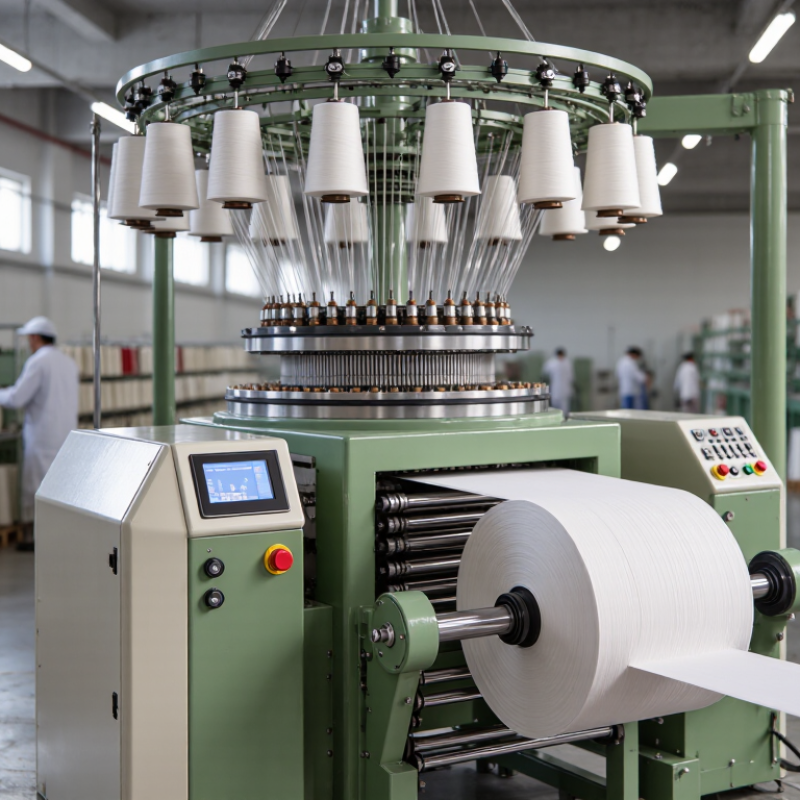
A single jersey knitting machine uses one needle bed to form lightweight, weft-knitted fabric. In common circular models, needles sit in a rotating cylinder while yarn feeders guide yarn into their hooks. Each needle pulls a new loop through the loop below, building rows as the cylinder turns. That sounds simple. But timing matters.
On the fabric face, smooth vertical wales create familiar V-shaped stitches; the reverse shows small connecting arcs. With one needle bed, the fabric is generally thinner and more elastic than many double-knit structures. Many machines produce a continuous tube, which can be slit open when a flat width is needed. Operators adjust stitch length, yarn tension, take-down, and speed to influence fabric weight and stability. A small tension change can create visible stripes or uneven loops.
This construction suits T-shirts, underwear, and linings, depending on the yarn and finishing. It has limits, too: unfinished edges tend to curl, and lightweight fabric can distort during handling. A setting that works for cotton may not suit an elastane blend or finer yarn. Trial knitting and careful inspection help reveal faults early. In practice, the fabric tells you when the setup is wrong. Not always politely.
How Single Jersey Knitting Machines Form Fabric
A single jersey machine forms fabric by making one row of intermeshing loops at a time. Around the circular needle cylinder, needles rise and fall as they pass through shaped cams. A yarn feeder presents yarn to each needle in sequence. The open latch catches the strand; as the needle descends, the old loop closes the latch and slips over the new yarn. One new course takes shape.
It happens quickly. The process repeats continuously, drawing fresh loops through the previous course. Because knitting uses one needle bed, the fabric has a smooth face with visible vertical wales and a looped reverse side. This structure is light and flexible, but its edges often curl. On the machine, stitch length, yarn tension, needle gauge, and take-down tension all influence the result. A small adjustment can change the fabric’s feel or stability. In practice, settings that look correct on paper may still need a test run. That part can be frustrating. Inspecting a sample under steady light helps reveal uneven loops, dropped stitches, or tension changes before a longer production run.
Why Choose a Single Jersey Machine for Knitting? - How Single Jersey Knitting Machines Form Fabric
| Dimension | How It Works | Why It Matters |
| Needle-bed arrangement | A typical single jersey circular machine uses one cylinder of needles. The needles move in their slots as cams guide them through the knitting cycle. | The straightforward arrangement supports efficient production of lightweight, weft-knitted fabric. |
| Loop formation | Each needle receives yarn and draws a new loop through the previously formed loop. Repeating this sequence builds the fabric course by course. | Loop-based construction gives jersey fabric its characteristic stretch and soft hand. |
| Fabric structure | Plain single jersey has distinct technical face and back sides. The face typically shows vertical knit columns; the back shows the reverse sides of the loops. | This familiar appearance is widely used in T-shirts, underwear, and other everyday apparel. |
| Machine gauge | Gauge refers to the number of needles per inch. The appropriate gauge depends on the yarn, desired fabric weight, and end use. | Choosing a suitable gauge helps achieve the intended stitch size and fabric density. |
| Yarn feeding | Yarn is supplied through feeders positioned around the circular knitting area. Feed arrangement and yarn delivery are set according to the machine and fabric design. | Consistent yarn delivery helps maintain even loops and reduce variations in the fabric. |
| Fabric take-down | As fabric forms, a take-down system draws it away from the knitting zone and commonly rolls it into a tube or roll. | Steady take-down tension supports stable knitting and orderly fabric collection. |
| Production flexibility | With suitable yarn, stitch settings, and machine configuration, single jersey machines can produce a range of plain and patterned knit fabrics. | This versatility makes the machine useful for different fabric weights and apparel applications. |
| Key operating considerations | Needle condition, yarn quality, stitch length, machine speed, and take-down tension all influence fabric appearance and performance. | Monitoring these variables helps limit faults such as dropped stitches, holes, and uneven fabric. |
Note: Machine specifications and achievable fabric characteristics vary by machine configuration, yarn, and production settings.
Key Benefits of Single Jersey Knitting
Single jersey knitting is valued for its smooth face, soft feel, and efficient production. A single jersey machine forms loops on one needle bed, creating a lightweight fabric suited to T-shirts, base layers, and casualwear. The structure stretches comfortably across the body. It also uses yarn efficiently, which can help control fabric weight and production costs.
For production teams, the machine’s straightforward knitting structure can make routine setup and fabric changes easier to manage. Operators can adjust yarn feed, stitch length, and take-down tension to influence the fabric’s appearance and performance. Small changes matter: a tighter stitch may create a denser fabric, while a looser setting can improve drape. Still, results depend on yarn quality, machine condition, and careful calibration. Single jersey edges may curl, and the fabric can distort if tension is uneven. It is useful, but not flawless.
Tips: Check stitch length and fabric width on a sample roll before a full run. Inspect the edges and wash-test a swatch, since finishing can change its feel. Keep notes on settings; memory is not always reliable.
Common Fabrics and Applications
Common Fabrics and Applications
Single jersey has a smooth face and a looped reverse. Its light weight and stretch suit everyday T-shirts, dresses, underwear, sleepwear, and casual sportswear. Cotton jersey feels soft and breathable; polyester jersey often dries faster. Cotton-polyester blends balance these qualities, while elastane can improve stretch recovery. Not every jersey behaves alike. Yarn, stitch length, fabric weight, and finishing all affect drape, comfort, and fit.
Textile Exchange’s Materials Market Report 2024 estimates that global fiber production reached 124 million tonnes in 2023, with polyester accounting for 57%. This figure covers many textile uses, not single jersey specifically. Still, it helps explain the wide availability of polyester and blended yarns for knit fabrics. A practical choice depends on the garment: a lightweight cotton jersey may suit a soft tee, while a resilient blend may work better for a close-fitting top. The trade-off deserves testing; fiber content alone cannot predict how a finished fabric will feel or perform.
Tips: Ask for fabric weight in g/m², then wash a sample. Check shrinkage, spirality, pilling, and stretch recovery before confirming production.
Why Choose a Single Jersey Machine for Knitting?
Common single jersey fabric weights and typical apparel applications
Single jersey machines produce versatile, lightweight knitted fabrics suited to a wide range of garments. The GSM ranges shown are indicative; actual fabric weight varies with yarn, machine gauge, and finishing.
How to Choose a Single Jersey Machine
Choosing a single jersey machine starts with the fabric you need, not the highest advertised speed. Define the target weight, width, and stitch structure, then compare those requirements with the machine’s diameter and needle gauge. Gauge affects how closely the needles are spaced and which yarn sizes suit the setup. Check the yarn. A smooth cotton yarn may run differently from a textured blend, so ask for a trial using your actual material. Watch the fabric as it comes off the machine: look for dropped stitches, uneven loops, and edge curling. Small details matter.
Consider how the machine will fit your daily production. Count the feeders and review the available adjustment controls, since both influence pattern options and changeover time. Ask how routine tasks are handled, including needle replacement, cleaning, and lubrication. A clear maintenance schedule is more useful than a speed figure alone. Request sample fabric and inspect it after washing; some defects only appear later.
There is no perfect setup. A machine that performs well with one yarn may need careful adjustment with another. Even experienced operators sometimes need a second trial, so leave time for testing before committing to a production plan.