What Are the Top Types of Household Elevators?

A Household Elevator can make daily movement easier, especially when stairs become tiring or difficult to manage. Yet choosing one is not simply a matter of picking the newest design. Available space, travel height, household routines, and installation requirements all shape which system may suit a home.

Hydraulic elevators use a powered mechanism to move the cabin, while traction models typically rely on ropes and a counterweight. Pneumatic elevators move through a sealed vertical tube, creating a distinctive, often compact design. Shaftless and platform lifts can serve shorter routes, such as access between two floors. Each type has different space, construction, operating, and maintenance considerations. Exact requirements vary by model and home.

Noise matters. So does maintenance. A compact lift may look ideal in a brochure, but a narrow doorway or limited landing space can change the plan. It is also worth asking how the elevator will feel in everyday use, not only how it looks on installation day. A qualified elevator professional can assess the building and explain applicable safety features, service needs, and project constraints. No type is best for every household, and even a careful comparison may leave questions. The sections ahead explore the main household elevator types, their practical strengths, and the trade-offs homeowners should examine before making a decision.
What Are the Top Types of Household Elevators?

Hydraulic Household Elevators: How They Travel Between Floors

Hydraulic household elevators travel between floors using a pump, fluid, and a lifting cylinder. When a passenger selects a floor, the pump moves hydraulic fluid into the cylinder. The rising piston supports the car as it moves upward along its guide rails. The ride is usually steady, though the exact feel depends on the system and installation.

Going down works differently. A control valve releases fluid from the cylinder into a reservoir, allowing the car to descend under its own weight. The valve regulates that flow, helping the car slow near the selected landing.

Small details matter: a gentle stop at the second floor feels very different from a sudden jolt. If movement seems uneven, a qualified technician should inspect the equipment rather than guess at the cause.

Hydraulic systems can suit homes with limited overhead space, but they need room for related equipment, such as a fluid reservoir and pump. Some installations place this equipment in a separate machine space; layouts vary. The pump may also be audible during upward travel. Not silent. Regular professional maintenance helps keep valves, seals, and fluid in working condition. I would avoid assuming every hydraulic lift feels identical; building structure, controls, and upkeep all shape the ride.


Traction Elevators: The Role of Cables and Counterweights

Traction elevators move the car with steel ropes or coated belts running over a motor-driven sheave. The sheave grips the ropes; it does not simply wind them onto a drum. As the car rises, its counterweight descends. The arrangement reduces the force the motor must supply, especially when passenger and car loads are reasonably balanced. It also means the machine room, or machine space, must support equipment and loads designed for that specific installation.

A common design target sets the counterweight near the car’s own mass plus 40–50% of its rated load, as described in CIBSE Guide D, Transportation Systems in Buildings. That balance suits typical traffic, not every trip. A nearly empty car and a heavily loaded car demand different effort. The ropes, sheave grooves, and brakes need regular inspection; small wear can affect grip and smoothness. It is easy to treat the counterweight as “free” energy savings. It isn’t.

Energy use depends on travel patterns, drive controls, and standby power. ISO 25745-2:2015 provides a method for assessing lift energy consumption and assigns efficiency classes from A to G. Its approach considers both movement and idle periods, which matter in a home where the elevator may sit unused for hours. Actual performance still depends on the building and how people use the lift. CIBSE Guide D and ISO 25745-2:2015 offer useful technical references, but a site-specific assessment is more informative than a class label alone.

Pneumatic Elevators: Using Air Pressure to Lift a Cabin

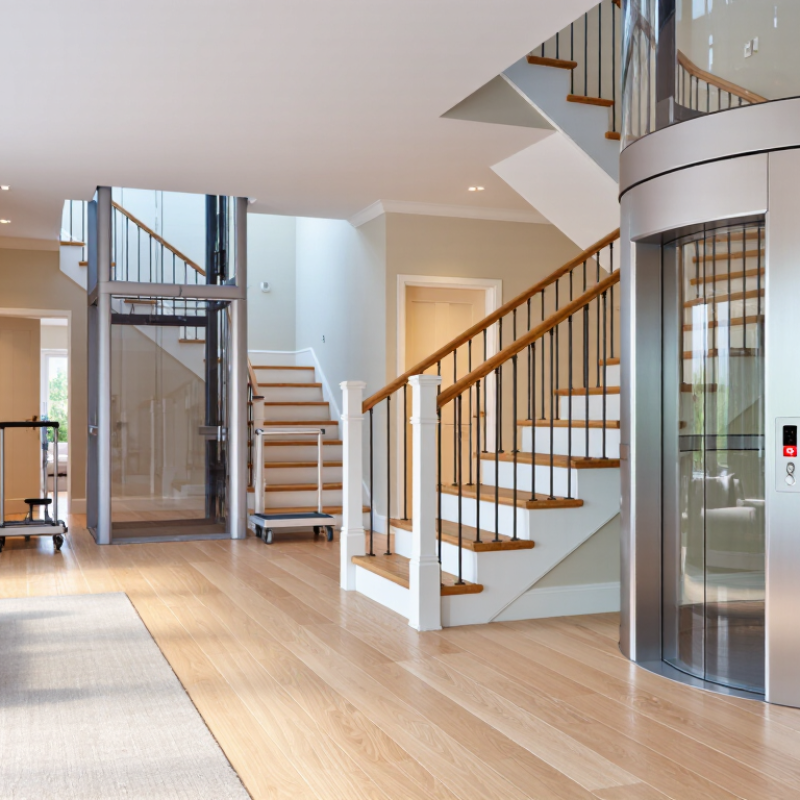
Pneumatic elevators move a cabin through a vertical tube by changing air pressure. A vacuum pump lowers pressure above the cabin; higher pressure below then pushes it upward. For descent, a controlled valve admits air. The mechanism is unusually visible: a clear tube, a compact landing, and a cabin rising without conventional suspension cables. Many designs need no deep pit or separate machine room, but exact requirements depend on the model and building.

The fit is not universal. Capacity, travel height, and cabin size are generally more limited than in many conventional lifts, and the pump can be audible. A narrow hallway may also make cabin entry awkward. The U.S. Census Bureau’s 2020 Census counted 55.8 million people aged 65 and older, a useful reminder that home access needs are significant, though age alone does not determine who needs a lift. Before choosing, check the manufacturer’s load and travel limits, noise information, and service plan. Ask an elevator professional to assess the site. The detail is easy to miss. In the United States, residential elevator design and installation are addressed by ASME A17.1/CSA B44; local authorities determine applicable requirements. A tube that looks simple still needs careful, code-aware installation.

Screw-Drive and Winding-Drum Elevators: Alternative Mechanisms

Screw-drive elevators move the cab with a motor-driven screw and a traveling nut. As the screw turns, the nut carries the platform between floors. The mechanism can fit homes where a separate machine room is impractical, though the drive assembly still needs accessible service space. Expect a steady mechanical sound during travel. It may be noticeable in a quiet hallway. Buyers should ask about routine lubrication, inspection intervals, and how the system behaves during a power interruption. Details vary by design, so specifications matter more than a broad label.

Winding-drum elevators use a motor to wind lifting cables around a grooved drum. The cab rises as cable is taken up and descends as it is released. This arrangement can serve compact installations, but cable condition and drum alignment deserve careful attention over time. Ask a qualified installer to explain the support structure, safety devices, and maintenance schedule for the exact model under consideration. A site assessment should check floor openings, headroom, and the route for electrical service. There is a trade-off. Neither mechanism is automatically the quieter, simpler, or cheaper choice; household layout and expected use can change the answer.

What Are the Top Types of Household Elevators? - Screw-Drive and Winding-Drum Elevators: Alternative Mechanisms
Comparison Dimension Screw-Drive Elevator Winding-Drum Elevator
How It Works An electric motor turns a threaded vertical screw. A traveling nut attached to the elevator platform moves along the screw to raise or lower the lift. An electric motor turns a drum that winds or unwinds a lifting cable connected to the elevator car.
Typical Layout The screw and drive are commonly arranged within or alongside the lift shaft. Some designs do not require a separate machine room. The drum and drive are generally positioned above the shaft or in a designated equipment area; the exact arrangement depends on the design.
Space Considerations Can suit homes where a compact shaft arrangement is preferred. The screw assembly occupies space along the lift’s travel path. Can be configured for residential spaces, but the drum, cable path, and required overhead clearance must be accommodated.
Ride Characteristics Travel is often relatively steady at modest residential speeds. Sound from the motor and screw may be noticeable, depending on installation and upkeep. Ride smoothness depends on the drive, cable arrangement, and controls. Starting, stopping, and operating noise vary by system design.
Common Applications Often considered for low-rise home lifts, including installations where a conventional hydraulic system or machine room is not preferred. Often considered for low-rise residential lifts where a cable-and-drum arrangement fits the building layout and lift requirements.
Maintenance Focus Maintenance may include inspection of the screw, traveling nut, drive, guides, and safety components, following the manufacturer’s service schedule. Maintenance may include inspection of the lifting cable, drum, drive, brakes, guides, and safety components, following the manufacturer’s service schedule.
Design Considerations Capacity, travel height, speed, noise, and available space depend on the specific model and installation. Capacity, travel height, cable arrangement, overhead space, and whether a counterweight is used depend on the specific design.
Safety and Compliance Must include appropriate safety features and be installed and maintained in accordance with applicable local codes and regulations. Must include appropriate safety features and be installed and maintained in accordance with applicable local codes and regulations.
Note: These are general characteristics, not guarantees for every model. Specifications, space requirements, performance, and safety provisions vary by design and local requirements.

How Household Elevator Types Differ in Design and Space Needs

Household elevators differ most in how they support the car and fit into a home. Hydraulic models move with a fluid-powered piston and usually need space for a pump and equipment cabinet. That equipment may sit nearby, though some layouts reduce the separate room requirement. Allow for a pit below the lowest floor and clearance above the highest landing. Even a small change in floor levels can affect the plan.

Traction elevators use ropes and a counterweight, so their shaft design must accommodate both. Some models place machinery within the shaft, while others need separate equipment space. They can suit multi-storey homes, but overhead clearance and structural support deserve careful checking. Screw-drive elevators use a threaded mechanism and may fit compact, self-supporting shafts. Their slower travel or operating sound may matter beside a bedroom.

Space matters.

Pneumatic elevators use air pressure and often have a round, visible enclosure rather than a conventional masonry shaft. That shape can simplify installation in some homes, but it limits car size and may not suit every mobility need. Compare the actual car dimensions with a wheelchair, walker, or caregiver—not just the advertised footprint. A floor plan can look generous and still leave an awkward doorway or landing. Final requirements depend on the home’s structure and the elevator’s specifications, so a site assessment is more useful than choosing by type alone.

Members of