China Top Screw Compressor Manufacturers and Suppliers

China has become an important sourcing destination for industrial air equipment, including screw compressor systems used in factories, workshops, and processing facilities. Buyers comparing manufacturers and suppliers need more than a low quotation. They should examine operating pressure, airflow, motor power, cooling method, and expected duty cycle. These details matter. A compressor sized for intermittent workshop use may not suit a production line running long shifts. Clear technical documents help reveal that difference.

This guide introduces factors to consider when evaluating China-based screw compressor manufacturers and suppliers. It looks at product range, production capability, quality control, customization, export experience, and after-sales support. Buyers can ask for test records, component specifications, warranty terms, and service procedures before making a decision. Where possible, compare those documents with the actual operating requirements at the installation site. A polished catalog is useful, but it cannot answer every question. That takes work. Supplier claims should be checked carefully, since specifications and support arrangements can vary between companies. Even a capable manufacturer may not be the right fit for every project. The following overview is intended to help readers ask more practical questions, assess available evidence, and shortlist suppliers with greater confidence. It is a starting point, not a substitute for independent technical review.

China Top Screw Compressor Manufacturers and Suppliers

How Screw Compressors Work and Where They Are Used

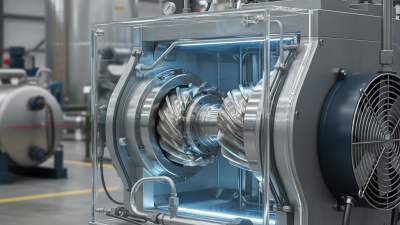
A screw compressor draws air into the space between two intermeshing helical rotors. As the rotors turn, trapped air moves along the casing and becomes compressed. The result is a steady flow suited to long production shifts. Oil-injected designs use oil for sealing and cooling; oil-free models keep oil out of the compression chamber. Each has trade-offs. Screw compressors commonly supply pneumatic tools, packaging lines, workshops, and process equipment. At a machine shop, a small pressure drop can slow an air tool during a busy shift. That sounds simple.

The U.S. Department of Energy’s Improving Compressed Air System Performance: A Sourcebook for Industry reports that compressed air uses about 10% of U.S. industrial electricity. It also notes that leaks can waste 20–30% of compressor output in poorly maintained systems. A hiss near a hose coupling may seem minor, but leaks can run through every shift. Not the whole story. Inlet temperature, pipe layout, pressure settings, and changing demand all affect real-world performance. A nameplate rating alone cannot predict energy use. Regular leak checks and pressure measurements help operators match compressor output to actual demand, rather than relying on assumptions.

China’s Screw Compressor Manufacturing Landscape

China’s Screw Compressor Manufacturing Landscape

China’s screw compressor manufacturing landscape combines precision machining, motor production, controls, and assembly within a broad industrial supply chain. Capabilities vary by factory. Some manufacturers focus on standard air packages, while others build systems for demanding duty cycles or site-specific conditions.

Production quality starts with details that are easy to overlook. Rotor profiles need accurate machining, and clearances must stay consistent after assembly. A test bench can reveal vibration, temperature rise, and pressure stability before shipment. It cannot, by itself, guarantee reliable operation in every plant. Installation, ventilation, maintenance, and changing workloads matter too.

The supplier base also includes component makers, engineering teams, and service providers. This can shorten procurement routes and make configuration changes practical. Buyers should still ask how each unit is tested, what operating data is recorded, and which parts are available locally. A clear answer is useful. A vague promise is not. Certifications and published performance figures deserve comparison against the actual application, including ambient temperature and air demand. The landscape is capable, but not perfectly even; production scale alone says little about process control or after-sales support. That distinction is easy to miss.

China Top Screw Compressor Manufacturers and Suppliers - China’s Screw Compressor Manufacturing Landscape

Dimension Typical Landscape in China Common Technical Range or Configuration Buyer Considerations
Core product categories Oil-injected Oil-free Fixed-speed Variable-speed Rotary screw compressors are commonly supplied as standalone compressor packages or as complete compressed-air systems with dryers, filters, receivers and control equipment. Select the technology according to air-quality requirements, duty cycle, energy targets, installation conditions and maintenance resources.
Compression technology Twin-screw rotary positive-displacement compression is the dominant format for industrial continuous-duty applications. Typical systems use male and female rotors, inlet regulation, oil separation in oil-injected models and electronic monitoring. Rotor profile, air-end efficiency, separator design, cooling arrangement and control logic have a major effect on lifecycle performance.
Typical pressure classes Industrial products are generally configured for low-to-medium pressure plant-air duties, with special models available for higher-pressure applications. Common nominal working-pressure selections include approximately 0.7–1.3 MPa for general industrial compressed air. Higher-pressure versions require application-specific confirmation. Compare rated pressure with actual discharge pressure at the point of use. Higher pressure normally increases energy consumption.
Air delivery capacity The market covers compact workshop units, medium industrial packages and large centralized compressor systems. Flow is normally specified in m³/min or m³/h. Actual capacity depends on rated pressure, inlet conditions, cooling temperature and test method. Request certified free-air delivery or actual volume flow rather than relying only on motor power or nominal model size.
Motor and drive options Common configurations include direct drive, geared drive, fixed-speed motors and variable-frequency-drive systems. Variable-speed systems are designed to follow changing demand, while fixed-speed systems are often used where air demand is stable and continuous. Evaluate the operating profile, minimum stable speed, motor efficiency, inverter protection, harmonic controls and expected annual running hours.
Oil-injected system features Oil-injected screw compressors are widely used because of their compact design, high reliability and suitability for general factory air. The package normally includes oil injection, an oil separator vessel, oil filters, an oil cooler and an air aftercooler. Confirm residual oil performance, oil-change intervals, separator service life, oil compatibility and the availability of replacement consumables.
Oil-free system features Oil-free screw technology is used where process air must avoid intentional oil contamination, including selected food, pharmaceutical, electronics and chemical applications. Oil-free designs may use water-cooled or air-cooled stages and require careful control of temperature, coating condition and interstage cooling. “Oil-free” should be verified against the required air-quality class and the applicable certification or test documentation.
Air-quality integration Suppliers commonly provide matched treatment equipment, including refrigerated or desiccant dryers, coalescing filters and dust filters. Air quality is commonly specified using ISO 8573-1, covering particles, water and oil. Define the required ISO 8573-1 class before sizing dryers and filters. Pressure dew point and filter pressure drop should be stated clearly.
Cooling configurations Air-cooled packages are common for general factory installations, while water-cooled systems are used where heat removal, ambient temperature or noise constraints require them. Cooling design affects installation space, ventilation, water quality, fouling risk and winterization requirements. Check maximum ambient temperature, cooling-water conditions, heat rejection, ventilation requirements and cleaning access.
Control and monitoring Modern packages generally include microprocessor controls with pressure regulation, alarm management, operating-hour records and maintenance reminders. Advanced systems may support sequencing, remote monitoring, load-sharing and communication through industrial data interfaces. Confirm communication protocols, cybersecurity requirements, data ownership, alarm history and compatibility with the plant management system.
Manufacturing and supply-chain structure China’s sector includes compressor-package assemblers, air-end and motor suppliers, control-system integrators, air-treatment manufacturers and system engineering providers. Supply models range from standard catalog products to engineered-to-order packages and complete compressed-air-room solutions. Assess in-house testing, component traceability, technical documentation, production capacity, quality control and after-sales support.
Customization capability Common customization areas include pressure, flow, voltage, frequency, cooling method, enclosure, sound attenuation and control integration. Special configurations may include containerized packages, high-temperature designs, low-ambient packages, stainless-steel components and multi-compressor sequencing. Provide a complete technical specification before quotation to avoid differences in rated conditions, accessories and acceptance criteria.
Testing and compliance Industrial buyers commonly request performance data, electrical safety documentation, pressure-vessel information and quality-management records. Relevant evaluation frameworks may include ISO 1217 for compressor acceptance testing, ISO 8573-1 for compressed-air quality and ISO 7183 for compressed-air dryers. Ask whether test results are based on stated standards, declared operating conditions and independently verifiable measurement procedures.
Typical end-use sectors Manufacturing, automotive, metalworking, textiles, electronics, packaging, food processing, pharmaceuticals, mining and general plant utilities. Applications range from pneumatic tools and automation to process air, instrument air, cleaning, conveying and specialized production equipment. Process-critical applications require a risk assessment covering air quality, redundancy, backup capacity, dew point and contamination control.
Procurement and export factors International orders commonly require detailed specifications for voltage, frequency, electrical certification, packaging, spare parts, installation and commissioning. Commercial terms may include factory acceptance testing, documentation packages, warranty conditions, training and remote or local service arrangements. Compare total cost of ownership, not only purchase price. Include energy use, consumables, maintenance, downtime, logistics and service response time.
Energy-efficiency evaluation Efficiency is assessed through specific power, part-load performance, leakage management, heat recovery potential and control-system optimization. Specific power is usually expressed as kW per m³/min or an equivalent unit at a defined pressure and measurement condition. Require a performance curve or test report at the expected operating points, including unloaded, partially loaded and fully loaded conditions where applicable.
Service and spare-parts model Standard service items typically include lubricating oil, oil filters, air filters, separators, belts or couplings, valves, sensors and maintenance kits. Maintenance intervals vary with operating hours, ambient conditions, oil type, loading pattern and contamination levels. Confirm spare-parts lead times, service coverage, maintenance procedures, training availability and recommended inventory for critical installations.
Reference note: Technical requirements should be verified against the project specification and the applicable editions of ISO 1217, ISO 8573-1, ISO 7183 and relevant national standards. Performance figures are application-dependent and should be confirmed under defined test conditions.

Leading Screw Compressor Manufacturers and Suppliers in China

Leading Screw Compressor Manufacturers and Suppliers in China

China has become a major sourcing base for industrial screw compressors, supported by broad machining capacity and established export networks. Grand View Research estimates that the global industrial air compressor market was valued at over USD 30 billion in 2023, with steady growth expected through 2030. This expansion increases demand for reliable Chinese manufacturers and suppliers.

Experienced buyers should examine more than purchase price. Check air delivery, motor efficiency, pressure stability, noise levels, and service response time. ISO 1217 performance data can support fair comparisons between models. For oil-injected systems, ask for oil carryover results and filtration details.

Energy matters greatly. The U.S. Department of Energy notes that compressed-air systems may waste 20% to 30% of their energy through leaks, poor controls, and unsuitable pressure settings.

Factory audits reveal practical details. Inspect rotor finishing, electrical cabinets, testing records, and spare-parts storage. Ask whether each unit receives a documented load test before shipment. A supplier offering remote monitoring may reduce downtime, but software quality still needs verification. No supplier is perfect. Some catalogs overstate efficiency. Independent testing is wiser.

China-based suppliers can provide customized voltage, tank configurations, cooling methods, and control systems for different industries. However, buyers should confirm certifications, warranty terms, installation support, and local maintenance capability. A lower quotation may become expensive when replacement parts arrive slowly. Careful verification remains essential.

Key Products, Technologies, and Industry Applications

China’s screw compressor manufacturers and suppliers commonly provide oil-injected and oil-free models, fixed-speed units, variable-speed systems, and complete air-treatment packages. Buyers may also source air ends, dryers, filters, and storage tanks.

Fit matters. A workshop running pneumatic tools has different needs from a food-processing line requiring controlled air quality.

Twin-screw rotors compress air continuously, while modern control systems adjust output to match demand. Variable-speed drives can reduce wasted energy when air use changes during a shift, but savings depend on the load profile and system setup.

Sensors monitor pressure and temperature; some packages also record operating data for maintenance planning.

Specifications can look neat on paper.
Real plants are messier.

These machines serve manufacturing, automotive assembly, metalworking, textiles, and general industrial facilities.

A practical assessment should include required pressure, peak flow, duty cycle, ambient temperature, noise limits, and available floor space. Dusty intake areas may need stronger filtration, while humid environments call for careful condensate management.

Not always. A larger compressor is not automatically a safer choice; oversized equipment may cycle inefficiently.

Suppliers should support selection with measured demand data, clear service intervals, and accessible parts information. Engineers should still review actual site conditions before installation.

How to Evaluate and Select a Chinese Supplier

China Top Screw Compressor Manufacturers and Suppliers
How to Evaluate and Select a Chinese Supplier

A supplier’s brochure is a starting point, not proof of performance. Compare airflow, discharge pressure, and specific power at the same operating conditions. Ask for test results based on ISO 1217, plus the measurement method and test date. Check whether the delivered unit’s configuration matches the quoted model. Small differences matter.

The U.S. Department of Energy’s Improving Compressed Air System Performance sourcebook notes that compressed air can account for about 10% of industrial electricity use, and up to 30% in some facilities. That makes efficiency claims worth checking carefully. Request an annual energy estimate using your actual operating hours and load profile. Also inspect service records, spare-parts availability, warranty terms, and response times. A video factory tour helps, but it cannot replace a documented quality-control process.

Tips: Ask for a sample test report, not just a certificate. Confirm who handles commissioning and local service. If possible, speak with a customer using a similar pressure range. Look closely at the fine print. I would not judge a supplier by price alone; yet, a polished report can still leave questions unanswered.

Members of