2026 Top Infrared Thermometer Types for Global Buyers

Choosing the right Infrared Thermometer in 2026 requires more than comparing temperature ranges and prices. Global buyers face different workplace conditions, product standards, and measurement expectations. A device suitable for a bakery may perform poorly in a steel workshop or clinical environment.

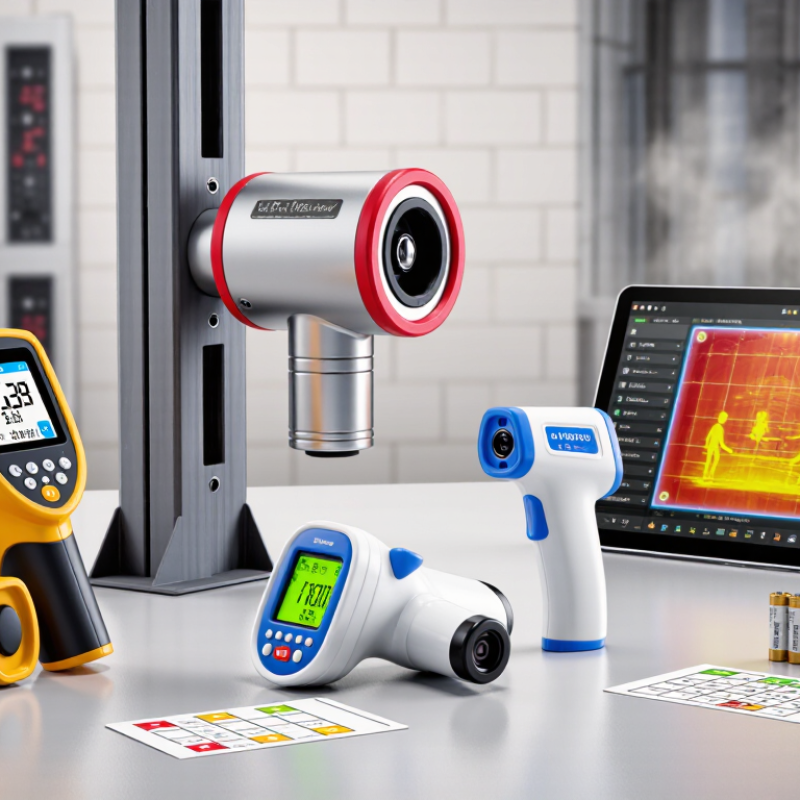
This guide examines leading infrared thermometer types, including handheld models, fixed industrial sensors, medical units, food-safe designs, and smart devices with data connectivity. It considers practical details such as emissivity adjustment, response time, distance-to-spot ratio, optical targeting, display readability, and battery performance. A bright laser point may help workers aim at a distant pipe, while a wide field of view may suit quick checks across a chilled storage area. Small specifications can change real results.

Accuracy needs context. Reflective metal, steam, dust, moving surfaces, and changing room temperatures can affect readings. Buyers should review calibration evidence, operating limits, warranty support, and regional compliance requirements before purchase. Product claims still need verification. Even experienced users can misread a surface.

The 2026 market also brings Bluetooth reporting, thermal imaging, rechargeable power, and improved sensor stability. These features may save time, but they can increase cost and training needs. This overview connects technical performance with daily purchasing decisions. It aims to help importers, distributors, engineers, safety teams, and facility managers select reliable tools for their actual environments. Use the specifications carefully. Measure twice when conditions are uncertain.
2026 Top Infrared Thermometer Types for Global Buyers

Infrared Thermometer Basics and Core Measurement Principles

2026 Top Infrared Thermometer Types for Global Buyers

Infrared thermometers measure thermal radiation from a surface without physical contact. A sensor receives infrared energy and converts it into a temperature reading. Non-contact models suit skin, machinery, food, and electrical panels. Ear thermometers measure heat near the eardrum and require careful positioning. Industrial models often cover wider temperature ranges.

Emissivity is the core measurement principle. It describes how efficiently a surface releases infrared energy. Matte, dark surfaces usually provide steadier readings than shiny metal. Reflections can mislead the sensor, especially near hot lamps or polished pipes. The distance-to-spot ratio also matters. A larger distance may measure the surrounding area instead of the target. The reading may look exact, yet the method can still be wrong.

Tips: Keep the lens clean and let the thermometer reach room temperature before use. Aim at a flat surface, not an edge. Respect the stated distance range. For body measurements, avoid sweat, drafts, heavy clothing, and direct sunlight. Compare unusual results with a trusted reference method. Calibration should follow documented procedures and suitable standards. Remember that infrared devices measure surface temperature, not internal temperature. Even experienced users can overlook room airflow or incorrect emissivity settings. That small oversight can change the result.


Major Infrared Thermometer Types for Different Use Cases

The 2024 MarketsandMarkets report estimates the infrared thermometer market will grow from about USD 1.2 billion in 2023 to USD 1.7 billion by 2028. This expansion reflects wider demand across healthcare, manufacturing, food processing, and building inspection. Yet one type rarely serves every application well.

Forehead thermometers support fast screening in clinics, schools, and workplaces. They are convenient, but sweat, drafts, and incorrect distance can distort readings. Ear thermometers can offer closer core-temperature estimates, especially for trained clinical users. Age, earwax, and positioning still matter.

Spot infrared thermometers suit electrical panels, motors, ovens, and cold-chain checks. A technician can scan a bearing from a safer distance, but shiny metal may reflect surrounding heat. Fixed infrared sensors provide continuous monitoring on production lines. Thermal imaging cameras add spatial detail, helping users identify uneven heating across walls, machinery, or storage rooms. They cost more and require stronger interpretation skills.

The FDA advises users to follow distance, environment, and positioning instructions for non-contact thermometers. For medical devices, IEC 80601-2-59 and ASTM E1965 offer useful performance references. Buyers should verify calibration procedures, emissivity settings, response time, and stated accuracy. A lower-cost model may appear practical, but poor training can erase that advantage. Reports provide market direction, not a purchasing decision. Real operating conditions remain the harder test.

Accuracy, Range, Speed, and Environmental Performance Compared

2026 Top Infrared Thermometer Types for Global Buyers

Accuracy depends on more than the number shown on the screen. Emissivity, distance, surface texture, and ambient temperature can shift results. A matte rubber surface usually reads more reliably than polished metal. In field inspections, I check the target with contact equipment when the reading affects safety or product quality. Look for clear accuracy specifications, adjustable emissivity, and calibration records traceable to recognized laboratories.

Measurement range should match the real task, not an impressive catalog figure. Food storage, electrical panels, machinery, and high-temperature processes require different limits. A narrow-range model may provide better resolution for routine inspections. A wide-range unit offers flexibility, but its accuracy can weaken near the extremes.

Response speed also matters. A reading captured in one second helps when surfaces move or temperatures change quickly. Still, fast does not always mean dependable.

Environmental performance is often overlooked. Dust, moisture, cold warehouses, direct sunlight, and condensation can influence operation. Choose equipment with a suitable ingress rating, a readable display, and batteries that tolerate local conditions. Tropical users should test repeated measurements after humidity exposure. Cold-region teams may need insulated storage and slower start-up checks. I have seen experienced operators trust one quick scan too much. That habit creates uncertainty. Repeating the measurement from two distances is simple, though not always convenient. Calibration intervals also need review, especially after drops, heavy use, or sudden climate changes.

Global Buyer Guide to Features, Standards, and Certifications

For global buyers, infrared thermometers now include forehead, ear, handheld, fixed-mount, and industrial types. Each serves a different measurement scene. Forehead models support quick screening, while ear models can improve clinical repeatability. Handheld devices suit warehouses, laboratories, and maintenance teams. Fixed-mount units help monitor repeated readings at entrances or production lines. Grand View Research estimates the infrared thermometer market may grow at roughly 7% annually through 2030. That forecast signals demand, but it does not prove every model is accurate.

Check the measurement range, response time, emissivity setting, memory, display visibility, and calibration method. For medical use, review IEC 80601-2-56 and ASTM E1965 requirements. Ear thermometers may also require EN 12470-5 alignment. A CE mark can indicate European market conformity, but it is not an accuracy certificate. Buyers should verify the declaration, test laboratory, product model, and certificate scope. In the United States, medical devices may require FDA clearance, depending on intended use. Requirements differ by destination.

Tips: Request a sample and compare ten readings against a calibrated reference. Test across skin tones, room temperatures, and operator distances. Keep the forehead dry. Small handling errors matter. Check calibration intervals and service support before ordering. Some supplier documents look complete, yet omit uncertainty data or software version details. That gap deserves a written question.

2026 Selection Trends Across Medical, Industrial, and Consumer Markets

2026 Top Infrared Thermometer Types for Global Buyers

2026 Selection Trends Across Medical, Industrial, and Consumer Markets

Infrared thermometer selection is becoming more application-specific in 2026. Grand View Research’s 2024 market assessment estimated the global infrared thermometer market at about USD 1.3 billion in 2023. It also projected steady growth through 2030. Medical buyers increasingly prioritize clinical validation, repeatability, and hygienic operation. Devices aligned with ISO 80601-2-56 or ASTM E1965 offer a stronger technical reference. However, compliance markings alone do not guarantee dependable readings.

Medical Market Infrared thermometer selection is becoming more application-specific in 2026. Grand View Research’s 2024 market assessment estimated the global infrared thermometer market at about USD 1.3 billion in 2023. It also projected steady growth through 2030. Medical buyers increasingly prioritize clinical validation, repeatability, and hygienic operation. Devices aligned with ISO 80601-2-56 or ASTM E1965 offer a stronger technical reference. However, compliance markings alone do not guarantee dependable readings.

Industrial Market Industrial demand is moving toward rugged, non-contact instruments. Maintenance teams need wider temperature ranges, adjustable emissivity, and clear displays in dusty workshops. Thermal inspection can reveal overheated bearings before visible damage appears. Still, shiny metal surfaces can produce misleading results. Practical training matters more than a crowded specification sheet. The International Energy Agency’s industrial efficiency reports continue to emphasize monitoring as a key route to reducing energy waste.

Consumer Market Consumer models are becoming simpler, faster, and more connected. Retail buyers often value fever alerts, memory storage, and one-button operation. A 2024 MarketsandMarkets report identified healthcare, manufacturing, and residential use as major growth areas for infrared sensing equipment. Yet consumer expectations can be unrealistic. A quick forehead scan cannot replace a clinical assessment. Ambient temperature, sweat, distance, and positioning still influence accuracy. In real purchasing work, the best model is not always the most advanced. It is the one users can operate correctly, repeatedly, and safely.

Members of