Choosing among the 2026 Top Industrial Rigging Suppliers requires more than comparing prices, catalogs, or polished websites. A supplier may promise fast delivery. Your site needs verified capacity, traceable materials, trained personnel, and practical lifting support. Grand View Research identifies steady growth in the global lifting equipment market, driven by construction, manufacturing, energy, and infrastructure investment. MarketsandMarkets also reports stronger demand for connected lifting systems, inspection records, and predictive maintenance. These trends matter, but market growth does not guarantee supplier quality.
James Headley, a recognized rigging consultant and author, has emphasized, “The lift plan is only as good as the information used to create it.” That principle belongs at the center of supplier selection. Ask for proof-load documentation, inspection procedures, sling identification, and application guidance. Examine how the supplier responds when a load has an unusual center of gravity or limited headroom. A reliable partner should discuss angles, edge protection, connection points, and environmental conditions before recommending hardware.
Look beyond the brochure. Request a sample inspection report. Visit the warehouse if possible. Check whether replacement parts can arrive before a damaged sling stops production. OSHA’s lifting and rigging guidance repeatedly stresses competent personnel, proper inspection, and safe operating practices. Yet one weakness remains easy to miss: many buyers evaluate products, not the supplier’s field experience. That is an imperfect approach. This guide compares technical capability, documentation, service response, and long-term reliability, helping buyers choose an Industrial Rigging supplier with fewer assumptions and fewer expensive surprises.
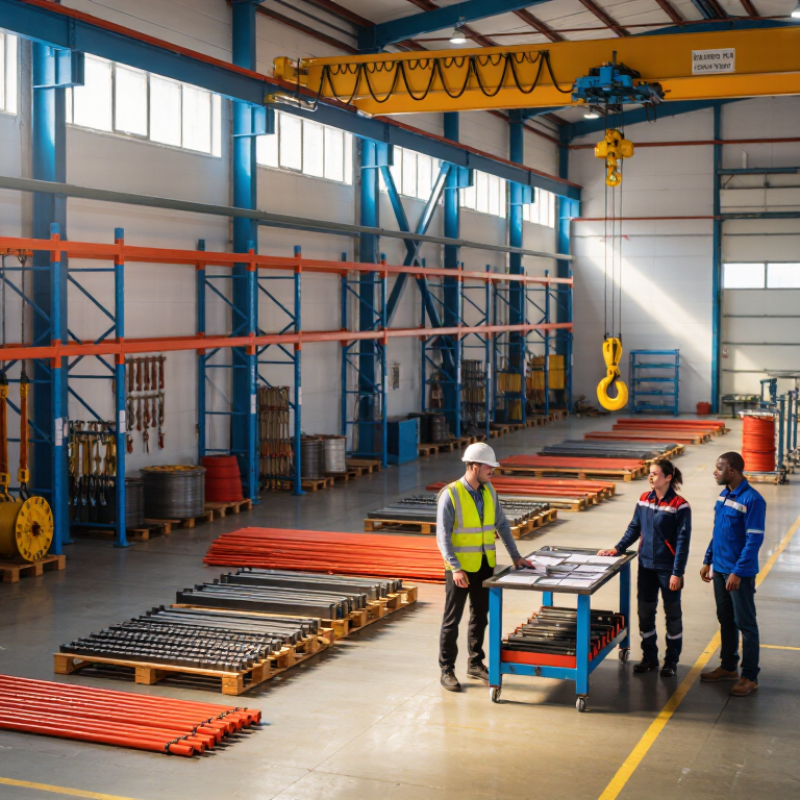
2026 Top Industrial Rigging Suppliers How to Choose?
Industrial rigging suppliers provide more than wire rope, lifting slings, shackles, and hoists. Reliable suppliers help engineers match equipment with load weight, lifting angles, working conditions, and usage frequency. A small angle mistake can sharply increase sling tension. That detail matters on a busy factory floor.
Experienced suppliers also offer load charts, inspection records, product traceability, and practical training. Their specialists should explain working load limits without hiding technical details. Ask how they test equipment, document defects, and handle replacement recommendations. Site experience matters here. A supplier may offer excellent products but provide weak guidance. That gap can create downtime, confusion, or unsafe decisions. I have found that clear documentation is often as valuable as the hardware itself.
Tips: Check certifications, inspection procedures, material quality, delivery reliability, and after-sales support. Request evidence, not promises. Compare how each supplier responds to an unusual lifting plan. If the answer sounds rushed, pause. Also review storage advice, maintenance guidance, and emergency availability. Cost deserves attention, but the cheapest option can become expensive after one damaged sling or delayed lift. No supplier gets every situation perfect. Buyers should still question assumptions, verify specifications, and involve qualified lifting personnel before work begins.
| Supplier Capability | Typical Products or Services | Common Technical Range | Compliance Evidence to Request | Why It Matters | Recommended Selection Check |
|---|---|---|---|---|---|
| Wire Rope and Cable Assemblies | Wire rope slings, socketed assemblies, cable-laid slings, end fittings and replacement components | Common rope diameters: approximately 6–52 mm; working load limit depends on construction, grade, hitch and design factor | Material certificates, proof-test records, rated capacity charts, inspection instructions and traceable identification | Correct rope construction and termination directly affect lifting capacity, fatigue resistance and service life | Confirm rope grade, diameter, sling configuration, hitch type, length tolerance and required safety factor |
| Synthetic Slings | Web slings, round slings, endless slings, protective sleeves and edge guards | Typical widths: approximately 25–300 mm; capacities vary by material, width, hitch and lifting angle | Rated capacity tag, sling identification, inspection criteria, fiber or webbing specification and test documentation | Low weight and flexibility improve handling, while abrasion, heat, chemicals and sharp edges can cause rapid damage | Check operating temperature, chemical exposure, edge protection, sling angle and tag legibility |
| Shackles, Hooks and Connecting Hardware | Anchor shackles, screw-pin shackles, safety hooks, master links, swivels and connecting links | Common working load limits range from under 1 tonne to more than 100 tonnes, depending on hardware type and size | Permanent markings, working load limit, batch traceability, dimensional drawings and proof-load or test certificates | Hardware transfers load between the lifting device and the load; incorrect pin, hook or angle selection can cause disengagement | Verify pin diameter, throat opening, latch condition, side-loading restrictions and compatibility with sling fittings |
| Hoists and Manual Pulling Equipment | Lever hoists, hand chain hoists, ratchet pullers, trolleys and load-positioning equipment | Common capacities: approximately 0.25–20 tonnes; lifting height and chain length are configured for the application | Rated capacity, operating instructions, overload protection details, inspection schedule and maintenance records | Controlled lifting and pulling reduce manual handling risks and help maintain stable load movement | Assess load weight, lift height, travel distance, duty cycle, anchorage and required load control |
| Heavy-Lift and Engineered Rigging | Spreader beams, lifting beams, custom frames, modular skidding systems and engineered lifting points | Designed for project-specific loads; capacity depends on span, center of gravity, deflection limits and connection geometry | Signed engineering calculations, fabrication drawings, weld records, non-destructive testing and load-test reports | Engineered equipment manages uneven loads, restricted clearances and complex centers of gravity more safely | Require a documented lift plan, verified center of gravity, design load cases and approval by a qualified engineer |
| Inspection and Certification | Pre-use inspections, periodic examinations, tagging, inventory audits, repair assessment and retirement recommendations | Inspection intervals are risk-based and may be set by regulations, manufacturer instructions, site procedures and usage severity | Signed inspection reports, asset register, photographs, defect classifications and corrective-action records | Inspection identifies deformation, cuts, corrosion, heat damage, broken wires, illegible tags and other rejection conditions | Choose a provider with competent inspectors, clear rejection criteria and digitally traceable records |
| Training and Lift Planning | Rigger training, signal-person training, toolbox talks, lift-plan preparation and on-site supervision | Training commonly covers load estimation, sling angles, center of gravity, communication, exclusion zones and inspection | Instructor qualifications, attendance records, assessment results, course outline and refresher schedule | Competent personnel reduce miscommunication, overloading, uncontrolled rotation and unsafe load paths | Check whether training reflects the actual equipment, regulations, language needs and site hazards |
| Availability and Technical Support | Stocked standard equipment, custom fabrication, emergency replacement, application guidance and after-sales service | Standard items may be available within days; engineered or custom equipment commonly requires several weeks | Written quotation, delivery commitment, warranty terms, spare-parts policy and technical contact details | Reliable support reduces downtime and helps prevent unsuitable substitutions during urgent lifting work | Compare total cost, delivery reliability, documentation quality, replacement availability and response time |