Choosing the right Felt Underlay supplier is not simply a pricing exercise. Global buyers must examine material quality, production consistency, technical documentation, and delivery reliability. A dense felt layer can soften footsteps beneath timber, laminate, or carpet. It can also help reduce minor subfloor imperfections. Yet performance depends on thickness, fiber composition, installation conditions, and the flooring system above it.
Flooring educator Brett Miller captures this practical concern with a simple observation: “The floor beneath your floor matters.” That principle guides this review of the 10 Best Felt Underlay Suppliers for Global Buyers. Each supplier should be assessed through verifiable samples, published specifications, factory experience, and responsive communication. Look for details such as recycled fiber content, compression resistance, moisture behavior, acoustic test results, and available roll sizes. Do not ignore packaging. A damp or crushed roll may arrive unusable after a long shipment.
Small details matter.
Experienced purchasing teams often request samples before approving bulk orders. They compare the felt underlay under real flooring, not only on a specification sheet. Some suppliers offer excellent technical support but limited export capacity. Others provide attractive prices but inconsistent density between batches. That weakness is easy to miss.
This guide is not a promise that one supplier fits every project. Regional standards, climate, flooring type, and installation skill can change the outcome. Buyers should verify current certifications and conduct their own suitability checks. A careful decision may take longer, but replacing defective underlay costs far more than reviewing evidence early.
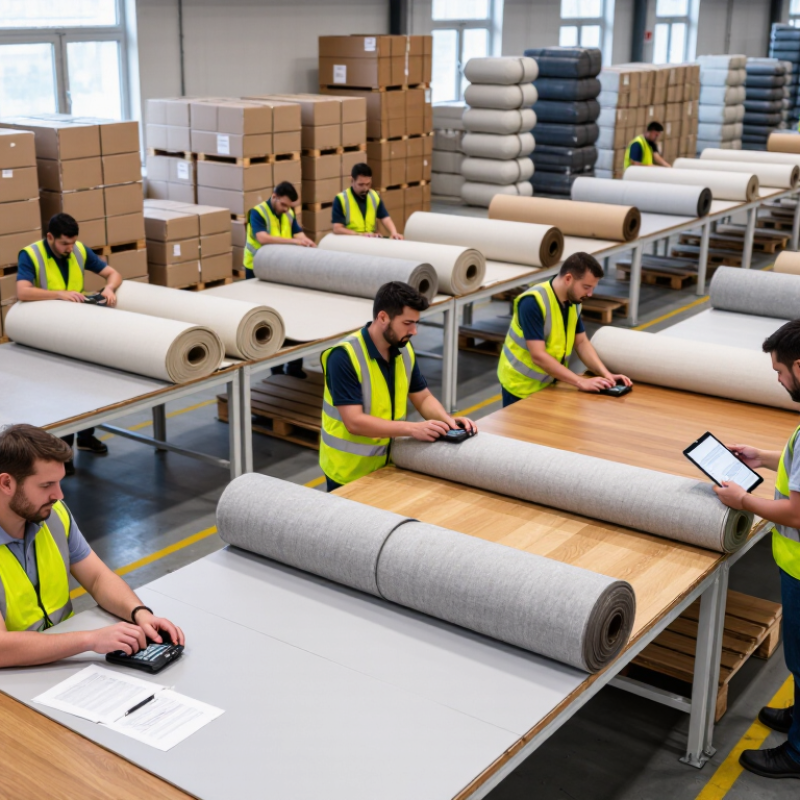
For global buyers, felt underlay quality begins with two measurable details: thickness and density. A 10–15 mm layer can soften footfall, reduce minor floor irregularities, and improve carpet comfort. Density between 1,000 and 2,000 g/m² usually offers a useful balance between resilience and cushioning. However, thicker does not always mean better.
Suppliers should provide technical data for each production batch. Ask for actual thickness under pressure, density tolerance, fiber composition, moisture content, and compression recovery. A reliable supplier can explain testing methods, not merely send attractive photographs. Request samples measuring at least 30 by 30 centimeters. Place them beneath matching carpet sections and check edge stability, odor, flattening, and cutting accuracy.
Packaging deserves attention too. Dense felt can absorb moisture during long sea transport. Wrapped rolls, protected pallets, and clear storage instructions reduce avoidable damage. I have seen buyers focus heavily on price, then discover that compressed material recovered unevenly. That mistake is expensive. Supplier reviews, factory audits, and independent laboratory reports strengthen purchasing decisions, although none removes every risk. Performance also depends on the carpet, floor type, humidity, and installation method. A 15 mm underlay may feel luxurious in one room but create clearance problems near doors. Small details matter.

A reliable felt underlay supplier should provide more than attractive pricing. During procurement reviews, I compare fiber composition, density, thickness, roll width, and compression recovery. These details affect comfort, acoustic performance, and installation quality. A dense 10-millimeter roll may feel stable underfoot, while a softer option may suit residential rooms better. Small differences matter.
The strongest manufacturers usually offer traceable raw materials, consistent batch records, and clear technical data sheets. Ask for samples from several production lots, not just one polished sample. A single piece can hide uneven bonding or weak edges. Request test evidence for moisture resistance, fire behavior, emissions, and dimensional stability where required by the project. Independent laboratory reports add useful confidence, although paperwork alone cannot replace factory checks.
Production capacity also deserves close attention. Confirm monthly output, packaging protection, lead times, and quality inspection procedures before signing a supply agreement. Some factories communicate quickly but struggle with repeat orders. Others produce excellent rolls but respond slowly when specifications change. That weakness matters. A practical shortlist should include suppliers willing to discuss recycled content, custom thickness, private labeling, and corrective actions. I would also inspect cutting accuracy and roll cleanliness. These points seem minor, yet installers notice them immediately. No supplier is perfect, and a careful buyer should record both strengths and unresolved concerns.
10 Best Felt Underlay Suppliers for Global Buyers
Acoustic Performance: ISO 10140, ISO 16283-2, and 25–35 dB Impact Gains
Felt underlay can reduce footfall noise, dropped objects, and chair movement beneath hard flooring. For global buyers, acoustic claims need more than a large decibel figure. ISO 10140 provides laboratory methods for testing building elements, including floor assemblies. These controlled tests help compare products under repeatable conditions.
ISO 16283-2 measures impact sound insulation in completed buildings. It reflects site conditions, room volume, junctions, and installation quality. A reliable supplier should provide test reports showing the tested floor construction, underlay thickness, density, and impact source. Ask whether the reported 25–35 dB gain refers to ΔLw, a single-number rating, or a different measurement. These values are not interchangeable.
The floor assembly matters greatly. Concrete slabs, timber joists, laminate, and engineered boards produce different results. A thick felt layer may improve impact performance, yet compress under heavy furniture. A thinner product may install neatly but deliver weaker cushioning. There is no universal best option.
Look for suppliers with traceable batches, clear installation drawings, and independent laboratory documentation. Check edge gaps, seams, moisture limits, and compression recovery. Small installation errors can reduce the expected benefit. A clean datasheet is useful, but it cannot replace an on-site measurement. Even a strong 30 dB result may change in a real apartment.
Comparative procurement table using anonymous supplier profiles. The specification bands represent common commercial ranges for recycled-fiber and textile-felt underlays; project-specific laboratory and field reports should be requested before approval.
| Anonymous Supplier Profile | Typical Fiber / Construction | Nominal Thickness | Typical Density | Indicative Impact Improvement ΔLw | Laboratory Test Basis | Field Test Basis | Compression / Recovery Range | Typical Fire Classification | Supply Format | Common Export Documentation |
|---|---|---|---|---|---|---|---|---|---|---|
| Supplier Profile 01 | Recycled PET, needle-punched nonwoven | 5–8 mm | 110–140 kg/m³ | 25–28 dB | ISO 10140-3 laboratory impact-sound testing; rating commonly reported under ISO 717-2 | ISO 16283-2 field impact-sound measurement, with ISO 717-2 rating where applicable | Approx. 85–92% thickness recovery after short-term loading | Efl or Efl-s1, depending on floor assembly | Rolls, typically 1.0–2.0 m wide | Technical data sheet, SDS, packing list, certificate of origin |
| Supplier Profile 02 | Recycled textile fibers, thermally bonded felt | 8–10 mm | 130–170 kg/m³ | 27–31 dB | ISO 10140-3 test report for a defined concrete or timber floor build-up | ISO 16283-2 on-site measurement; results vary with room volume and flanking paths | Approx. 80–90% thickness recovery after installation conditioning | Efl-s1 to Cfl-s1, subject to formulation and covering | Rolls or cut sheets | TDS, installation guide, test report, commercial invoice |
| Supplier Profile 03 | Recycled PET and polypropylene blend, needled felt | 6–12 mm | 90–125 kg/m³ | 25–30 dB | ISO 10140-3 with impact source and floor-covering assembly identified | ISO 16283-2 field testing recommended for renovation projects | Approx. 88–94% recovery under moderate compressive loading | Efl is common; higher classifications require assembly testing | Large rolls, slit rolls, custom die-cut pieces | TDS, SDS, REACH-related declaration, packing list |
| Supplier Profile 04 | Mixed recycled textile fibers, dense acoustic mat | 10–15 mm | 150–220 kg/m³ | 29–35 dB | ISO 10140-3 laboratory test on a specified floating-floor system | ISO 16283-2 field result depends on substrate, junctions and workmanship | Approx. 75–88% recovery; higher density generally supports load stability | Cfl-s1 or Efl-s1 when tested as a complete floor system | Rolls, panels or pre-cut mats | Declaration of performance where applicable, TDS, test report, COO |
| Supplier Profile 05 | Wool and synthetic-fiber blend, needle-punched felt | 7–10 mm | 100–160 kg/m³ | 26–30 dB | ISO 10140-3 results reported for the tested floor-covering combination | ISO 16283-2 suitable for verifying installed impact performance | Approx. 82–91% recovery, depending on wool content and binder system | Efl-s1 is a commonly targeted classification | Rolls and narrow-width rolls | Fiber declaration, TDS, SDS, test report, origin documents |
| Supplier Profile 06 | High-density recycled PET, laminated acoustic felt | 5–7 mm | 160–200 kg/m³ | 25–29 dB | ISO 10140-3 test data generally supplied for laminate, adhesive and substrate as a system | ISO 16283-2 field verification recommended where airborne and impact paths are critical | Approx. 80–90% recovery with good dimensional stability | Efl-s1 or Cfl-s1 depending on facing and adhesive | Rolls, sheets or adhesive-backed formats | TDS, installation instructions, SDS, batch traceability documents |
| Supplier Profile 07 | Recycled cotton and polyester, resilient textile underlay | 8–12 mm | 120–180 kg/m³ | 27–32 dB | ISO 10140-3 laboratory measurement for the complete floor assembly | ISO 16283-2 field testing should include representative rooms and edge conditions | Approx. 78–90% recovery; permanent set must be checked under furniture loads | Efl-s1 is typical for tested flooring assemblies | Rolls with overlap or butt-joint installation | TDS, SDS, installation guide, quality inspection record |
| Supplier Profile 08 | Polyester staple fiber, mechanically bonded acoustic mat | 10–20 mm | 80–130 kg/m³ | 28–35 dB | ISO 10140-3 results require the exact thickness, floor finish and ceiling condition to be stated | ISO 16283-2 can confirm installed performance but does not replace laboratory product testing | Approx. 82–93% recovery in low-to-medium load applications | Efl-s1 is common; classification is assembly-dependent | Rolls, cushions or modular panels | TDS, SDS, test report, packing list, loading photographs |
| Supplier Profile 09 | Recycled PET with resilient backing, composite felt mat | 6–10 mm | 140–190 kg/m³ | 26–32 dB | ISO 10140-3 laboratory impact test with backing and floor finish identified | ISO 16283-2 field measurement, normally evaluated together with ISO 717-2 | Approx. 80–92% recovery and low lateral movement when correctly installed | Cfl-s1 to Efl-s1 depending on composite layers | Rolls, sheets and project-specific cut kits | TDS, SDS, installation method, conformity statement |
| Supplier Profile 10 | Multi-fiber recycled felt, heavy-duty commercial grade | 8–15 mm | 170–230 kg/m³ | 30–35 dB | ISO 10140-3 testing on a floating or resiliently supported floor construction | ISO 16283-2 field test recommended for offices, apartments and hospitality projects | Approx. 75–87% recovery with strong resistance to long-term compression | Cfl-s1 or Efl-s1 when supported by a valid system test | Rolls, panels and CNC-cut components | Test report, TDS, SDS, batch certificate, origin and export documents |
For global felt buyers, compliance should be checked before price and sample appearance. REACH screening helps identify restricted chemicals in fibers, dyes, adhesives, and finishing agents. The European Chemicals Agency’s 2024 enforcement report found 18% of inspected products breached chemical safety rules. That figure is difficult to ignore.
Ask each supplier for recent laboratory reports, not only declarations. OEKO-TEX certification can support textile safety claims, but buyers should verify the certificate number, product scope, and expiry date. A certificate for fabric may not cover an adhesive backing. That detail is often missed.
Request batch traceability, fiber percentages, and production-country records. Suppliers with documented testing usually answer technical questions more clearly.
Recycled-fiber content needs equal attention. Textile Exchange reported global fiber production at about 132 million tonnes in 2023, with continued growth expected toward 2030. Recycled inputs can reduce dependence on virgin resources, yet “recycled” is not automatically sustainable. Pre-consumer and post-consumer fibers have different traceability risks.
Ask for transaction certificates or mass-balance evidence where applicable. Also check whether recycled fibers affect thickness, compression recovery, odor, or cutting performance.
In practice, one felt roll may pass chemical testing but vary noticeably between batches. A stronger supplier combines verified content claims, repeatable specifications, and independent testing. No system is perfect, and that uncertainty should appear in the purchasing review.
A reliable felt underlay supplier should be judged through a consistent buyer evaluation matrix, not a polished catalog. Record MOQ by thickness, density, width, and packaging unit. A 500-square-meter MOQ may suit a distributor, but it can burden a trial order. Ask for a sample roll and a production reference. Confirm whether lead time covers material allocation, cutting, packing, and export documents. Short promises need evidence.
Compare Incoterms with your actual logistics capability. FCA can work when your forwarder controls pickup and export coordination. FOB may suit containerized sea freight, while CIF simplifies port delivery but leaves destination charges unclear. DDP looks convenient, yet tax and customs responsibilities must be written precisely. Request a dated production schedule. A missed vessel can erase a small price advantage.
A five-year warranty deserves line-by-line review. It should identify compression loss, delamination, odor, moisture damage, and installation limits. Ask how claims are measured, which documents are required, and whether replacement or credit is offered. Keep retained samples from each lot. This supports fair comparison later. One weakness remains: warranty length alone proves little. A supplier with strong testing records but a higher MOQ may be safer than the cheapest option. Still, buyers should review the matrix quarterly, because freight costs, capacity, and material availability change.
Buyer Evaluation Matrix: MOQ, Lead Time, Incoterms, and 5-Year Warranty Coverage
This anonymized benchmark compares ten supplier profiles commonly available in international felt underlay sourcing. Lower MOQ and shorter lead time improve purchasing flexibility, while 5-year warranty coverage and flexible Incoterms reduce long-term procurement risk.
| Supplier Profile | MOQ | Lead Time | Typical Incoterms | 5-Year Warranty |
|---|---|---|---|---|
| Profile A | 500 pcs | 18 days | FOB, CIF | Yes |
| Profile B | 1,000 pcs | 25 days | EXW, FOB | No |
| Profile C | 300 pcs | 15 days | FOB, CIF, DDP | Yes |
| Profile D | 2,000 pcs | 30 days | EXW, FOB | No |
| Profile E | 800 pcs | 20 days | FOB, CIF | Yes |
| Profile F | 1,500 pcs | 28 days | EXW, FOB, CIF | No |
| Profile G | 600 pcs | 22 days | FOB, DDP | Yes |
| Profile H | 2,500 pcs | 35 days | EXW | No |
| Profile I | 400 pcs | 17 days | FOB, CIF, DDP | Yes |
| Profile J | 1,200 pcs | 26 days | FOB, CIF | Yes |
Please share your email with us to see your results.