Choosing among the top 360 degree swivel stand manufacturers requires more than comparing prices and polished product photos. Buyers must examine rotation smoothness, load capacity, locking strength, base stability, and long-term wear. A stand may turn beautifully on day one, then develop side-to-side movement after months of repeated use. That detail matters.
Mechanical engineer and mounting-systems consultant David P. Smith explains, “A reliable swivel stand should move easily, stop firmly, and remain stable under repeated daily use.” This practical standard helps separate serious manufacturers from short-term suppliers. Strong companies usually provide material specifications, torque data, quality-control procedures, and realistic installation guidance. They also explain whether their 360 degree swivel stand uses steel bearings, polymer bushings, or a sealed rotating plate. These differences affect noise, maintenance, and service life.
This article examines manufacturers through an experience-based lens. It considers factory capabilities, customization options, testing methods, warranty support, and industry reputation. Product consistency deserves attention, especially when stands support monitors, displays, cameras, or retail equipment. A low-cost model can appear attractive. However, unstable movement can create service problems later. That assumption can be wrong when a supplier offers excellent testing and traceable materials. Buyers should still verify every claim. A catalogue is not proof. Sample testing, customer references, and clear technical drawings reveal more. Some manufacturers also overlook cable routing, creating a messy installation around the rotating joint. It is a small flaw, but it affects daily usability. The following overview aims to identify dependable manufacturers while acknowledging that no supplier fits every application.
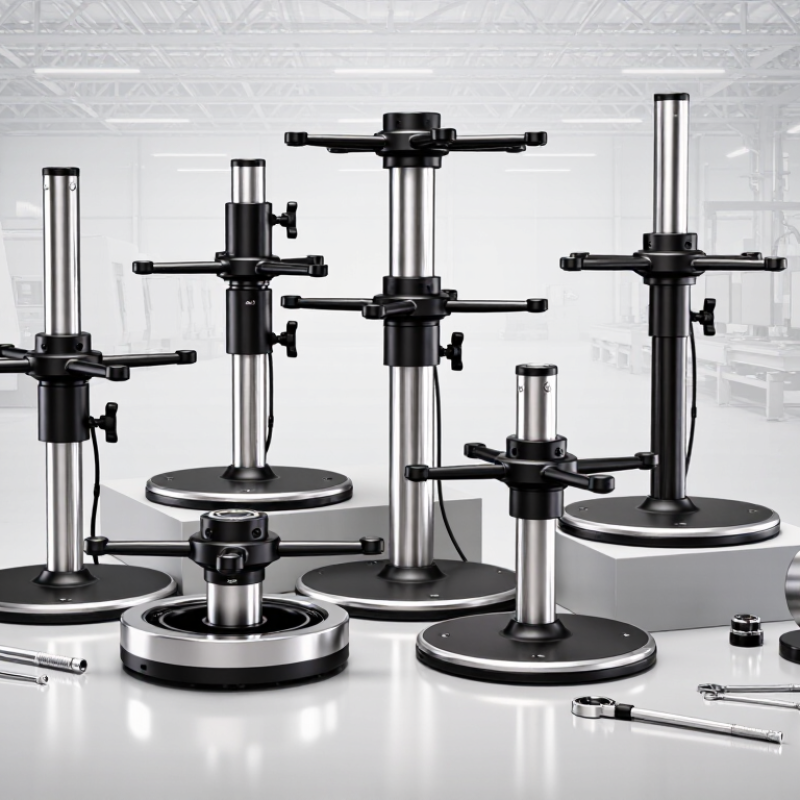
A 360-degree swivel stand is a support platform that rotates through a full circle. It can hold a display, monitor, camera, tool, or compact fixture. The stand usually combines a base, rotating plate, central shaft, and bearing assembly. Some models also include a locking knob or indexed positions. These parts keep movement controlled instead of loose or unpredictable.
When force reaches the platform, the bearing transfers the load around the shaft. This reduces friction and allows smooth rotation with modest hand pressure. The base spreads weight across the table or floor. A locking mechanism then fixes the chosen angle. In practical use, I check for wobble by turning the platform slowly and pressing each edge. Uneven resistance often indicates poor alignment, a damaged bearing, or an overloaded stand. Small details matter.
Manufacturers with strong engineering practices publish load ratings, rotation limits, material specifications, and maintenance guidance. Look for steel or reinforced aluminum where stiffness is important. Rubber feet can reduce sliding and vibration on polished surfaces. However, a higher weight rating does not guarantee better operation. The load may sit too high, creating tipping force during rotation. I once underestimated this effect on a tall fixture; the stand turned smoothly but felt unstable. That experience changed my selection process.

A 360-degree swivel stand uses a rotating interface—commonly a bearing, thrust washer, or turntable mechanism—to allow continuous horizontal movement around a fixed vertical axis. The chart models one complete rotation at a constant speed of 6 revolutions per minute, equal to 36 degrees per second.
At 6 rpm, the stand completes one 360-degree cycle in 10 seconds. The rotation angle increases continuously while the base remains stationary and the supported platform turns around the central axis.
A high-quality 360-degree swivel stand should move smoothly, remain stable, and survive repeated adjustment. In practical inspections, the best units turn without grinding or sudden drops. The base should resist tipping when a screen rotates off-center. This detail is easy to overlook.
Load capacity is the foundation. A responsible manufacturer states the tested weight limit, mounting pattern, and compatible screen dimensions. ISO 9241-5 emphasizes adjustable workplace equipment and neutral viewing positions. A swivel mechanism supports this goal when it offers controlled movement, not excessive freedom. A loose joint soon becomes a safety concern.
Materials also reveal quality. Thick steel, reinforced joints, and corrosion-resistant coatings generally provide better long-term performance. UL 1678 covers safety considerations for carts and stands used with television equipment. Buyers should seek documented testing, not vague claims. Grand View Research’s 2023 office furniture analysis valued the global market at about 63.3 billion dollars in 2022, showing strong demand for functional workspace products. Yet market growth does not guarantee better engineering. Some stands still use thin plates and undersized fasteners. That is where careful inspection matters. Check the locking system, cable routing, rotation range, and base contact points before choosing a manufacturer. A beautiful finish cannot compensate for unstable movement.
Top 360 Degree Swivel Stand Manufacturers
How to Evaluate Top 360-Degree Swivel Stand Manufacturers
Evaluating swivel stand manufacturers requires more than comparing catalog photos and prices. Start with the load rating, rotation range, and intended operating environment. A reliable supplier should provide test data for weight capacity, tilt stability, and repeated rotation cycles. Ask whether the rating reflects static use or continuous movement. The difference matters.
Inspect the swivel mechanism closely. Smooth rotation usually depends on accurate machining, suitable bearings, and controlled assembly tolerances. Request material specifications for the base, shaft, fasteners, and contact surfaces. Stainless steel may resist corrosion, while reinforced polymers can reduce weight. Neither option is perfect for every application. Sample testing helps reveal wobble, noise, friction, and uneven resistance.
Review the manufacturer’s quality system and production records. Look for incoming material checks, assembly inspections, and documented final testing. Clear drawings, inspection reports, packaging details, and traceable batch numbers show stronger process control. Factory audits can verify equipment, worker training, and actual production capacity. Certifications should match the product and destination market, not simply decorate a sales file. Ask about tooling ownership, replacement parts, warranty handling, and delivery consistency. A low quotation may hide weak packaging or unstable tolerances. I would also test several samples from different batches, because one excellent unit can create false confidence.
| Evaluation Dimension | What to Examine | Relevant Technical Benchmark | Suggested Weight | Verification Evidence | Evaluation Guidance |
|---|---|---|---|---|---|
| Load Capacity | Maximum permitted static load and the load distribution used during testing. | Rated capacity should exceed the actual equipment weight by a documented safety margin. | 20% | Load-test report, product specification sheet, and test setup details. | Give priority to suppliers that publish both working load and test load rather than a single unsupported figure. |
| Rotation Performance | Full 360-degree rotation, smoothness, stopping control, and resistance to unwanted movement. | Continuous rotation should be possible without binding, excessive play, or abnormal noise. | 15% | Demonstration sample, rotation-cycle records, and inspection of bearings or bushings. | Test the stand under its intended load, because unloaded rotation may not represent operating performance. |
| Bearing and Joint Durability | Wear resistance of bearings, bushings, shafts, joints, and locking components. | Repeated-cycle testing should reflect the expected service life and operating frequency. | 15% | Cycle-test data, maintenance instructions, replacement-part availability, and failure records. | Manufacturers with documented cycle testing and replaceable wear parts generally offer lower lifecycle risk. |
| Material Selection | Base material, shaft material, fastener grade, and suitability for the operating environment. | Material selection should match the required strength, corrosion exposure, temperature, and cleanliness conditions. | 12% | Material certificates, technical drawings, surface-treatment details, and incoming-inspection records. | Confirm that the material specification applies to the structural and rotating parts, not only the outer finish. |
| Manufacturing Precision | Dimensional accuracy, concentricity, flatness, hole position, and consistency between production batches. | Critical tolerances should be defined on controlled drawings and checked with calibrated equipment. | 10% | Quality-control plan, inspection reports, calibrated-measuring-equipment records, and sample approval. | Consistent tolerances help prevent vibration, uneven loading, installation problems, and premature wear. |
| Safety and Locking System | Mechanical locks, detents, brakes, anti-tip features, pinch-point protection, and fastener retention. | The stand should remain stable at the required positions and under the specified operating load. | 12% | Safety test results, risk assessment, user instructions, and physical inspection of locking parts. | Do not treat unrestricted rotation as sufficient; the locking method must suit the application and user workflow. |
| Surface Protection | Powder coating, plating, anodizing, stainless-steel finish, or other corrosion-control treatment. | Finish performance should correspond to the humidity, salt exposure, chemicals, and cleaning process involved. | 6% | Coating specification, adhesion results, thickness readings, and corrosion-test documentation when applicable. | Evaluate the complete assembly, including cut edges, fasteners, joints, and hidden surfaces. |
| Customization Capability | Ability to adapt mounting patterns, dimensions, load ratings, materials, locking angles, and finishes. | Custom changes should be supported by revised drawings, prototype validation, and documented approval. | 5% | Engineering-change procedure, sample-development records, CAD drawings, and prototype review. | Assess whether customization is controlled through engineering documentation rather than informal production changes. |
| Quality Management | Process control, traceability, nonconformance handling, final inspection, and corrective actions. | A documented quality-management system should define inspection points and responsibility for release decisions. | 3% | Quality certificates, audit reports, inspection standards, batch traceability, and corrective-action records. | Certification is useful, but actual process records and product traceability should also be reviewed. |
| Delivery and Supply Reliability | Lead time, production capacity, packaging, minimum order quantity, and continuity of supply. | Quoted lead times should be supported by capacity planning and realistic production milestones. | 2% | Production schedule, sample-to-mass-production timeline, packaging specification, and delivery history. | Compare total landed cost and supply risk, not only the initial unit price. |
Scoring method: assign each manufacturer a score from 1 to 5 for every dimension, multiply the score by the suggested weight, and compare the resulting weighted totals. Final requirements should be adjusted to the stand's load, environment, rotation frequency, safety needs, and applicable regulations.
Top 360 Degree Swivel Stand Manufacturers?
Leading manufacturers generally fall into three categories: display-mount specialists, office-equipment producers, and industrial fixture suppliers. Display-mount manufacturers focus on VESA compatibility, smooth rotation, and cable clearance. Office-equipment producers emphasize compact bases, adjustable viewing angles, and daily user comfort. Industrial suppliers usually prioritize steel thickness, sealed bearings, and higher load capacity.
Grand View Research reported continued growth in the global office furniture market, driven partly by ergonomic workplace demand. This supports stronger interest in monitor stands with height adjustment and full rotation. The U.S. Bureau of Labor Statistics also recorded millions of computer-based office jobs in recent employment data. That figure explains why stable, low-friction swivel mechanisms matter during long work sessions. Small details matter.
Product strength depends on the application. A display specialist may offer precise 360-degree rotation with locking intervals every 90 degrees. An office supplier may provide a weighted base, soft-touch edges, and tool-free adjustment. Industrial manufacturers often use powder-coated steel, reinforced plates, and replaceable bushings. Reports from the Consumer Product Safety Commission repeatedly stress stability and tip-over prevention for furniture products. Buyers should still verify testing evidence, not trust vague claims. In practice, some stands rotate smoothly at first, then develop play after repeated movement. That weakness deserves more attention.
Choosing a 360-degree swivel stand manufacturer starts with your product’s real working conditions. Measure load, rotation frequency, mounting space, and exposure to dust or moisture. A stand for a showroom tablet differs from one supporting industrial equipment. Ask for drawings, material grades, bearing details, and tested load data. Reliable manufacturers explain limits clearly. They do not hide behind vague claims. Details matter.
Review manufacturing experience through relevant case studies, sample units, and inspection records. Look for controlled machining, consistent finishes, and repeatable assembly. Request a sample before approving a large order. Test it yourself. Rotate it by hand, check wobble, listen for grinding, and inspect screw alignment. Also ask how the supplier manages tolerance changes and replacement parts. A polished catalog is not proof. I have seen attractive samples fail when production controls were unclear. That risk deserves a direct conversation, not hopeful assumptions.
Technical support should continue after delivery. Confirm packaging, lead times, warranty terms, quality checks, and communication responsibilities in writing. If you need custom height, locking positions, cable routing, or a specific finish, test those changes early. Start small. Compare total value rather than unit price alone. A cheaper stand may require more adjustments, returns, or field labor. Ask whether test reports match the final material and design. If answers remain incomplete, pause the order. Trust is built through evidence, though careful buyers can still miss one detail.
Please share your email with us to see your results.