What Are China Top 10 Compressor Tools Suppliers?
China’s compressor industry has become a practical sourcing destination for workshops, factories, mining sites, and maintenance contractors. Yet finding reliable Compressor Tools suppliers requires more than comparing prices. Product range, machining accuracy, material strength, delivery records, and after-sales support all influence purchasing results. A tool that looks solid in a catalogue may fail beside a hot compressor, oily gloves, or a crowded maintenance bench.
As compressed-air specialist Ron Marshall has observed, “The cheapest air is the air you do not use.” The same logic applies to tools: the best purchase reduces downtime, rework, and unsafe improvisation. This guide introduces China’s top 10 Compressor Tools suppliers through a buyer-focused review of manufacturing experience, certifications, export capability, customization, and customer feedback. It considers items such as valve tools, service kits, pullers, gauges, torque equipment, and specialized compressor maintenance sets.
No ranking is flawless. Supplier websites can be polished, while factory capacity may change quietly. Some companies excel at standard tools but struggle with small custom orders. Others offer attractive prices but provide limited technical documentation. Therefore, this overview should support due diligence rather than replace it. Buyers should request recent test reports, sample photos, production videos, warranty terms, and references from comparable industries. Small details matter. Ask about steel grade, surface treatment, dimensional tolerance, packaging, and replacement parts.
The following suppliers are assessed with practical expectations, not promotional language. Their strengths, limitations, and suitable applications are discussed clearly. That makes the list more useful for engineers, distributors, and maintenance teams seeking dependable Compressor Tools from China.
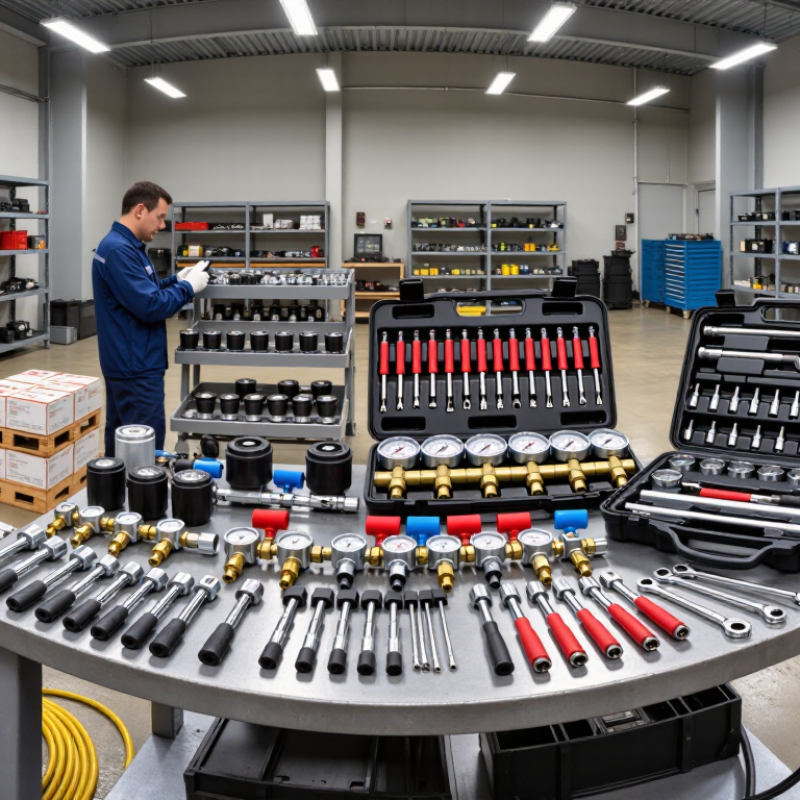
What Are Compressor Tools and Why Are They Important?
Compressor tools are practical instruments used to install, inspect, adjust, and repair compressed-air equipment. They include pressure gauges, torque wrenches, alignment tools, vibration meters, leak detectors, and specialized filter tools. Each tool answers a different maintenance question. Is pressure stable? Is the shaft aligned? Is air escaping through a damaged fitting? The answer should come from measurement, not guesswork.
In field service, a calibrated gauge can reveal pressure loss before production slows. A vibration meter may identify imbalance, loose bearings, or coupling problems. A torque wrench helps technicians tighten fasteners consistently, reducing damage from over-tightening. These details matter because compressors operate under heat, pressure, and repeated mechanical stress. Small errors can become expensive failures. Safety procedures matter too. Isolate energy, release stored pressure, and verify zero pressure before opening equipment. This is not a decorative checklist.
Reliable suppliers should provide clear specifications, calibration information, compatible sizes, and replacement support. Tool quality is more than polished metal. It includes readable scales, durable materials, documented testing, and instructions that technicians can actually follow. A low-cost tool may look attractive, yet inaccurate readings can mislead an entire repair. A common mistake is assuming one convenient tool fits every compressor. That assumption deserves scrutiny. Different models need different ranges, connections, and service methods. Good purchasing decisions begin with the compressor manual, operating pressure, workspace, and technician skill level. Even experienced teams should recheck measurements. Memory is useful, but it is not calibration.
How Were China’s Top Compressor Tool Suppliers Selected?
How Were China’s Top Compressor Tool Suppliers Selected?
The top ten were selected through a practical, evidence-based screening process. Market visibility alone was not enough. The U.S. Department of Energy reports that compressed-air systems can consume 10–30% of industrial electricity. This makes efficiency, durability, and service quality essential selection factors. Each supplier was reviewed for product range, operating pressure, airflow stability, energy-saving design, and documented factory capacity.
Quality evidence mattered more than polished websites. We checked certification records, ISO 9001 quality systems, ISO 1217 performance testing, export experience, warranty terms, and spare-parts availability. The selection also considered data from the International Trade Centre and UN Comtrade, including export activity and machinery trade patterns. Suppliers with stable international shipments received stronger consideration. However, export volume alone can mislead.
Factory inspections, technical catalogs, customer feedback, and response times were compared where records were available. We also examined oil-free options, noise control, maintenance access, and protection against moisture and dust. These details matter on a workshop floor, where a clogged filter or weak service response can stop production. Some public data was incomplete. That limitation deserves attention. Rankings therefore combine measurable evidence with informed industry judgment, rather than pretending every supplier has perfectly comparable records.
Who Are the Top 10 Compressor Tool Suppliers in China?
China’s top ten compressor tool suppliers are best identified through evidence, not promotional rankings. A practical buyer should examine industrial air compressor manufacturers, pneumatic tool factories, portable compressor producers, workshop equipment suppliers, OEM specialists, precision machining companies, export-focused manufacturers, maintenance equipment makers, energy-efficient system providers, and custom assembly suppliers. These ten supplier groups cover most professional sourcing needs.
Reliable suppliers usually provide pressure-test records, material specifications, factory photographs, and clear production schedules. Look for documented quality systems, stable component sourcing, and technicians who can explain airflow, pressure loss, noise levels, and duty cycles. A serious supplier should also support sample testing before large orders. Ask for spare-part availability. It matters.
In supplier audits, I would check weld quality, electrical protection, moisture control, and packaging strength. A compressor tool may work well in a showroom but fail under dust, heat, or continuous use. That risk is easy to overlook. Supplier websites can also exaggerate capacity, so buyers should compare certificates with factory records and shipment history. The strongest Chinese suppliers communicate quickly, accept technical questions, and revise drawings when needed. Still, no shortlist is perfect. Local service coverage, delivery consistency, and after-sales response can change the ranking for each buyer.
What Are China’s Top 10 Compressor Tool Suppliers?
This chart presents a neutral procurement-weight model for comparing China-based compressor tool suppliers. The percentages represent the relative importance of each evaluation dimension and do not rank or identify individual companies.
Manufacturing capability and product reliability receive the highest weighting, followed by certification, customization, export support, pricing, delivery performance, and after-sales service.
How Do the Top 10 Suppliers Compare in Products and Capabilities?
China’s top ten compressor tool suppliers differ widely in product depth and manufacturing strength. Some focus on portable air compressors for workshops, while others produce high-pressure units for factories and service vehicles. Their catalogs may include impact wrenches, nailers, inflators, air hoses, and replacement parts. The strongest suppliers usually offer stable pressure control, heat-resistant motors, and clear maintenance instructions. However, product variety does not always prove technical capability.
Production evidence matters more than attractive catalog photos. Check motor testing, pressure accuracy, noise measurements, and batch inspection records. Ask whether the supplier controls key parts, or only assembles imported components. A reliable factory should explain warranty handling, spare-part availability, and delivery controls. Certifications can support trust, but they should match the actual model. No supplier is perfect. Even experienced buyers sometimes overlook after-sales response speed.
Tips: Request a sample before placing a large order. Compare output pressure under continuous use, not only initial performance. Ask for test reports with model numbers and dates. Review packaging details, especially foam protection around gauges and fittings. A supplier with fewer products may provide better customization and technical support. Still, claims require verification. A video call through the workshop can reveal useful details, such as organized testing benches, labeled components, and trained inspection staff. Look beyond price; downtime often costs more than a modest purchasing difference.
What Should Buyers Consider When Choosing a Supplier?
When comparing China’s top compressor tool suppliers, buyers should examine measured performance, not attractive catalog figures. Motor size alone proves little. Ask for free air delivery at the required pressure, temperature, and duty cycle. The U.S. Department of Energy notes that compressed air may consume 10–15% of industrial electricity. Small efficiency differences can therefore become large operating costs.
Energy data deserves close attention. The International Energy Agency reports that electric motor systems use roughly 53% of global electricity. Request specific power data, expressed in kilowatts per cubic metre per minute. A serious supplier should provide test conditions, noise readings, oil separation details, and maintenance intervals. ISO 11011 also encourages evaluating generation, distribution, and end-use efficiency, not only the compressor itself. That wider view often exposes leaking hoses or poorly sized dryers.
Service capability may matter more than a low quotation. Check spare-parts availability, technician response time, remote diagnostics, and warranty exclusions. Ask for references from factories with similar humidity, dust, and production schedules. A supplier that offers an energy audit shows stronger practical knowledge than one offering only a discount. Still, no scorecard is perfect. I would question unusually impressive efficiency claims, especially when the test method is missing. One overlooked detail can be a two-year maintenance burden. Get the figures in writing, then compare total ownership cost over five years.