Cold foil printing can add bright metallic detail to labels, packaging, book covers, and promotional materials without relying on traditional hot stamping. The right Cold Foil Printing Machine, however, is not simply the one with the highest listed speed. Print quality depends on steady foil transfer, accurate registration, compatible substrates, and careful control of adhesive and curing. Small differences matter. A narrow metallic line can reveal poor alignment, while uneven pressure may leave dull patches across a larger area.
This guide to the top 10 machines for sale in 2026 focuses on practical buying questions, not just sales claims. It considers press configuration, production capacity, setup requirements, maintenance access, operator needs, and the availability of technical support. Buyers should confirm current specifications, included equipment, warranty terms, and regional service directly with each supplier. Product details can change, and a published speed may not reflect results on your actual materials. A machine that suits a high-volume packaging plant may be excessive for a small print shop. No machine is perfect. Even a careful comparison has limits, because paper, film, adhesive, and job design all affect the finished result. Use the shortlist as a starting point, then request samples or a production trial before making a purchase.
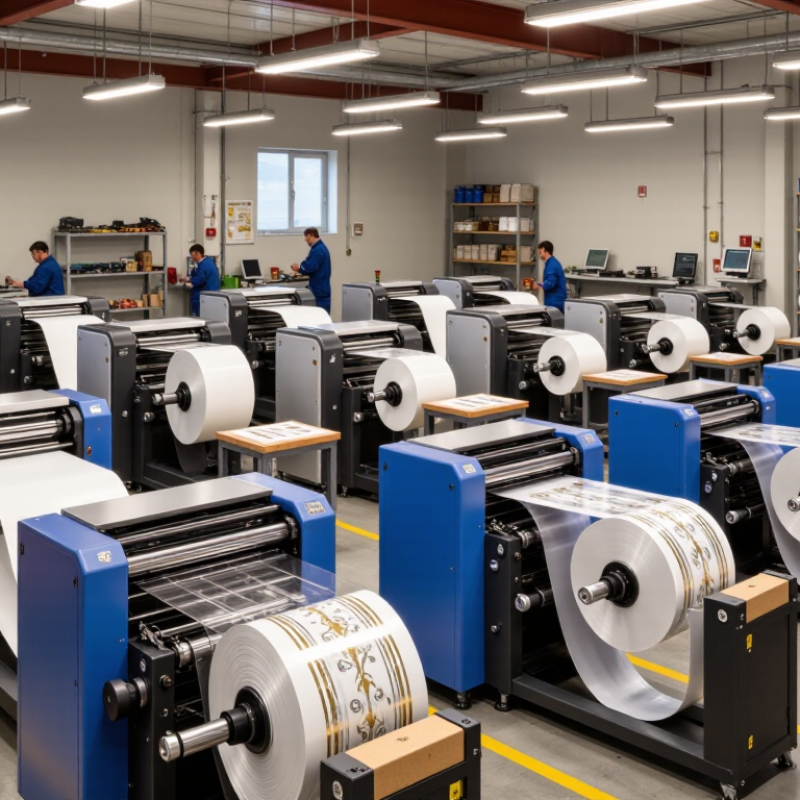
Cold foil transfer depends on a clean match between adhesive, foil, and substrate. The press lays down a UV-curable adhesive only where metallic detail is needed. A moving foil carrier then meets the wet adhesive at a pressure-controlled nip. Too little pressure leaves pinholes; too much can squeeze adhesive beyond fine edges. Keep the web flat and inspect small type under angled light.
RadTech’s UV/EB technical resources identify 365–405 nm as common UV-LED curing wavelengths. Treat that range as a starting reference, not a machine setting: adhesive chemistry, lamp output, line speed, and carrier transparency all affect cure. The foil carrier must allow suitable UV exposure, or adhesive may remain soft beneath transferred areas. Test cure with the adhesive supplier’s method, then check adhesion with a tape pull and rub test.
Once cured, the carrier is peeled away, leaving foil bonded to adhesive-covered areas. Peel angle and web tension matter. A hurried setup can lift fine strokes or leave foil flakes around edges. Small gaps matter. Record lamp dose, speed, nip pressure, and peel behavior for each stock; even then, recycled or coated papers can behave differently from one roll to the next.
| No. | Machine Configuration | Typical Applications | Adhesive Transfer | Foil Transfer and Release | UV-Curing Considerations | Best-Suited Production Needs |
|---|---|---|---|---|---|---|
| 1 | Sheetfed offset press with an inline cold-foil unit | Folding cartons, premium covers, and commercial print | An offset unit prints a compatible cold-foil adhesive in the selected image areas. | Foil contacts the adhesive at a pressure nip; the carrier web is peeled away after transfer. | UV exposure and release timing must match the adhesive, foil, carrier, and press configuration. | Sheet-fed work requiring foil effects alongside conventional offset printing. |
| 2 | Dedicated sheetfed cold-foil press or press line | High-value cartons, invitation work, and specialty graphics | A dedicated printing station lays down adhesive with controlled registration. | A foil unwind and controlled nip bring the foil into contact with the printed adhesive; the carrier is rewound or collected. | Confirm the installed lamp or LED-UV system is compatible with the chosen adhesive and production speed. | Printers prioritizing repeatable foil placement and a process configured around foil work. |
| 3 | Narrow-web flexographic label press with cold-foil station | Pressure-sensitive labels, narrow-web packaging, and decorative labels | A flexographic unit applies adhesive to the required image areas on a continuous web. | The foil web is nipped against the adhesive-coated substrate, then its carrier is stripped and rewound. | Inline curing settings depend on adhesive chemistry, web speed, substrate, and the press’s curing equipment. | Label converters needing inline foil decoration and continuous-web production. |
| 4 | Mid-web flexographic packaging press with foil capability | Flexible packaging, sleeves, and medium-width printed webs | A flexo station prints a registered adhesive pattern on the moving web. | Foil is brought into contact through a nip; carrier release and winding are managed inline. | Validate cure performance across the full web width and at the intended operating speed. | Packaging production that needs inline decoration over a broader web than a typical narrow-web line. |
| 5 | Wide-web flexographic press with an integrated cold-foil module | Large-volume flexible packaging and wide-web converting | Flexographic printing applies adhesive in the designed areas before foil contact. | A wide foil web passes through a controlled nip; the spent carrier is separated and collected. | Check lamp coverage, web temperature limits, and cure uniformity across the working width. | High-volume wide-web operations with suitable tension control and inline finishing capability. |
| 6 | Web offset press configured for cold-foil transfer | Continuous commercial print, selected packaging work, and high-volume graphics | An offset unit deposits a compatible adhesive pattern on the web. | Foil is pressed against the adhesive in the transfer section; the carrier is then released and rewound. | The curing sequence must be specified for the press and adhesive system; verify it before production. | Continuous-web operations seeking to combine offset printing and foil decoration. |
| 7 | Rotary letterpress label press with a cold-foil unit | Labels and narrow-web specialty print | A rotary printing station applies adhesive in register with the label artwork. | Foil meets the adhesive at the transfer nip, while the carrier web is peeled away downstream. | Confirm that the curing arrangement suits the adhesive and the press’s available station layout. | Label work where rotary registration and inline finishing are important. |
| 8 | Screen-printing line equipped for cold-foil adhesive application | Specialty graphics, selected packaging, and work requiring heavier printed deposits | A screen-printing station deposits a compatible adhesive through the stencil-defined image. | The foil is nipped against the adhesive and the carrier is released after transfer. | Use the curing method and sequence specified for the adhesive; test deposit thickness and cure before a run. | Shorter runs or specialty applications where screen printing is already part of the workflow. |
| 9 | Hybrid digital press with an inline flexographic adhesive station | Short- to medium-run labels and packaging with variable digital content | A flexographic unit applies adhesive; digital printing can add variable data or complementary artwork. | The foil web is transferred at an inline nip, with carrier release handled by the foil module. | Check compatibility among the adhesive, digital inks, curing units, and substrate; validate the complete sequence. | Jobs combining variable digital print with fixed-position foil embellishment. |
| 10 | Offline cold-foil transfer or laminating unit paired with a compatible print line | Post-press embellishment of previously printed sheets or webs | A compatible adhesive is printed on the substrate in a preceding operation, unless the unit includes an adhesive-printing station. | The printed substrate and foil pass through a controlled nip; the carrier is separated after transfer. | Curing may occur in the transfer line or in a separate step, depending on the adhesive system and equipment design. | Print shops adding foil finishing without replacing their primary press. |
Selection note: These are representative machine configurations, not ranked product listings or claims of live inventory. Actual availability, format, speed, and specifications vary by equipment configuration. A typical cold-foil workflow applies adhesive, brings foil into contact under pressure, cures according to the adhesive system, and releases the carrier; the exact curing and release sequence must follow the equipment and consumables’ specifications.