7 Tips for Choosing Ultrapure Water Equipment
Choosing an Ultrapure Water Equipment system is not simply a matter of comparing prices or selecting the most advanced-looking cabinet. The right choice depends on water quality, laboratory workload, application risk, available space, and long-term maintenance. A system used for HPLC analysis may require different controls from one supporting cell culture, semiconductor testing, or critical cleaning.
Water-treatment expert Dr. Walter J. Weber Jr. observed, “Water quality is not a property of water alone; it is a property of water in relation to its use.” That principle remains practical today. A polished screen cannot compensate for poor pretreatment. A high-flow loop cannot solve careless filter replacement. Small details matter, including feed-water hardness, chlorine levels, bacterial control, storage tank design, and point-of-use filtration.
This guide presents seven practical tips for choosing Ultrapure Water Equipment with greater confidence. It considers resistivity, total organic carbon, microbial protection, monitoring functions, installation requirements, service support, and operating cost. Each factor affects daily reliability.
Not every system needs every feature.
That is easy to forget.
In real laboratories, buyers sometimes focus on initial specifications and underestimate consumables, calibration, or technician response time. That is an imperfect approach, but it is common. A better decision uses documented water-quality data, application requirements, and realistic usage records. The final system should deliver stable water quality without creating unnecessary complexity. It should also leave room for honest review, because even a well-designed unit may need adjustment after installation.
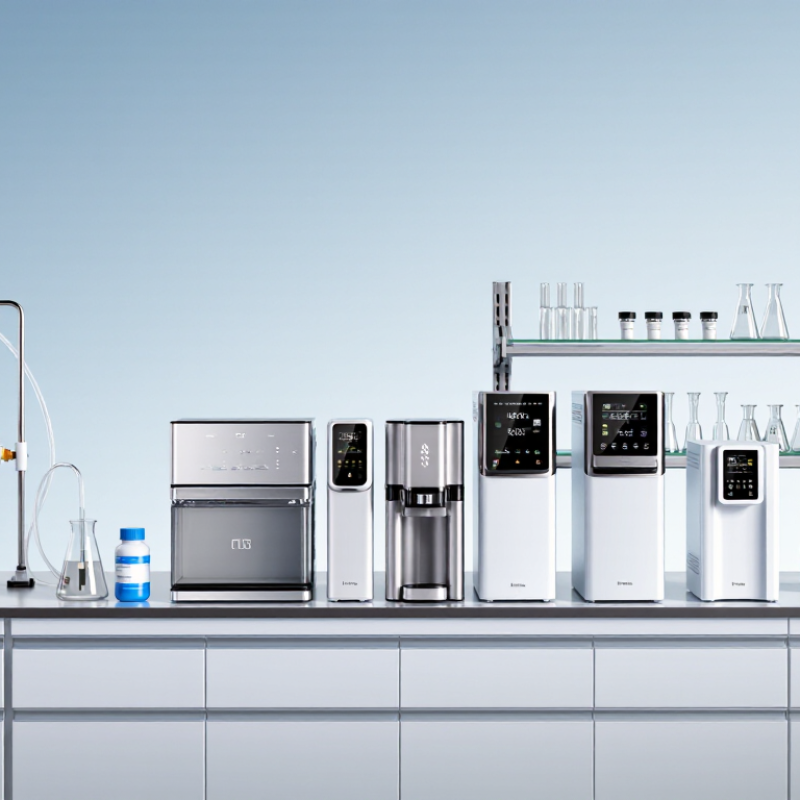
Define Your Ultrapure Water Quality and Application Requirements
Choosing ultrapure water equipment starts with the water, not the catalog. Define the application, contaminants, volume, and sampling frequency. Analytical work may need 18.2 MΩ·cm resistivity at 25°C. ASTM D1193 lists 18 MΩ·cm as the minimum for Type I water. Resistivity alone is not enough. Liquid chromatography may also require low TOC and controlled particles. Cell-based work adds microbial and endotoxin concerns. The United States Pharmacopeia, General Chapter <1231>, stresses that water quality must match its intended use. That principle prevents expensive overdesign. Or so it should.
Write a measurable user requirement specification before comparing systems. Include conductivity, TOC, bacteria, endotoxin, silica, and particle limits. ISO 3696 Grade 1 water lists conductivity below 0.1 mS/m and TOC below 0.05 mg/L. These figures are useful benchmarks, not universal rules. Semiconductor rinsing may demand tighter particle and silica control. A teaching laboratory may not. Record peak demand, daily volume, and acceptable recovery time. Twenty liters in ten minutes needs different storage and flow than twenty liters per day. I learned this late. A small detail can change the entire design.
Map quality at the point of use, not only at the purifier outlet. Specify sanitization, recirculation, filter replacement, calibration, and alarm records. USP <1231> emphasizes monitoring and system control because stored water can deteriorate. Consider online resistivity and TOC monitoring, but verify instruments through documented calibration. Ask for validation evidence, not attractive screenshots. Test incoming feed water seasonally; municipal chemistry can shift after heavy rain. Leave a margin. My earlier plans treated maintenance as an afterthought, which was a mistake. Equipment selection becomes clearer when every limit has a purpose and a test method.
Compare Purification Technologies and System Configurations
Choosing ultrapure water equipment starts with comparing purification technologies, not copying a familiar system. Tip 1: Define the required resistivity, conductivity, organic carbon, and microbial limits. Tip 2: Test the incoming water first. Its hardness, chlorine, silica, and seasonal changes affect every choice.
Reverse osmosis removes dissolved salts and many contaminants efficiently, but it produces reject water and needs pretreatment. Deionization polishes ionic impurities, although resin capacity falls quickly under heavy loading. Tip 3: Use RO before DI when feed water contains substantial dissolved minerals. Ultraviolet treatment controls microorganisms and breaks down organic compounds, but it does not remove particles. Tip 4: Pair UV with filtration instead of treating it as a complete solution. Ultrafiltration can reduce particles, colloids, and endotoxins. It cannot replace all ionic purification steps.
System configuration matters as much as technology. Tip 5: Select a point-of-use unit for occasional laboratory demand, or a central loop for several users. A recirculating loop helps maintain quality, yet poor pipe design can create stagnant areas. Tip 6: Check dead legs, flow velocity, sanitization access, and storage tank exposure. Distillation offers broad contaminant removal, but it usually requires more energy and maintenance. Tip 7: Compare total operating cost, water waste, consumables, alarms, and service requirements.
In practice, the most advanced setup is not always the best fit. I have seen designs that met specifications on paper but struggled during weekend shutdowns. That weakness deserves attention. Choose measurable performance over impressive features.
Evaluate Capacity, Performance, Compliance, and User Safety
7 Tips for Choosing Ultrapure Water Equipment
Tip 1: Match capacity to real demand, not an optimistic forecast. Record daily use, peak draw, and rinse cycles. A small laboratory may need steady flow, while a production area may require rapid recovery. Oversizing can waste energy and increase maintenance.
Tip 2: Examine performance beyond the purity number. Check resistivity, total organic carbon, microbial control, and particle levels. Ask for test methods and operating conditions. A system may perform well on paper, yet struggle when filters age or inlet water changes. That detail matters.
Tip 3: Confirm compliance before purchase. Review documentation for applicable water-quality, electrical, pressure, and workplace-safety requirements. Look for calibration records, validation support, alarms, and traceable materials. Compliance is not a decorative certificate. It affects daily operations.
Tip 4: Treat user safety as part of performance. Choose enclosed lines, clear status indicators, leak detection, and safe chemical-handling procedures. Operators should reach filters without awkward lifting or exposed electrical parts. Small design flaws become expensive interruptions.
Tip 5: Evaluate serviceability. Ask how often filters, lamps, and sensors require replacement. Request realistic maintenance times. A technically excellent unit can still frustrate users if routine work is difficult. I have learned that convenience is not a luxury.
Tip 6: Review data access and alarm history. Reliable records help identify drifting quality before experiments or processes fail. Do not assume every display is accurate; verify critical readings with scheduled checks.
Tip 7: Test the decision with actual users. Their feedback may reveal missing connections, confusing menus, or poor installation space. Reconsider the specification when evidence changes. That is often the wiser choice.
Plan for Installation, Maintenance, Operating Costs, and Expansion
Choosing ultrapure water equipment requires more than comparing flow rates. Plan the installation around real working conditions. Measure twice. Check ceiling height, doorway width, drainage, electrical capacity, and nearby heat sources before delivery. A compact unit can still demand service clearance and stable flooring.
Maintenance planning should be practical, not optimistic. Ask how often filters, membranes, lamps, and sensors require replacement. Confirm whether technicians can reach each component without dismantling the whole system. Keep spare consumables on site, especially when laboratory schedules are tight. I once underestimated storage needs, and a delayed replacement interrupted routine testing. That mistake changed my equipment checklist.
Operating costs deserve a written estimate. Include water use, electricity, consumables, calibration, labor, and wastewater handling. Request performance data under your expected feed-water quality, not ideal conditions. Expansion also needs attention. Leave room for additional purification stages, storage tanks, distribution loops, or higher daily demand. Design connections that can be upgraded without rebuilding the room. Growth rarely follows the original forecast. A modular layout may cost more initially, but it can reduce disruption later. Still, expansion space is not automatically valuable if maintenance access becomes awkward. Ask an experienced installer to review the floor plan, utility drawings, and five-year demand assumptions before approval.