Screw compressors play a critical role in various industries, particularly in refrigeration and air conditioning. According to a recent report by Market Research Future, the global screw compressor market is expected to grow significantly, with an estimated CAGR of 6.5% from 2022 to 2028. This growth highlights the increasing reliance on efficient and reliable compression technologies.
Industry expert, Dr. James Anderson, a prominent researcher in the field, states, “Screw compressors are crucial for maintaining energy efficiency and operational effectiveness in industrial applications.” His insights underline the technological advancements in screw compressor designs, which contribute to enhanced performance and reduced energy consumption.
Despite their advantages, screw compressors face challenges. Some users report concerns regarding maintenance and initial costs. Addressing these issues is essential for optimizing the benefits of screw compressors. Continuous innovation and understanding of their operational mechanics can lead to improved reliability and cost-effectiveness in the long run.
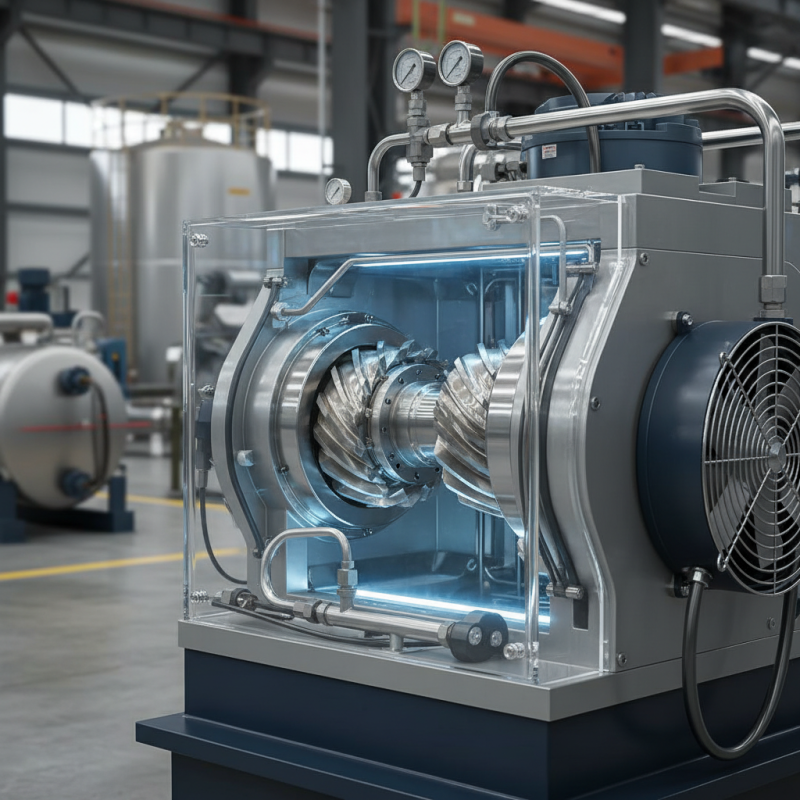
A screw compressor is a type of positive displacement compressor. It uses two interlocking helical screws to compress the air or gas. As these screws rotate, they trap the air and reduce its volume. This process creates a high-pressure output that is ideal for various applications in industries.
One notable feature of screw compressors is their efficiency. They can run continuously without overheating, making them reliable for ongoing operations. However, they may also present challenges. Regular maintenance is essential to prevent wear and tear on the screws. Neglecting this can lead to costly repairs and downtime.
Screw compressors come in different sizes and configurations, catering to diverse industrial needs. They can be found in manufacturing, refrigeration, and even air conditioning systems. While they are capable machines, users must be mindful of their energy consumption. Balancing performance and operational costs can be a complex task. Understanding the intricacies of these compressors is key to maximizing their potential.
| Feature | Description |
|---|---|
| Principle of Operation | Uses two interlocking helical rotors to compress air. |
| Types | Oil-injected and oil-free screw compressors. |
| Efficiency | Highly efficient with continuous operation; minimal energy waste. |
| Applications | Used in industrial applications, refrigeration, and air conditioning. |
| Maintenance | Requires regular oil changes and filter replacements for optimal performance. |
| Advantages | Compact size, low noise level, and high reliability. |

A screw compressor is essential in many industries. It utilizes two interlocking helical screws to compress air or gas. The design of a screw compressor allows for a continuous flow of compressed air, making it an efficient choice for various applications.
The basic components of a screw compressor include the rotor assembly, timing gears, and the cooling system. The rotors, often made from high-quality steel, provide durability. They rotate in opposite directions, allowing for the effective compression of air. Timing gears ensure that the rotors maintain the correct synchronization. This aspect is critical to achieving optimal performance.
Another important component is the cooling system. As the screws compress the air, heat is generated. The cooling system helps dissipate this heat, maintaining a safe operating temperature. However, the effectiveness of cooling systems can vary. Regular maintenance is vital, as overlooked issues may lead to overheating and reduced performance. Observing these components carefully can lead to improved efficiency and longevity of the compressor.
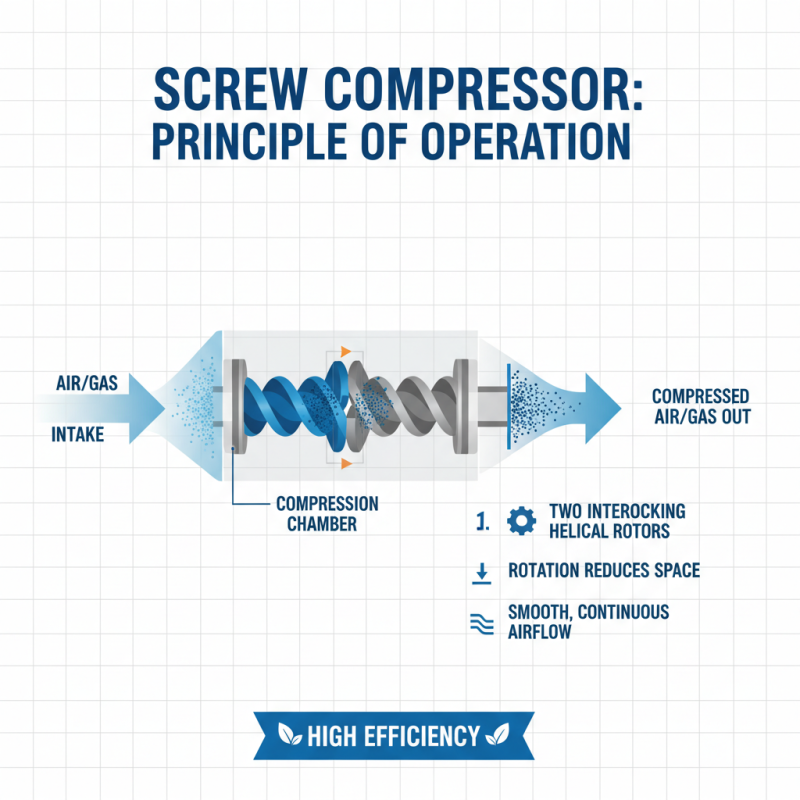
Screw compressors operate on a unique principle that differentiates them from traditional piston compressors. They use two interlocking helical rotors to compress air or gas. As the rotors turn, the space between them decreases, compressing the gas inside. This design allows for smooth and continuous airflow, making it highly efficient.
The main operation principle relies on positive displacement. As the rotors turn, they trap a volume of gas and force it into a smaller space, increasing pressure. This method results in a steady output and minimizes pulsation, which is common in other types of compressors. Observing how the rotors interact can reveal design insights. However, achieving perfect balance is challenging. Even slight misalignments can cause inefficiencies or wear over time.
Although screw compressors are robust, they're not infallible. Their performance can suffer if not properly maintained. Regular checks are essential to avoid issues. Understanding operational intricacies can improve reliability. End users should remain aware that, like any machine, screw compressors require a level of oversight to ensure optimal function throughout their lifespan.
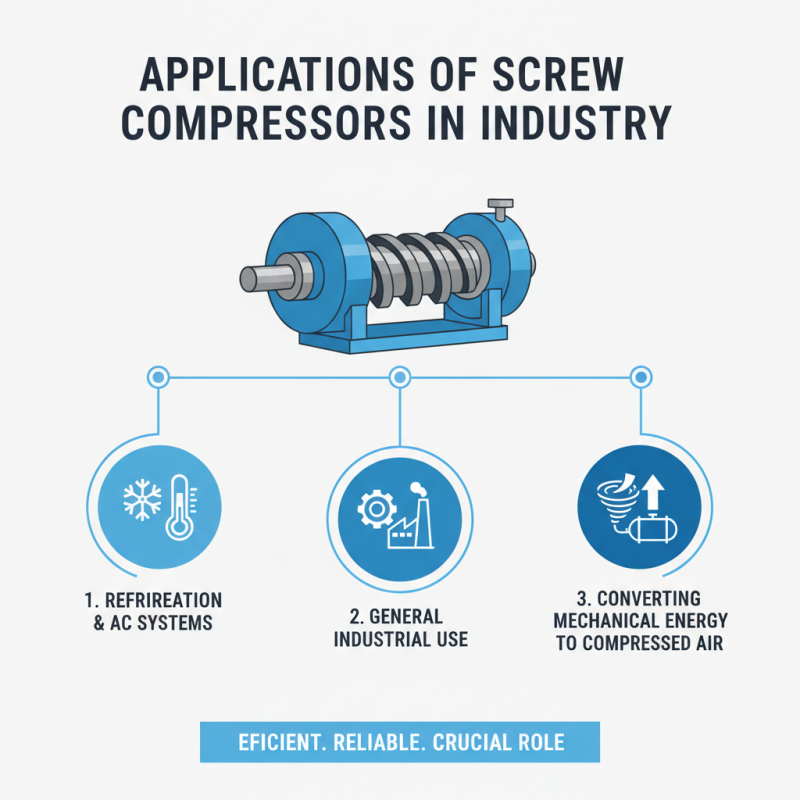
Screw compressors play a crucial role in various industrial applications. They are widely used in refrigeration and air conditioning systems. Industries often rely on these compressors for their efficiency and reliability in converting mechanical energy into compressed air.
In manufacturing, screw compressors provide a steady flow of compressed air for tools and equipment. They are key in driving pneumatic machinery. Additionally, these compressors support processes such as packaging and material handling. Their ability to operate continuously makes them ideal for heavy-duty tasks.
However, not all setups benefit equally from screw compressors. Their initial installation cost can be high. Maintenance requires skilled personnel. Industries must weigh these factors against their specific needs. Understanding these points is essential for optimizing efficiency and performance in industrial operations.
Screw compressors have distinct advantages that make them popular in various industries. They are known for their efficiency and ability to provide a constant air supply. This design minimizes energy consumption, which is a significant factor for companies focused on reducing operational costs. Additionally, these compressors work quietly. This feature makes them suitable for environments where noise levels must be controlled, such as hospitals and offices.
However, screw compressors are not without their downsides. They can be quite expensive to purchase and install compared to other compressor types. Maintenance is another area of concern. While they require less frequent servicing, when repairs are needed, they can be costly due to the specialized parts and skilled technicians required. Moreover, not every application benefits from the high efficiency; in low-demand scenarios, alternative compressor types may perform better.
These aspects highlight a critical consideration for buyers: the specific application matters. Employees must evaluate their unique needs. Choosing the right compressor involves understanding both the benefits and limitations. Balancing these elements is key to making an informed decision in selecting a suitable compressor system.
Please share your email with us to see your results.