How to Choose a 90° Long Radius Elbow in 2026?
Choosing a 90° Long Radius Elbow in 2026 is a small decision with large consequences. In process piping, a bend affects pressure loss, flow behavior, support loads, and access for maintenance. The right choice depends on more than nominal pipe size. Material, schedule, connection type, operating conditions, and the applicable piping code all matter.
The wider energy outlook helps explain why reliable piping decisions remain important. The International Energy Agency’s Oil 2024 report projects global oil demand to rise by 3.2 million barrels per day between 2023 and 2030, approaching 106 million barrels per day. That forecast does not predict elbow demand directly. It does point to continued investment in energy systems where dependable components matter. For fitting dimensions and tolerances, ASME B16.9 is a key reference for factory-made wrought butt-welding fittings. Project specifications and piping codes may add requirements, so a catalog description alone is not enough.
Check the details. A long-radius elbow typically has a centerline radius of 1.5 times the nominal pipe size, but confirm the product drawing and standard before ordering. Then compare material grade, wall thickness, end preparation, marking, and inspection documents against the line specification. A mismatch can complicate welding or create an avoidable weak point. One detail is easy to miss: the “right” fitting on paper may not fit the actual layout. Verify dimensions with the project engineer, especially where space is tight or service conditions are severe. That extra check is worth the time.
Understanding the Geometry of a 90° Long Radius Elbow
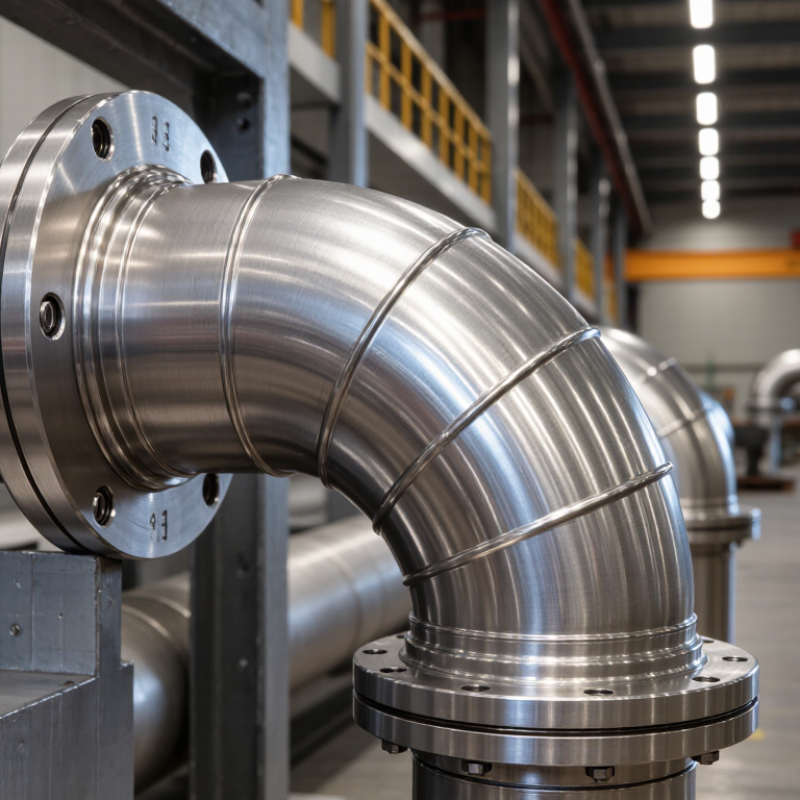
A 90° long radius elbow turns a pipe through a quarter circle, with a centerline radius typically equal to 1.5 times the nominal pipe size. That ratio describes the bend’s geometry, not its outside curve. The distinction matters when checking clearances or laying out supports. Measure from the pipe centerline, not the outer edge. A small mistake here can shift a connection by several centimeters.
The broader arc usually creates a gentler change in flow direction than a short radius elbow. It can reduce turbulence and pressure loss, though the actual result depends on flow rate, fluid properties, surface condition, and nearby fittings. Geometry also affects space: the elbow needs room for its center-to-end dimension and for welding or inspection access. Check the applicable dimensional standard, pipe outside diameter, wall thickness, and connection type before ordering. Nominal size alone is not enough.
On a drawing, confirm the elbow’s tangent points and centerline radius against the available installation envelope. In the field, a tape measure can catch a mismatch, but it cannot replace verified manufacturer dimensions. I have seen layouts treat “long radius” as a universal measurement. It isn’t. Standards and product dimensions can differ, so verify the specific specification before committing to a tight fit.
Defining Pressure, Temperature, and Flow Requirements
A 90° long radius elbow should match the pressure, temperature, and flow conditions of the actual line. Start with normal and maximum design pressure, including possible surges during startup or valve changes. Check the elbow’s material, wall thickness, and connection details against the piping specification. A smooth bend helps guide flow, but it does not remove pressure loss or make an undersized line safe. Measure twice.
Temperature changes material strength and can affect gasket and connection performance. Use the expected operating range, not just the temperature on a typical day. For flow, note the fluid, flow rate, and available pipe diameter; these details help estimate velocity and pressure drop through the bend. Real systems are rarely as tidy as a drawing. If field data are incomplete, flag that uncertainty before choosing a fitting rather than treating an estimate as fact.
Tips: Compare design limits with the fitting documentation, and have a qualified piping professional review unusual service conditions. Check the full route, too; nearby valves and tight supports can affect installation and flow.
Selecting the Material and Applicable Pipe Standards
How to Choose a 90° Long Radius Elbow in 2026?
Selecting the Material and Applicable Pipe Standards
Start with the service conditions, not the shelf label. Record the fluid, design temperature, pressure, corrosion risks, and pipe grade. ASME B16.9 dimensional tables define standard factory-made buttweld fittings; a long-radius elbow’s center-to-end dimension is generally 1.5 times the nominal pipe size. Check the table for the exact NPS and schedule. Nominal size is not the pipe’s measured outside diameter. Fit-up matters.
For carbon and alloy steel, ASTM A234/A234M covers wrought fittings for moderate and high-temperature service. For stainless steel, ASTM A403/A403M specifies wrought austenitic stainless-steel fittings. Match the elbow’s grade and wall thickness to the connected pipe, then verify heat-treatment and marking requirements against the purchase specification. “Stainless” alone is not a material grade. Chemistry and temperature matter.
The governing piping code also matters: ASME B31.3 applies to process piping, while ASME B31.1 addresses power piping. These codes establish design and construction requirements; ASME B16.9 supplies fitting dimensions, not a complete design approval. Review the project documents and applicable code edition before ordering. A mismatch can complicate welding or inspection. Even careful selection has limits: actual corrosion conditions may differ from the assumptions in a datasheet, so confirm them with the responsible materials engineer.
Matching Elbow Dimensions, Schedule, and End Connections
A 90° long radius elbow changes direction gradually, usually with a centerline radius about 1.5 times the nominal pipe size. That radius is not a substitute for checking actual dimensions. Compare the elbow’s outside diameter, center-to-end dimensions, and nominal pipe size with the connected pipe and project drawing. Nominal size alone can be misleading, especially when metric and inch-based specifications meet.
Schedule determines wall thickness, not the elbow’s turning angle. Match the fitting schedule to the pipe schedule, then confirm the specified material and pressure requirements. A thicker fitting may create an internal step if it joins thinner pipe. That mismatch can affect flow and complicate welding. Check the applicable fitting standard and manufacturer’s dimensional data before ordering. Measure twice.
End connections must suit the installation. Butt-weld ends need compatible outside diameters and preparation for the specified weld; socket-weld and threaded ends require different allowances and checks. For a tight retrofit, verify center-to-end dimensions against available space, including room for weld access and insulation. I have seen a correct nominal size still fail to fit because the adjoining spool was measured from the wrong reference point. It is an easy mistake. Record the measurement method, pressure class where relevant, and end type on the purchase specification.
How to Choose a 90° Long Radius Elbow in 2026
Compare the nominal pipe size with the elbow’s center-to-end dimension. The values below are standard long-radius 90° butt-welding elbow dimensions commonly specified to ASME B16.9; confirm the applicable standard and tolerances for your project.
Selection tip: Match the elbow’s NPS and schedule (wall thickness) to the connecting pipe, then verify the butt-weld end preparation, material, pressure and temperature requirements. Schedule affects wall thickness, not the listed center-to-end dimensions.
Checking Compatibility, Quality, and Service Conditions
A 90° Long-Radius Elbow is commonly specified with a centerline radius of 1.5 times the nominal pipe size. Confirm the exact dimensions against ASME B16.9 and the project drawings; nominal size alone does not confirm a fit. Check wall schedule, material grade, end preparation, and the adjoining pipe’s actual dimensions. A small mismatch can complicate welding and create alignment stress. Close is not enough. Also verify pressure and temperature limits for the complete piping system, not the elbow in isolation.
Service conditions deserve equal attention. Record the fluid, operating temperature, pressure cycles, corrosion risk, and possible erosion from solids or high flow. For quality checks, request material test reports, heat-number traceability, dimensional inspection, and suitable examination records. The World Steel Association’s World Steel in Figures 2024 reports 1,892.2 million tonnes of crude steel production in 2023. That figure describes industry scale, not the quality of any individual fitting. I would still verify the paperwork against the part markings; paperwork can be tidy while details are easy to miss. Consider thermal expansion and support loads, too, especially where a heavy valve sits near the elbow.