What is Cold Rolled Coil and How is it Used in Industry?
Cold Rolled Coil is a vital material in various industries, from automotive to construction. According to industry expert Dr. Sarah Jenkins, "Cold Rolled Coil is the backbone of modern manufacturing." This statement underscores its significance.
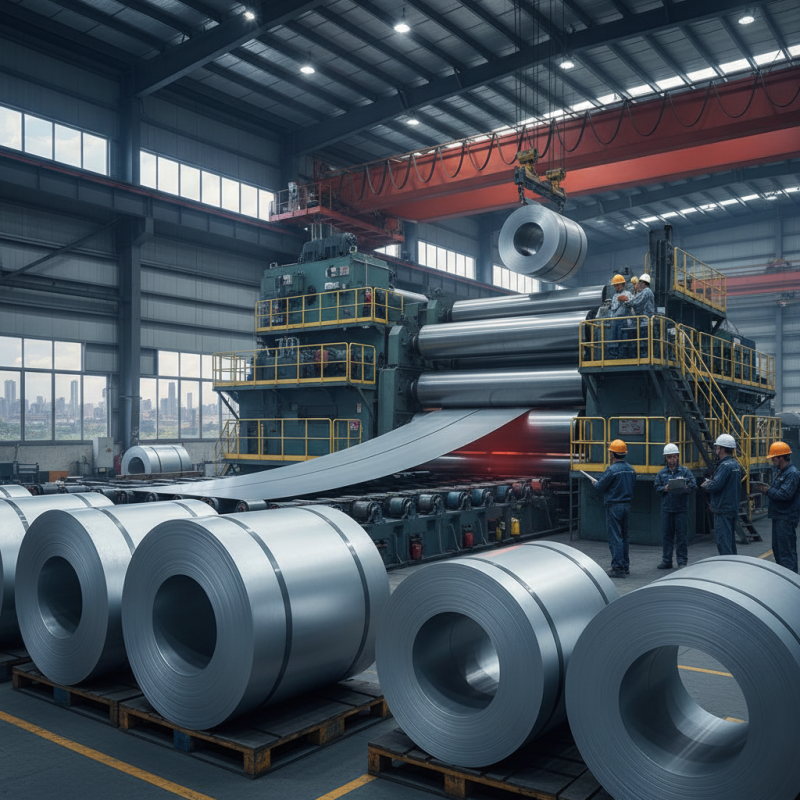
Cold Rolled Coil undergoes a unique manufacturing process. It starts as hot-rolled steel that is further processed to enhance its strength and surface quality. The result is a product with tighter tolerances and better dimensions. It is commonly used for producing car body panels, appliances, and furniture.
However, the industry faces challenges. Quality control issues can arise during production. Manufacturers must continuously adapt to changing market demands. Investing in new technologies and training can improve outcomes. Using Cold Rolled Coil is essential, yet it is a process that requires constant refinement and critical evaluation.
What is Cold Rolled Coil? Definition and Characteristics
Cold rolled coil (CRC) is a type of steel that undergoes further processing after the initial hot rolling. The process involves cooling the steel and then rolling it at room temperature. This method enhances the material's strength and finish. CRC is known for its smooth surface, precise dimensions, and superior mechanical properties. It is widely used in various industries due to these characteristics.
In terms of applications, cold rolled coil is often utilized in automotive manufacturing, appliances, and construction. For instance, the automotive industry relies on CRC for making body panels and structural components. According to a recent industry report, cold rolled steel accounts for approximately 50% of the total steel used in cars. This number highlights the material's significance in producing lightweight yet strong vehicles.
However, the production of cold rolled coil faces challenges. Environmental regulations and the need for sustainable practices are becoming more stringent. Manufacturers must adapt to these changes or risk falling behind. The competition is growing, and quality consistency remains a concern. It's essential for companies to invest in advanced technologies to enhance efficiency and product quality.
Manufacturing Process of Cold Rolled Coil Explained
Cold rolled coil (CRC) is a steel product widely used in various industries. The manufacturing process involves several key steps, starting with hot rolled steel that undergoes cooling before being passed through rollers. This process enhances the steel's strength and surface finish. The final thickness often ranges between 0.15 mm to 3.2 mm, making them versatile for different applications.
Quality control plays a crucial role. Industry data indicates that defects can occur due to improper handling or inconsistencies during the rolling process. Common defects include surface scratches and dimensional inaccuracies. Regular monitoring of parameters like temperature and pressure is essential for minimizing such issues.
Tip: Always consider the final application when selecting cold rolled coils. Proper specifications can prevent future problems.
The applications of CRC are vast, from automotive components to appliances. In construction, CRC is favored for its precision and aesthetic appeal. However, it’s important to acknowledge that the market can be unpredictable. Fluctuations in demand often lead to inventory challenges.
Tip: Stay informed about market trends. This knowledge can aid in decision-making and stock management.
Applications of Cold Rolled Coil in Various Industries
Cold rolled coil is a versatile material widely used in various industries. Its smooth surface and precise dimensions make it ideal for applications that require precision. For example, in the automotive industry, cold rolled coils are essential for manufacturing body panels, components, and frames. They provide strength while being lightweight, which is crucial for fuel efficiency.
In construction, cold rolled coils are used in metal roofs and structural supports. Their resistance to corrosion ensures durability. Appliances like refrigerators and washing machines often utilize this material for their casing and internal components. The aesthetic appeal of cold rolled steel also plays a role in home decor, making it a popular choice in modern design.
Tips: When choosing cold rolled coil, consider the material's thickness. Thicker coils offer greater strength but may be more challenging to work with. Always check the supplier for quality certifications. Imperfections in the surface may affect the final product, so pay attention to these details during production.
In furniture design, cold rolled coils can create unique pieces. However, working with them poses challenges. Improper handling can lead to undesirable bends or scratches. Always have a plan for cutting and shaping to minimize mistakes. Engaging with experienced fabricators can provide insights for successful projects.
Market Trends and Demand for Cold Rolled Coil in 2023
The demand for cold rolled coil is on the rise in 2023. Many industries rely on this versatile material. From automotive to construction, its applications are diverse. Cold rolled coil offers superior finish and tighter tolerances. Manufacturers prefer it for precise components. However, challenges exist. Fluctuating raw material costs can disrupt prices.
Market trends show a growing interest in energy-efficient solutions. Cold rolled coils are essential for lightweight structures. They help improve fuel efficiency in vehicles. Yet, some sectors face difficulties in adaptation. The transition to sustainable practices is complex and gradual. Companies must invest in better technologies.
In addition, competition is fierce. New players are entering the market, causing price wars. This can lead to lower quality products. Industries must be cautious when selecting suppliers. Quality should never be compromised for cost savings. The focus should be on innovation and sustainability. Embracing change is vital for staying relevant.
Comparative Analysis: Cold Rolled vs. Hot Rolled Steel Products
Cold rolled and hot rolled steel each serve distinct functions in the industry. Cold rolled steel undergoes a process that enhances its surface finish and precision. However, this comes at a cost: it is typically more expensive than its hot rolled counterpart. According to the World Steel Association, cold rolled products represent about 25% of the global steel market share.
Hot rolled steel is produced through a process that occurs at elevated temperatures. This method allows for easier shaping and forming but results in a less refined finish. In contrast, cold rolled steel often achieves better dimensional tolerances and surface quality. Industrial reports indicate that cold rolled products can have a yield strength that is 20% higher than hot rolled steel, making them suitable for applications requiring greater structural integrity.
Tips: When selecting between these products, consider the application needs. Cold rolled is ideal for items needing tight tolerances. Hot rolled may be better for large-scale, structural components. Remember to evaluate cost versus performance requirements carefully. Each type has its pros and cons, so gathering insights is essential before making a decision.
Comparison of Cold Rolled and Hot Rolled Steel Production