How to Choose Wheel Alignment Equipment in 2026?
Choosing Wheel Alignment Equipment in 2026 requires more than comparing screen size, camera count, or promotional discounts. A busy workshop needs equipment that delivers repeatable measurements, supports modern vehicle systems, and fits the available service space. The best choice should also reduce setup errors when a vehicle arrives with uneven tire wear, a damaged rim, or unclear steering symptoms.
Lee Hunter, a long-time alignment specialist associated with Hunter Engineering, has said, “Accuracy is not a feature; it is the foundation of alignment service.” That principle remains practical. A technician should examine measurement resolution, target durability, turnplate quality, software updates, and vehicle database coverage. Wireless sensors may speed daily work, while imaging systems can reduce contact with delicate wheels. However, convenience should never replace verification.
Look closely at the details.
In real workshops, a glossy demonstration may hide awkward cable routing, poor lighting performance, or expensive subscription requirements. Ask how quickly the system compensates for uneven floors. Check whether technicians can complete a compensation procedure without repeated interruptions. Confirm training, calibration support, warranty terms, and local service availability before signing an order. These points influence uptime more than impressive brochures.
Some buyers may choose the most advanced Wheel Alignment Equipment immediately. That can be a mistake. A smaller shop may gain better returns from a reliable three-dimensional system, strong reporting tools, and ADAS-ready capabilities. Larger facilities may need multiple bays, automatic vehicle identification, and integration with inspection software. Requirements differ. Reconsider the purchase after measuring actual vehicle volume, technician skill, and future service plans.
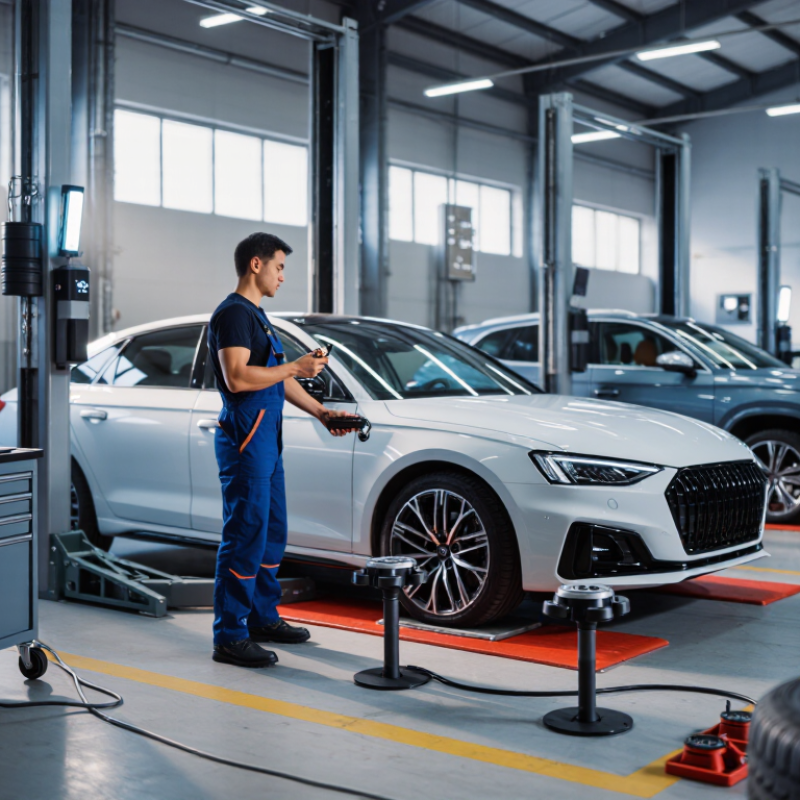
Define Your Wheel Alignment Needs and Workshop Requirements
How to Choose Wheel Alignment Equipment in 2026?
Define Your Wheel Alignment Needs and Workshop Requirements
Start by studying your actual service mix. Record the vehicles entering your workshop each week. Include passenger cars, vans, electric vehicles, and light commercial models. Different wheel sizes and suspension designs may require different measurement ranges. Check your current lift, bay length, floor level, and lighting. A precise system cannot correct a poorly prepared workspace.
Measure your workflow, not your ambition. A busy workshop may need fast setup, automatic compensation, and clear inspection reports. A smaller garage may value simple operation and lower maintenance costs. Confirm that the equipment supports your lift type and wheel dimensions. Ask how often calibration is required. Also check whether technicians can complete routine checks without waiting for outside support.
Hands-on testing matters.
Place a vehicle on the lift and observe the full process. Watch for awkward clamps, cable restrictions, or confusing software prompts. Small delays become expensive during a crowded afternoon. Request evidence of measurement repeatability, calibration procedures, and technician training. Reliable data should remain consistent after several checks.
Do not trust impressive screens alone. That assumption can be costly. Some workshops overlook storage and charging space for wireless components. I have found that this mistake often appears after installation, not before. Record your requirements honestly, including weaknesses in your current process. Then compare equipment against those facts, rather than against attractive specifications.
Evaluate Accuracy, Compatibility, and Vehicle Coverage
How to Choose Wheel Alignment Equipment in 2026?
Accuracy should be tested in practical workshop conditions, not only in product specifications. Check repeatability after several measurements on the same vehicle. A reliable system should produce nearly identical readings each time. Look for clear tolerance ranges, calibration reminders, and measurement reports that technicians can review later. I once trusted a quick setup too much. Small sensor movement changed the result. That mistake showed me why stable mounting matters.
Compatibility affects daily productivity. Confirm support for different wheel sizes, suspension designs, and vehicle heights. The equipment should work with steel wheels, alloy wheels, and common commercial vehicles. Check whether its sensors fit tightly without damaging rims. Software updates also matter, especially when newer electric vehicles enter the workshop. Some systems appear flexible but lack coverage for unusual axle layouts. Ask for a detailed vehicle database, not a general coverage claim.
Vehicle coverage should match your actual customer base. Review supported models, production years, wheelbase ranges, and alignment adjustment types. Test the system on a compact car, a van, and a low-clearance vehicle before purchasing. Measure setup time, reading stability, and report clarity. A local service network and documented calibration process add reliability. Still, even advanced equipment depends on careful technician work. Technology reduces errors, but it does not remove them.
How to Choose Wheel Alignment Equipment in 2026?
Evaluate accuracy, compatibility, and vehicle coverage before selecting an alignment system.
The chart presents a practical 100-point evaluation framework for comparing wheel alignment equipment. Accuracy receives the highest weighting because precise readings directly affect adjustment quality. Compatibility covers vehicle geometry, sensor technology, ADAS-related workflows, and software integration, while vehicle coverage reflects support for passenger cars, SUVs, light commercial vehicles, and different wheel or suspension configurations. These are planning weights rather than company or brand performance data.
Assess Installation, Calibration, Software, and Operator Training
Choosing wheel alignment equipment in 2026 requires more than comparing measurement ranges. Installation affects accuracy from the first day. Check the bay floor, lift stability, lighting, and available power. The sensor targets should sit level and remain clear of nearby tools. Leave enough space for technicians to move around each wheel. A poorly planned installation can create repeated readings that look precise but remain wrong.
Calibration deserves strict attention. Ask how often calibration is required, which reference tools are used, and how records are stored. A reliable system should provide clear tolerance values and traceable calibration reports. Test it with a vehicle that has known alignment results. Small differences matter. I would also repeat the test after moving the equipment, because workshop vibration can change readings. This step is easy to overlook.
Software should explain measurements in plain language, not hide them behind colorful graphics. Look for guided procedures, automatic updates, vehicle data coverage, and exportable inspection reports. Offline access can help when the network fails. Operator training must include vehicle positioning, tire pressure checks, compensating for wheel runout, and interpreting symptoms. Short practical sessions are more useful than a single classroom demonstration. Training can still miss real-world habits, so supervisors should review the first jobs and compare printouts with manual checks.
Calculate Total Cost, Maintenance Needs, and Long-Term Value
How to Choose Wheel Alignment Equipment in 2026?
Calculate Total Cost, Maintenance Needs, and Long-Term Value
The purchase price rarely shows the real cost of alignment equipment. Include installation, operator training, software updates, calibration, and future repairs. A lower-priced system may need frequent sensor replacement or extra setup time. Those delays can quietly reduce workshop profit.
Ask for a written maintenance schedule before buying. Check calibration intervals, replacement sensor prices, warranty coverage, and local technical support. Equipment should provide clear measurement reports and repeatable results. During a workshop trial, compare readings after moving a vehicle several meters and measuring again. Stable results build confidence.
My first cost estimate was wrong. I ignored cleaning time and annual calibration fees. That mistake changed the long-term comparison. Small details count. A technician should also test the equipment with different wheel sizes, lighting conditions, and uneven floors. If the system struggles, daily productivity may suffer. Keep service records, calibration certificates, and repair invoices in one file. These documents support quality control and reveal the equipment’s real operating cost. Over five years, reliable components and simple maintenance may matter more than advanced features that staff rarely use. Some calculations remain uncertain, especially when workload changes by season. Use realistic job numbers, not optimistic forecasts.
How to Choose Wheel Alignment Equipment in 2026? - Calculate Total Cost, Maintenance Needs, and Long-Term Value
Illustrative 2026 planning comparison for independent automotive service facilities; all monetary values are in USD and exclude tax, shipping, and workshop construction.
| Equipment Configuration | Typical Purchase Price | Installation & Training | Annual Service & Calibration | Annual Software Cost | Expected Service Life | Recommended Throughput | Six-Year Parts & Spares | Estimated Six-Year Total Cost | Estimated Cost per Alignment | Best Long-Term Fit |
| Portable optical alignment kit | $3,500 | $800 | $450/year | $0/year | 5–7 years | Up to 4 jobs/day | $600 | $7,600 | $1.27 | Low-volume workshops, mobile technicians, and facilities with limited floor space. |
| CCD sensor alignment system | $11,500 | $1,800 | $900/year | $400/year | 6–8 years | Up to 8 jobs/day | $1,000 | $22,100 | $1.84 | General repair shops requiring repeatable measurements at moderate daily volume. |
| Camera-based 3D alignment system | $24,000 | $2,800 | $1,400/year | $1,200/year | 7–10 years | Up to 12 jobs/day | $1,500 | $43,900 | $2.44 | Busy workshops that need fast setup, digital reporting, and higher technician productivity. |
| Drive-on 3D alignment package with integrated turnplates | $42,000 | $4,700 | $2,200/year | $1,800/year | 8–12 years | Up to 16 jobs/day | $2,500 | $73,200 | $3.05 | High-volume service centers where speed, workflow integration, and minimum vehicle movement are priorities. |
Calculation basis: Six-year total cost includes purchase price, installation and initial training, six years of service and calibration, six years of software fees, and estimated replacement parts or wear items. Cost per alignment assumes 250 operating days per year and the recommended daily throughput. Actual ownership cost will vary with local labor rates, calibration requirements, utilization, financing, and equipment configuration.