Choosing Translucent Glass is not just a question of appearance. It shapes daylight, privacy, and how a room feels throughout the day. A ribbed panel can soften a bright hallway, while frosted glass may blur views more evenly. Small samples help, but they can mislead: full-size panels may reveal stronger textures and color shifts. Light changes everything.
The right choice depends on where the glass will sit and what it needs to do. A bathroom screen has different privacy and cleaning needs than an office partition or kitchen cabinet door. Consider thickness, edge finish, panel size, framing, and the product’s intended use. Ask suppliers for technical data, performance ratings, and care instructions. If a panel is near a door, stair, or wet area, confirm suitable specifications with a qualified glazier or designer. Appearance alone is not enough.
This guide explains how to compare common translucent finishes, assess light transmission and privacy, and match glass to practical constraints. It also considers trade-offs: more texture can obscure detail, yet may soften the crispness of daylight. There is no universally best option. A sample may still look different after installation, so view it in the actual space when possible. That extra check is easy to skip. It can also prevent an expensive mismatch. A sound choice balances visual intent with documented performance—and leaves room to reconsider.
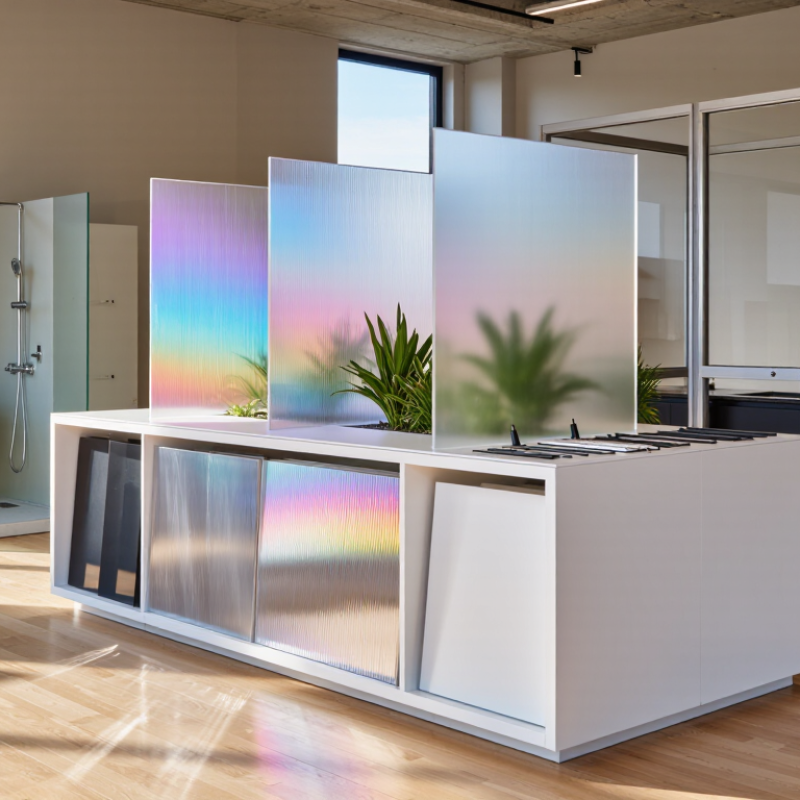
Translucent glass lets daylight pass while scattering it, so objects behind it appear softened rather than sharply defined. Clear glass transmits light with little diffusion; edges, colors, and movement usually remain crisp. The difference often comes from the glass surface or its construction. Frosted finishes, patterned textures, and certain interlayers scatter light in distinct ways. Not all translucent glass behaves alike.
At a bathroom window, a fine satin finish may blur a face while keeping the room bright. A deeper texture can obscure more detail, but may also reduce incoming light and collect dust in its grooves. Check a sample in the actual opening, in daylight and with indoor lights on. Hold a hand or printed page behind it at several distances. Small test, useful clue. The effect can change with viewing angle, thickness, and lighting, so a showroom swatch may not tell the whole story. For a door or partition, consider whether softened outlines provide enough privacy or whether you need stronger visual screening. Translucent does not mean opaque. That distinction is easy to overlook.

How to Choose Translucent Glass for Your Project
Translucent glass softens views without shutting out daylight. The balance depends on visible light transmission, surface pattern, and the room’s sightlines. The U.S. Department of Energy’s daylighting guidance notes that well-designed daylighting can reduce lighting energy use by 20–60%, depending on design and controls. That is potential, not a guarantee. A deeply etched panel may blur faces near a doorway, yet still reveal movement when backlit. Fine ribbing can spread light across a hallway, but may create distracting stripes on a nearby wall. Check samples in the actual opening, at different times of day. I once underestimated how strongly a west-facing window would sharpen a subtle texture. It is an easy detail to miss.
Tips: Compare samples against a person standing behind them, not just against a white wall. Check them in morning and evening light. For bathrooms or street-facing rooms, test privacy from outside after dark, with interior lights on. If the effect feels slightly imperfect, adjust the texture or panel placement before ordering.
Balance daylight, privacy, and visual texture by comparing common glass treatments.
Clear glass maximizes daylight but offers little visual privacy. Acid-etched and reeded glass soften views while retaining useful daylight; patterned obscure glass generally provides the greatest screening. Values are indicative planning estimates, not certified product specifications. Actual visible light transmission varies by product, thickness, tint, and pattern, so confirm tested data with the manufacturer. Privacy scores are relative design ratings from 1 (low) to 5 (high).
The right translucent glass depends on what you need to hide, how much daylight you want, and where the panel will be installed. Frosted or acid-etched glass softens views while spreading light across a room. It works well for bathroom doors and office partitions, though fingerprints may show on frequently touched surfaces. Light still matters.
Patterned glass adds texture and can blur outlines more strongly in some designs. It suits entry doors, cabinet fronts, and feature windows where visual character matters as much as privacy. Laminated glass with a translucent interlayer can hold fragments together if the glass breaks, making it worth considering for doors or other impact-prone areas. The finish and safety construction are separate choices.
Think about viewing distance and changing light. A panel that looks private in a showroom may reveal silhouettes when a room is lit at night. I would not choose from a small catalog photo alone; ask for a sample and check it in the actual space. Also confirm the required thickness, edge finish, and safety-glazing specification with a qualified installer. The perfect balance can be awkward to find. A little less privacy may bring noticeably more daylight.
How to Choose Translucent Glass for Your Project
Translucent glass should be judged against safety, energy, and durability needs—not appearance alone. Start by asking where people may touch or strike it. A door, shower enclosure, or low-level partition may need safety glazing, such as tempered or laminated glass. The right choice depends on the installation and local building requirements, so confirm specifications with a qualified glazier. Edges matter. Chips or poor support can weaken a panel, even when its surface looks sound.
Energy performance needs equal attention. Check the glass’s U-factor and solar heat gain coefficient, then consider window direction and climate. A west-facing room with strong afternoon sun may need a different balance from a shaded hallway. Translucent finishes soften views, but they do not automatically control heat or glare. Coatings and insulated glass units can help; compare tested performance data rather than relying on appearance. Small differences add up.
Durability is more than resistance to impact. In wet rooms, ask about moisture exposure, sealants, and cleaning methods. Textured surfaces can hide fingerprints, yet some collect soap residue in their recesses. That trade-off is rarely neat. I would avoid specifying glass before checking how it will be cleaned and replaced; that step is easy to overlook. Review sample panels in the actual lighting, since a finish that feels private in a showroom may look surprisingly transparent at night.
| Glass option | Typical visible light transmission (VLT) | Safety characteristics | Energy performance | Durability and maintenance | Best suited for |
|---|---|---|---|---|---|
| Acid-etched or sandblasted annealed glass | Often about 70–90% for lightly treated clear glass; heavier etching and patterns can reduce transmission. | Annealed glass breaks into large, sharp shards. It is not safety glazing unless the complete product is tested and approved for the required application. | Usually similar to the clear glass substrate. A single pane provides limited insulation; a low-emissivity coating or insulated glass unit can improve thermal performance. | The exposed matte surface can show fingerprints and may need gentle, regular cleaning. Abrasive cleaners can damage the finish. | Privacy screens or interior partitions where impact-safety rules do not require safety glazing. |
| Tempered patterned or frosted glass | Commonly about 40–80%, depending on glass thickness, texture, and pattern. | Heat-treated tempered glass generally has greater resistance to thermal stress and impact than annealed glass of comparable thickness. When it breaks, it usually fragments into small pieces; it does not remain in the frame. | Tempering itself does not significantly improve insulation. Thermal performance depends on the glass build-up, coatings, and framing. | Suitable for many doors, shower enclosures, and other applications when the required specification is met. Glass edges and surfaces still require protection from damage. | Locations where breakage risk makes safety glazing important, subject to local code and product certification. |
| Laminated translucent glass | Often about 40–80%; interlayer color, texture, and glass selection affect the result. | A plastic interlayer bonds the glass layers and helps hold fragments after breakage. Whether it meets a specific safety or security requirement depends on the tested construction. | A single laminated pane offers limited insulation. Combining laminated glass with an insulating glass unit can improve thermal performance and may also help reduce sound transmission. | Typically retains broken glass in the opening, but edge protection and correct installation are important. Damaged or exposed edges should be assessed and repaired as needed. | Overhead glazing, façades, or areas where fragment retention is a priority, when the specified system is approved for the application. |
| Translucent low-E insulating glass unit (IGU) | Often about 30–70%, depending on the diffusing layer, coatings, and number of panes. | Safety depends on the individual panes: an IGU can include tempered or laminated glass where required. An IGU alone does not guarantee safety-glazing compliance. | A double-glazed unit with a low-E coating and gas fill can have a center-of-glass U-factor roughly in the range of 1.0–1.6 W/m²·K. Whole-window performance is affected by the frame, spacer, size, and installation. | Sealed units require sound seals and correct installation. Seal failure can cause condensation between panes and may require replacement of the unit. | Exterior windows and façades where daylight, privacy, and better insulation are all priorities. |
| Translucent glass with a ceramic frit or printed pattern | Varies widely; coverage, color, and pattern density determine how much light passes through. | The frit or print does not by itself make glass safety-rated. The underlying glass and full assembly must meet the project’s safety requirements. | Fritting does not automatically improve insulation. Solar heat gain depends on the glass, coating, pattern coverage, and orientation. | Fired ceramic frit is generally durable, but performance depends on the product and exposure. Confirm cleaning instructions and compatibility with coatings. | Façades, privacy bands, and design features that need controlled visibility or light diffusion. |
Selection note: VLT and thermal values are indicative ranges, not guarantees; actual results vary by thickness, glass composition, coating, texture, spacer, and test method. Confirm current product data, applicable building codes, and required safety-glazing certification for the project location and installation.
Translucent glass needs a sound installation plan, not just a pleasing finish. Measure the opening at several points; older frames are rarely perfectly square. Leave room for setting blocks, drainage, and movement, following the glass fabricator’s specifications. Tight contact with metal or masonry can create stress and edge damage. Small gaps matter. The U.S. Department of Energy’s Energy Saver guidance estimates that heat gain and loss through windows account for 25–30% of residential heating and cooling energy use. For exterior applications, compare rated U-factor and solar heat gain coefficient values on National Fenestration Rating Council labels, then check whether the frame and seals suit the exposure. A beautiful sample won’t reveal a poor sill detail.
Plan cleaning access before the glass is installed, especially for high panels or textured surfaces that collect dust. Use clean water, a soft cloth, and a mild, non-abrasive cleaner; grit can leave fine scratches when wiped across the surface. Rinse away residue, then inspect edges and sealant for gaps or discoloration during routine maintenance. Keep a record of cleaning products and repairs. It sounds fussy, but it helps identify what is actually causing a problem. Long-term performance also depends on the glass type, edge quality, support, and local weather; no single cleaning schedule suits every building. Revisit the installation after the first seasonal temperature changes. That first review is easy to overlook.
Please share your email with us to see your results.