How to Choose a Liquid Nitrogen Dosing System?

Choosing a Liquid Nitrogen Dosing System is a process decision, not merely an equipment purchase. The right system controls pressure, droplet volume, timing, and nitrogen consumption. It must also match container speed, product temperature, and packaging geometry.

Grand View Research valued the global industrial gases market at approximately USD 102.8 billion in 2023. Its forecast indicates continued expansion through 2030. MarketsandMarkets estimated the cryogenic equipment market at about USD 17.5 billion in 2023. These figures reflect growing investment in controlled cooling, inerting, and pressure management. They do not guarantee a suitable dosing solution for every factory.

Dr. John G. Weisend II, a recognized cryogenic engineering specialist, offers a useful principle: “Cryogenic systems must be designed as complete systems, not isolated components.” This idea matters on a filling line. A precise nozzle cannot compensate for unstable tank pressure. A fast filler cannot hide poor sensor response. Hygiene, insulation, ventilation, and emergency controls deserve equal attention. Small details matter.

A practical evaluation should compare dosing accuracy, liquid nitrogen loss, maintenance access, PLC compatibility, and operator training. Request measured data under your actual line conditions. Ask for tests with your containers and production speed. Laboratory performance can look impressive.

It can still disappoint in production.

The best choice balances safety, consistency, footprint, and total operating cost. Some buyers focus too heavily on purchase price. That may be the weak point. A slightly higher-quality Liquid Nitrogen Dosing System can reduce waste, rejects, and unplanned stoppages. Yet every claim should be verified through documented trials, references, and transparent performance limits.
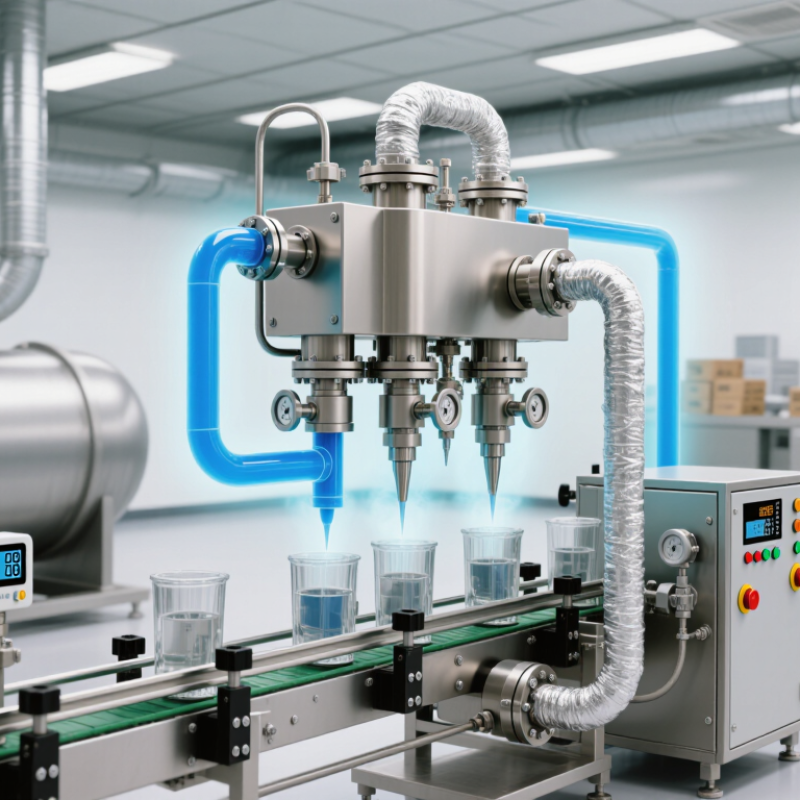
How to Choose a Liquid Nitrogen Dosing System?

Understand Liquid Nitrogen at −196°C and Its 694:1 Gas Expansion

Liquid nitrogen boils at approximately −196°C, or 77.36 K, under atmospheric pressure. This figure is reported by the NIST Chemistry WebBook. At this temperature, nitrogen remains a cryogenic liquid. Small heat gains can create rapid vaporization.

The key design fact is its expansion ratio. One liter of liquid nitrogen can produce about 694 liters of nitrogen gas. This value assumes atmospheric pressure and near-ambient gas conditions. The Compressed Gas Association highlights this behavior in its cryogenic safety guidance, including CGA P-12. It explains why enclosed spaces, piping, and storage vessels need reliable pressure relief and ventilation.

That volume changes the dosing-system decision. A system serving 10 liters per hour could generate roughly 6,940 liters of gas hourly. Flow control must handle liquid temperature, pressure variation, and flashing inside the delivery line. Insulation reduces unwanted boiling, but it does not stop it completely. Field commissioning often finds that warm transfer lines cause unstable dosing during startup. I would not choose equipment from flow rate alone.

Check the pump or pressure-building method, valve response, vent capacity, oxygen-monitoring needs, and control accuracy. A practical test should measure delivered liquid, not only calculated gas volume. The 694:1 figure is useful, but it is not universal. Actual expansion changes with temperature, pressure, and measurement conditions. That detail is easy to overlook.


Define Dose Requirements Using Container Volume, Speed, and Target Pressure

How to Choose a Liquid Nitrogen Dosing System?

Choosing a liquid nitrogen dosing system starts with dose requirements, not machine output. Measure the container’s internal volume, product fill level, closure design, and available headspace. The headspace usually determines how much nitrogen vapor is needed. A larger headspace requires more vapor to reach the same pressure. Container shape also matters. A narrow neck may slow gas distribution and create uneven pressure. Record real dimensions. Do not rely only on nominal container sizes.

Production speed defines the dosing window. At 120 containers per minute, each container allows only 0.5 seconds for dosing and transfer. The system must deliver a stable dose within that interval. Calculate the required nitrogen mass per container, then confirm valve response, nozzle placement, and timing accuracy. Liquid nitrogen expands rapidly as it warms. Even a small dose error can create noticeable pressure variation. Test at the actual line speed, not only during slow trials.

Target pressure must be defined with temperature and measurement time included. Pressure can change as the container cools, warms, or moves through the line. Use pressure sensors and retained samples to compare immediate and delayed results. A practical starting point is to test several dose levels around the calculated value. I have seen teams trust one successful run too quickly. That is risky. Check fill variation, container stiffness, ambient temperature, and venting behavior. Also verify that every component is rated for cryogenic service and expected pressure conditions.

Compare Pressure, Servo, and Weigh-Based Dosing Accuracy Within ±1%

How to Choose a Liquid Nitrogen Dosing System?

A ±1% accuracy target demands more than a precise-looking specification. For a 250 ml dose, the acceptable variation is about 2.5 ml. Pressure-based systems are simple and economical, but tank pressure, nozzle restriction, and liquid temperature can shift the result. They work best when supply conditions remain stable. Small pressure changes can become visible in filled containers.

Servo-based systems adjust the valve during each dose. Their feedback can correct changing flow rates and reduce overfilling. However, response time matters. A slow valve may continue flowing after the target is reached. Proper tuning, repeatable nozzle geometry, and routine calibration are essential. Weigh-based systems measure the delivered mass directly, offering strong traceability. Yet vibration, frost buildup, and an unstable platform can distort readings. The “most accurate” system is not always the best system. That assumption deserves testing.

Tips: Test every system under real production conditions, not only in a clean workshop. Record at least 30 consecutive doses at low, normal, and high line speeds. Compare the average, range, and standard deviation. Check calibration before and after the trial. For weigh-based equipment, isolate the scale from conveyor vibration. For pressure systems, log vessel pressure beside each dose. Servo controls need inspection when product temperature or container size changes. A practical acceptance test should include start-up, steady running, and short interruptions. Even careful designs can miss one detail. Review the data before choosing.

Size Storage and Supply Capacity from Consumption in kg/h and L/min

How to Choose a Liquid Nitrogen Dosing System?

Size the system from real consumption, not the tank label. NIST Chemistry WebBook reports liquid nitrogen density near 0.808 kg/L at its normal boiling point. Therefore, 1 kg equals about 1.24 L. A process using 12 kg/h needs approximately 14.9 L/min. Check this against the highest hourly demand, not the average. Short peaks can starve the dosing line.

kg/h × 1.24 ÷ 60 = L/min

For an eight-hour shift, 12 kg/h consumes 96 kg, or nearly 119 L. Three days of reserve requires about 357 L before adding operating losses. Select a vessel with usable capacity above this figure. EIGA guidance on cryogenic storage stresses pressure control, ventilation, and safe separation from occupied areas. The vessel must also support the required withdrawal rate. A large tank is not enough if its vaporization capacity is too low.

Tips: Record actual consumption for two weeks. Include startup waste and line cooldown. Convert units carefully: kg/h × 1.24 ÷ 60 = L/min.

Do not size from perfect laboratory readings. Real plants are less tidy. Allow a practical peak factor, often 20–30%, but validate it with site data. Recheck the calculation after seasonal production changes.

Verify Safety Controls Against the 19.5% Oxygen-Deficiency Threshold

How to Choose a Liquid Nitrogen Dosing System?

Verify Safety Controls Against the 19.5% Oxygen-Deficiency Threshold

Choosing a liquid nitrogen dosing system starts with oxygen safety, not dosing speed. Liquid nitrogen quickly expands into gas and can displace oxygen in enclosed areas. A room may look normal while conditions become hazardous. The 19.5% oxygen level is commonly treated as an oxygen-deficiency threshold in workplace safety practice. Confirm the exact requirement for your location and facility.

A suitable system should use fixed oxygen sensors near likely gas-accumulation points. Low-level sensors may be needed because nitrogen can collect in poorly ventilated areas. Alarms should be visible and audible, with clear readings near entrances and operator stations. The system should also stop dosing automatically when oxygen falls toward the configured limit. Ventilation interlocks, emergency shutoff controls, and backup power add useful protection. Do not rely on one detector. Sensors require documented calibration and functional testing. One overlooked detail can weaken the entire safety plan.

Tips: Test alarms with the ventilation system operating. Record oxygen readings during commissioning and routine production. Check sensor placement after equipment moves. Train workers to leave immediately when an alarm sounds. Avoid treating ventilation as a substitute for detection. In practice, installation plans can miss cold-gas flow paths, so review them under realistic operating conditions.

Members of