A Chemistry Lab Table is more than a work surface. It must support instruments, withstand routine chemical exposure, and fit the way people actually work. A poor choice can mean damaged finishes, unstable equipment, or awkward access to sinks and utilities. Small details matter: a solvent bottle near an edge, a balance vibrating during measurements, or a joint that traps residue.
The U.S. Department of Energy’s Better Buildings initiative reports that laboratory buildings can use five to ten times more energy per square foot than typical office buildings. This figure describes whole-building energy use, not table performance, but it highlights why laboratory layouts and services deserve careful planning. The National Research Council’s Prudent Practices in the Laboratory (2011) also offers guidance on designing and equipping safer laboratory workspaces. Together, these sources provide useful context for comparing table materials, load capacity, stability, storage, and utility access. Not every surface suits every chemical. Check manufacturer compatibility information against the substances and procedures used in your lab. It is easy to over-specify a table and still miss a practical need, such as adjustable height or room for a waste container. The right choice depends on the work, the room, and the people using it. A little uncertainty is normal; document assumptions and verify critical specifications before ordering.
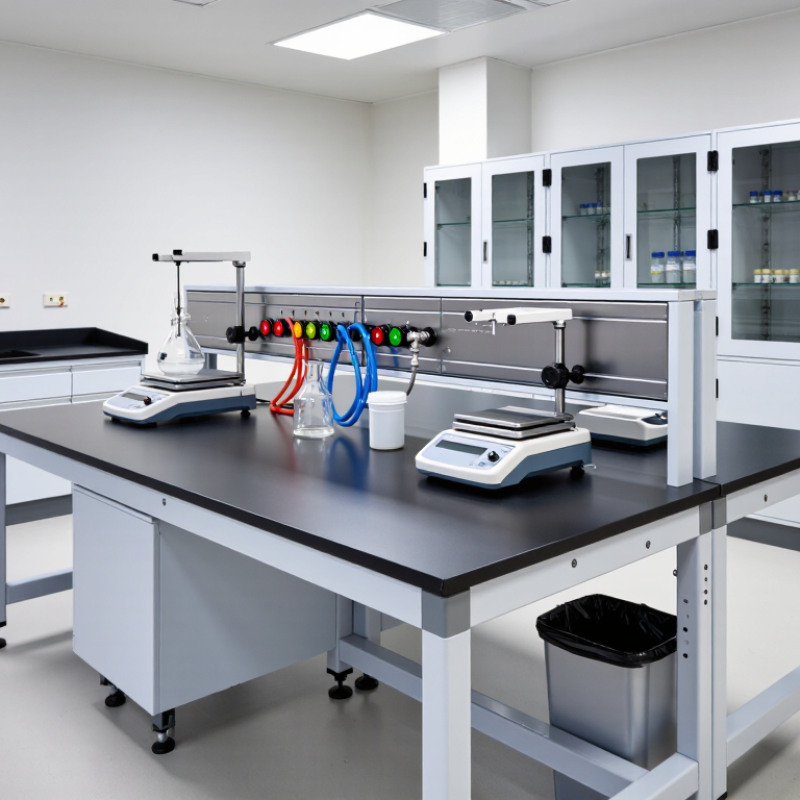
Start with tasks, not catalog dimensions. Map each activity: weighing powders, preparing solutions, operating instruments, and cleaning glassware. Note who performs it, how often, and what moves between stations. Include equipment footprints, power and water needs, storage, and clear working space.
Small details matter. A balance beside a busy wash area may face vibration, splashes, or constant traffic.
The U.S. Department of Energy’s Better Buildings Initiative reports that laboratory buildings can use about 5–10 times more energy per square foot than typical offices. This is not a table specification; it is a reminder to coordinate bench utilities and equipment loads with the facility plan.
Match work surfaces to actual tasks: chemical-resistant tops for routine solution preparation, stable support for sensitive instruments, and accessible service connections where equipment needs them. Measure the largest instrument, including doors and service panels.
Plans can look convincing on paper and still miss a cable route or a shared drawer. Review the layout with the people who will use it, then revise it against real workflow observations.

Choosing a chemistry lab table means matching its work surface to the chemicals and heat it will encounter. Epoxy resin surfaces generally tolerate many common laboratory chemicals and brief contact with warm equipment. Phenolic resin can be a practical option for lighter-duty work, but its resistance depends on the specific formulation. Check compatibility data for the actual acids, solvents, and concentrations used in your lab.
Stainless steel handles heat well and is easy to wipe down, yet some chemicals can stain or corrode it. Ceramic tile resists heat and many chemicals, but grout lines may trap spills, and tiles can crack if heavy glassware is dropped. Small details matter. A hot beaker set directly on a surface can leave damage even when the material is rated for chemical resistance. Use suitable heat mats, and clean spills promptly.
Look beyond a material’s general label. Ask for chemical-resistance charts, temperature limits, and care instructions, then compare them with your daily procedures. A surface that performs well with dilute solutions may react differently to concentrated chemicals or prolonged exposure. No table material is perfect. It is easy to focus on resistance ratings and overlook edges, seams, and worn areas, where damage often begins. Inspect samples if possible, and consider how the table will be cleaned and maintained over time.
Measure the room before choosing a chemistry lab table. Record wall lengths, door swings, columns, sinks, and the clear route to exits. A taped floor outline can reveal awkward corners that a plan misses. Measure twice. NFPA 45 uses a 36-inch clear aisle as a laboratory-planning benchmark; confirm the applicable edition and site requirements. Keep that route clear, even when stools and carts are in use.
Choose table depth and length around actual tasks, not a catalog photo. Leave room for a balance, notebooks, and a safe reach to utilities. The U.S. Department of Energy’s Better Buildings program notes that laboratories can use up to five times more energy per square foot than offices. That figure is not a table-sizing rule, but it supports avoiding oversized, poorly planned spaces. Put frequent-use supplies in drawers or under-bench cabinets; reserve upper shelves for light, rarely used items. I still find storage plans easy to overestimate.
Tips: Sketch equipment footprints on paper, then mark service connections and accessible storage. Leave clear space around safety equipment and doors. Check chair movement, too. A layout that looks tidy while empty may feel cramped once a second person is working.
A chemistry lab table should match the hazards and tasks in the room, not just its dimensions. Check that the work surface resists the chemicals used in your procedures, and ask for test data rather than relying on a “chemical-resistant” label. Even durable finishes can discolor or fail after repeated spills. Inspect seams, sealed edges, and joints where liquids might collect. Check the details. Confirm the frame’s load rating includes equipment, stored materials, and routine use, and make sure the table stays stable under that load.
Utilities need equal care. Map the required outlets, water, gas, vacuum, and drainage before choosing a layout. Confirm shutoffs are accessible, fittings suit the intended service, and electrical outlets are positioned away from likely splash zones. A table does not replace room-level safeguards, such as suitable ventilation or nearby emergency equipment. Have qualified facilities staff review connections and installation. Verify applicable local building, fire, electrical, and laboratory-safety requirements, since standards vary by location and lab use. Request current documentation, including load limits and relevant test reports. A tidy specification sheet can still leave gaps; compare it with the actual room plan and ask what has not been tested.
Emergency eyewash and shower access is an important utility to consider when planning a chemistry lab. ANSI/ISEA Z358.1 specifies minimum flow rates of 0.4 gallons per minute (gpm) for an eyewash, 3.0 gpm for an eye/face wash, and 20 gpm for a safety shower. These devices must deliver flushing fluid for at least 15 minutes.
Assess Installation, Maintenance, and Long-Term Cost
Installation costs can change the real price of a lab table. Check doorway widths, elevator access, and floor capacity before ordering. A heavy table may need extra handling or floor reinforcement. Measure twice. Confirm whether plumbing, electrical outlets, or service connections must be moved, and ask who will coordinate that work. Small details matter.
Maintenance depends on the chemicals, heat, and equipment used at each bench. Ask for documented resistance information for the worktop, not just a general claim that it is chemical-resistant. A surface that tolerates occasional spills may still stain after repeated exposure. Match cleaning instructions to the products staff actually use, and inspect seams, edges, and supports for damage. Keep a simple inspection log. It helps reveal wear before repairs interrupt work.
Compare long-term costs, not only the purchase quote. Include installation, cleaning supplies, replacement parts, repair labor, and possible downtime. A lower-cost top may be sensible for light use, while intensive work may justify a more durable surface. Check whether damaged components can be replaced individually. That can avoid replacing an entire table. I have seen planning documents overlook future access for repairs; it is an easy mistake, and worth revisiting before the layout is fixed.
Please share your email with us to see your results.