How to Choose the Best Power Tool Organizers
Choosing the right Power Tool Organizers starts with understanding how tools are used, not how attractive a storage system looks. A cordless drill, impact driver, and circular saw need different access points. Weight, battery size, dust exposure, and charging habits all matter. A crowded drawer can hide a missing bit. It can also damage a tool’s housing.
Market data shows why this decision deserves attention. Grand View Research valued the global power tools market at approximately USD 36.2 billion in 2023 and expects continued growth through 2030. The U.S. Bureau of Labor Statistics also reports millions of workers across construction and maintenance occupations, where fast, reliable tool access affects daily productivity. Storage is not a minor accessory.
Ron Paulk, a respected woodworking-tool designer and workshop educator, has said, “A tool should have a home where it is easy to find and easy to return.” That principle is useful, although real workshops are rarely perfect. Some organizers waste wall space. Others fit drills well but fail with larger batteries. I have seen users choose deep bins, then lose time searching through them.
The best Power Tool Organizers match your workflow. Compare open racks, modular cases, drawer inserts, and wall-mounted systems. Check load ratings and mounting hardware. Leave room for future tools. A five-minute access test can reveal more than a product photograph.
The smartest choice is practical, secure, and slightly forgiving. Not flawless. Just dependable.
Understanding Power Tool Organizer Types and Storage Needs
How to Choose the Best Power Tool Organizers
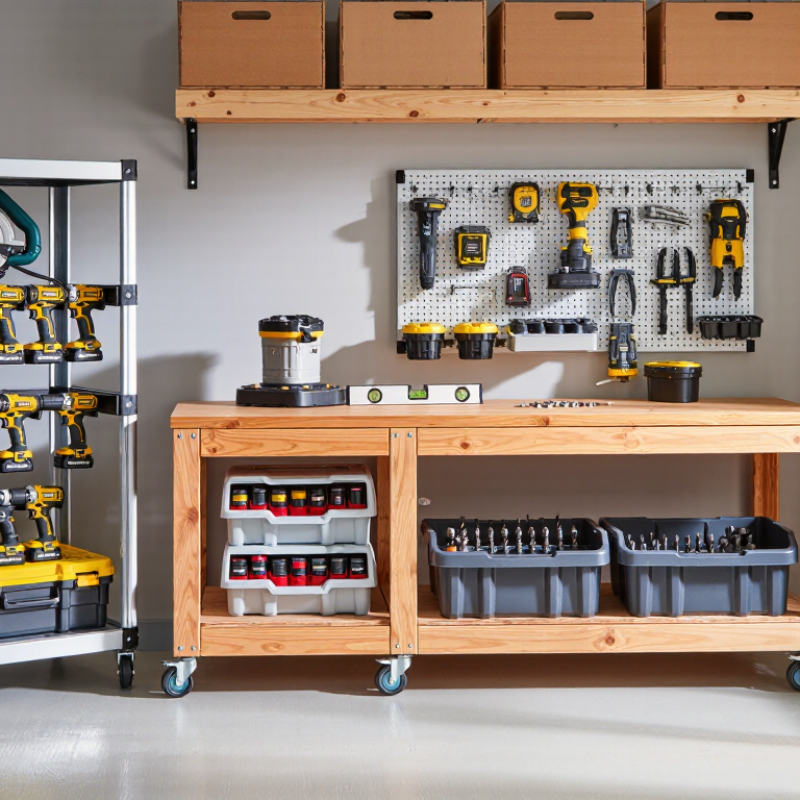
Understanding power tool organizer types starts with the tools you actually use. A wall-mounted rack suits drills, drivers, and saws used daily. Drawers protect smaller bits, blades, and measuring tools from dust. A mobile cart works better when projects move between rooms. In my workshop, open storage saves time, but it also exposes tools to moisture. That trade-off matters.
Storage needs depend on weight, battery size, access frequency, and workspace conditions. Heavy equipment needs low, stable storage. Frequently used tools should sit between waist and shoulder height. Batteries need a dry, ventilated area away from heat and metal clutter. The U.S. Occupational Safety and Health Administration requires stored materials to remain secure against sliding or collapse under 29 CFR 1910.176(b). That principle applies to home workshops too. A crowded shelf is not efficient storage.
Market data also shows why tool collections keep expanding. Grand View Research valued the global power tools market at about 40.8 billion U.S. dollars in 2023 and projected continued growth through 2030. More tools create more organizational pressure. However, market growth does not prove that larger cabinets are better. I once chose deep drawers and lost visibility of small accessories. Shallow compartments would have worked better. Measure your longest tool, battery clearance, and walking space before buying. Leave room for future additions, but avoid storing empty capacity that encourages clutter.
How to Choose the Best Power Tool Organizer
Understanding organizer types and storage needs helps match capacity, accessibility, and mobility to the number of tools you use. The chart shows practical planning midpoints for common organizer formats.
How to read the chart: Compact cases are suitable for small tool collections and transport. Wall racks improve visibility while saving floor space. Drawer cabinets provide organized storage for a larger collection, while rolling carts offer the highest capacity and can be moved around a workshop.
Assessing Tool Quantity, Size, Weight, and Accessibility
Choosing a power tool organizer starts with an honest inventory, not an attractive storage box. Count drills, drivers, saws, batteries, chargers, and loose bits. I once underestimated battery space and created a crowded drawer that slowed every repair. Quantity determines capacity, but empty space matters too. Leave room for future tools.
Measure the longest tool, widest handle, and tallest battery. Record these dimensions before choosing an organizer. A compartment may fit a tool head but still press against its trigger or cable. Heavy equipment needs a low, stable position, especially in a rolling cabinet. Place dense items near the base. Lightweight accessories can sit above them for easier lifting. This reduces tipping and shoulder strain, although my own layout still changes after larger projects.
Accessibility is about action, not appearance. Tools used daily should be visible and reachable without moving three other cases. Open pockets suit bits and measuring tools, while firm dividers protect heavier equipment. Check whether the organizer passes through doorways and can be lifted safely with one hand. Labels help, but they fail when compartments change. Review the setup after a week of real use. A neat arrangement on day one may become inconvenient by Friday.
Comparing Materials, Capacity, Portability, and Installation Options
Choosing the best power tool organizer starts with its material. Steel handles heavy drills, batteries, and impact drivers without flexing. However, it can add noticeable weight to a wall or vehicle. Reinforced polymer is lighter and resists moisture, but cheaper versions may crack near screw holes. In my workshop, I prefer thick panels with rounded edges. They survive daily contact better. Still, no material is perfect.
Capacity should match your real tools, not an imagined collection. Measure the longest tool, widest battery, and tallest charger before buying. A crowded organizer slows work and damages handles. Oversized storage wastes wall space and encourages loose items. Leave a little room. You will probably add another tool later. I once ignored this detail and regretted it.
Portability depends on weight, grip design, and balance. A compact case is useful for service calls, while a modular rack suits a fixed workspace. Check whether the handle remains comfortable when fully loaded. Installation also deserves careful attention. Wall-mounted systems need solid anchors and enough clearance for tool removal. Pegs offer flexible positioning, while rails usually provide stronger alignment. For uneven walls, adjustable hardware can prevent unwanted movement. I have found that marking stud locations first reduces mistakes, although I sometimes measure twice and still drill imperfectly. A reliable organizer should make access predictable, not merely look tidy.
Matching Organizer Features to Your Workspace and Safety Requirements
Choosing a power tool organizer starts with the workspace, not the product label. Measure wall width, bench depth, and walking clearance. In a small fabrication bay, I have seen loose chargers block a fire exit and cords trail across aisles. OSHA 29 CFR 1910.176(b) requires stored materials to avoid hazards, including blocked passageways. Choose wall-mounted storage for narrow rooms. Use drawer organizers when dust and falling objects are concerns.
Safety features should match daily handling. Select compartments that keep drills, blades, and batteries separated. Add non-slip liners where vibration can move tools. A locking drawer may suit shared workshops, but it can slow urgent access. That trade-off matters. The U.S. Bureau of Labor Statistics recorded 2.6 million nonfatal private-industry workplace injuries and illnesses in 2023. Better organization cannot prevent every incident, but it can reduce reaching, searching, and accidental contact.
Check visibility before capacity. Clear labels and bright compartment markings help workers identify missing tools quickly. Keep heavy equipment between knee and shoulder height, reducing awkward lifting. The National Safety Council’s Injury Facts 2024 reported $167 billion in work-injury costs for 2022, including medical expenses and lost productivity. I still misjudge storage needs after adding new tools. Leave roughly 20 percent spare capacity, then review the layout monthly. A crowded organizer is a warning.