How to Choose the Best Portable Electric Winch?

Choosing the best Portable Electric Winch starts with the job, not the product label. A compact winch may look powerful on a workshop shelf, yet struggle on wet ground, steep trails, or uneven loading ramps. The right choice depends on pulling capacity, duty cycle, battery system, cable length, control method, and anchoring options.

Pierre Roy, founder of Portable Winch Co., has emphasized, “A portable winch must be simple, reliable, and easy to carry.” That principle remains useful. Portability means more than a lightweight housing. You should be able to transport, position, and operate the unit without unnecessary effort. Check the rated pulling force carefully. Manufacturers often publish maximum capacity under ideal conditions. Real terrain may reduce performance.

Think about your actual load.

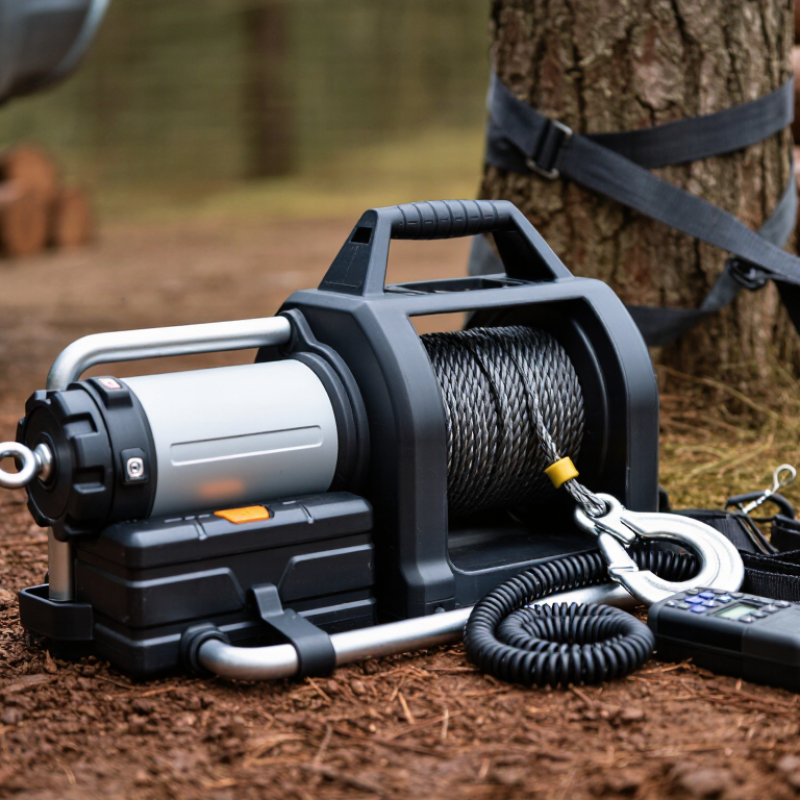
A 2,000-pound vehicle on level ground differs greatly from a heavy log on mud. Synthetic rope can reduce weight and handling risk, while steel cable may offer greater abrasion resistance. Neither option is perfect. Inspect the rope, hook, remote control, battery connector, and mounting points before every use. Small damage can become a serious failure.

This guide will compare essential specifications, practical safety features, battery choices, and common purchasing mistakes. It will also examine noise, maintenance, weather exposure, and long-term value. Some recommendations may feel obvious, but real-world use often exposes overlooked details. A cheaper Portable Electric Winch can become expensive when its battery drains quickly or its controls fail in cold weather. Choose based on repeated performance, not impressive numbers alone.
How to Choose the Best Portable Electric Winch?

What Is a Portable Electric Winch and How Does It Work?

A portable electric winch is a compact pulling machine powered by a battery or external DC source. It uses an electric motor, gearbox, drum, and braking system. When activated, the motor turns the gearbox, increasing torque while reducing speed. The drum then winds a cable or synthetic rope around itself. Simple, but not harmless.

A 2024 Grand View Research report estimated the global winch market at about USD 2.9 billion in 2023, with steady growth expected through 2030. This demand reflects wider use in vehicles, construction, marine work, and recovery tasks. A portable unit usually includes a remote control, relay, clutch, and thermal protection. The rated pulling force applies to the first rope layer. It decreases as more rope gathers on the drum. Many buyers miss this detail.

Choosing the right model starts with the real load, not the advertised maximum. A practical field rule is to select capacity above the expected load, especially on slopes or muddy ground. Check voltage, duty cycle, rope length, mounting method, and ingress protection. ASME B30.7 guidance also emphasizes reliable braking and controlled operation for powered winches.

I would inspect the anchor point twice. Portable does not mean effortless. A small battery can overheat, and an underestimated rope angle can change everything. Performance claims deserve testing, not blind trust.


How to Match Winch Capacity to Your Vehicle and Load

Choosing a portable electric winch starts with the actual load, not the advertised pulling figure. Check your vehicle’s gross weight, passengers, fuel, tools, and recovery equipment. Then estimate the stuck load, including mud suction, slope, and rolling resistance. A compact vehicle on level ground may need far less force than the same vehicle in wet clay. Measure the real load. Do not rely on curb weight alone. That shortcut can create an underpowered setup.

Look for rated line pull on the first cable layer. Capacity usually drops as more cable wraps around the drum. For routine self-recovery, many technicians choose a winch rated at least 1.5 times the vehicle’s gross weight. Add more margin for steep terrain, deep mud, oversized tires, or frequent heavy use. A snatch pulley can redirect force and reduce winch strain, but it does not remove anchor limitations. Every component must match. Inspect the cable, hook, battery, and mounting plate before use. The manual matters more than sales language.

Electrical demand is part of capacity matching. High pulling loads can drain a small battery quickly, especially after repeated attempts. Check current draw, alternator capacity, cable size, and duty cycle. During practical recovery work, I once treated a shallow slope as harmless; buried tires proved otherwise. That mistake changed my estimates. Build each pull around a stable anchor, controlled tension, and pauses for heat. Capacity is a starting point, not permission to exceed equipment limits.

How to Choose the Best Portable Electric Winch? - How to Match Winch Capacity to Your Vehicle and Load

Vehicle or Load Category Typical Vehicle GVWR or Load Weight Suggested Minimum Rated Line Pull Suitable Portable Winch Range Typical Use Important Matching Considerations
ATV, UTV, or small utility vehicle Up to 1,500 lb / 680 kg 2,000–3,500 lb / 907–1,588 kg 2,000–4,500 lb Light recovery, moving logs, trailers, and equipment on firm ground Check the vehicle’s mounting point, battery capacity, and allowable front or rear accessory weight.
Compact car, crossover, or small SUV 3,000–5,000 lb / 1,361–2,268 kg 4,500–7,500 lb / 2,041–3,402 kg 4,500–8,000 lb Recovery from shallow mud, loose gravel, snow, or a gentle incline A winch is not a substitute for a rated recovery point; confirm the vehicle manufacturer’s towing and recovery limits.
Mid-size SUV, pickup, or van 5,000–7,500 lb / 2,268–3,402 kg 7,500–12,000 lb / 3,402–5,443 kg 8,000–12,000 lb Moderate off-road recovery, uneven terrain, and light trailer handling Use a snatch block when practical to increase pulling capacity and reduce motor load; the anchor must also be rated.
Full-size SUV, heavy pickup, or loaded van 7,500–10,000 lb / 3,402–4,536 kg 11,000–15,000 lb / 4,990–6,804 kg 12,000–16,000 lb Deep mud, steep slopes, heavy equipment, or heavily loaded vehicles Portable units at this capacity can be heavy; verify the mounting plate, electrical supply, cable size, and duty cycle.
Trailer, boat, or non-powered equipment Use actual gross load, including cargo 1.5–2.0 × estimated pulling resistance 2,000–12,000 lb Boat launching, loading trailers, positioning machinery, and moving rolling loads Rolling resistance varies with tire pressure, slope, bearings, surface, and whether the load is braked.
Capacity and safety checklist
  • Choose the rated line pull from the winch specification, not the motor’s peak power.
  • For a stuck vehicle, size the winch using the vehicle’s actual loaded weight and the severity of the recovery, not GVWR alone.
  • Winch capacity is normally highest on the first layer of cable and decreases as more cable winds onto the drum.
  • A pulley or snatch block can provide mechanical advantage, but it approximately doubles the line length required and increases anchor-point loading.
  • Use only rated recovery straps, shackles, hooks, anchor points, and a mounting system designed for the expected load.
  • Confirm battery voltage, wiring, fuse or circuit protection, remote-control range, waterproofing, and the manufacturer’s duty-cycle limits before purchase.

Planning guide only: actual pulling force depends on surface type, slope, tire condition, load distribution, cable angle, and whether the load is stuck. Always follow the vehicle and winch manufacturer’s rated limits.

Which Power Source and Mounting Options Fit Your Needs?

Choosing a portable electric winch starts with its power source, not its advertised pulling capacity. A 12-volt model suits vehicles with a healthy starting battery and short recovery work. A 24-volt system usually supports longer cycles with lower current draw. The U.S. Department of Energy reports lithium-ion battery energy densities commonly ranging from 150 to 265 Wh/kg. That advantage reduces portable battery weight, but cold weather and poor charging habits still reduce usable capacity. Real experience matters here.

For remote work, compare a dedicated battery pack with a vehicle-powered winch. A separate lithium battery simplifies installation and protects the vehicle’s starting battery. However, it needs a charger, weather protection, and a clear recharge plan. The International Energy Agency reported that global battery demand for electric vehicles exceeded 750 GWh in 2023. This growth supports wider battery availability, but it does not guarantee every pack can deliver high winch currents safely. Check continuous current, peak current, cable size, and protection devices.

Mounting options determine whether that power becomes useful force. A receiver-mounted plate installs quickly and stores easily, while a bumper or chassis mount offers greater rigidity. Use rated recovery points, not decorative brackets or improvised hardware. ASME B30.26 emphasizes inspecting below-the-hook hardware for deformation, cracks, and wear. That principle applies here. I would also measure cable path, anchor height, and fairlead alignment before buying. Small alignment errors create ugly side loads. Portable does not mean effortless.

What Safety Features and Build Qualities Should You Check?

Choosing a portable electric winch starts with its safety design, not its advertised pulling power. Check the rated capacity against your real load, including mud, slopes, and rolling resistance. A small margin matters. Never treat maximum capacity as normal working capacity.

Inspect the hook, latch, and cable before every use. The hook should close securely, while the cable should show no crushed sections, broken strands, or deep corrosion. A reliable winch needs an automatic brake that holds the load when power stops. Overload protection, thermal protection, and a clearly marked emergency stop add valuable control. Keep the wired or wireless controller away from pinch points. Wet hands and poor visibility can turn simple operation into a serious mistake.

Build quality appears in less obvious details. Look for a rigid frame, sealed electrical connections, strong mounting points, and a drum that winds evenly. The battery leads should feel thick, flexible, and firmly connected. During field checks, I also watch for overheating after short pulls. Heat is information, not just an inconvenience. Let the motor cool when needed. Gloves, eye protection, and stable footing remain essential, even with automatic features. I once focused too much on pulling speed and overlooked cable alignment. That was a useful reminder: convenient equipment still demands careful judgment. Examine the manual for inspection intervals, load limits, and operating warnings. Clear documentation often reveals more reliability than polished packaging.

How to Compare Controls, Portability, Maintenance, and Price

Portable electric winches vary widely, even when their pulling ratings look similar. Start by comparing controls. A wired remote provides direct feedback near the load, while a wireless remote improves distance and visibility. Check emergency stopping, cable response, and button quality. I once found a remote unreliable behind a concrete wall. Ratings alone can mislead.

Portability depends on more than total weight. Look for a balanced handle, compact housing, and mounting points that fit your equipment. A lighter winch may be easier to carry, but it can sacrifice cooling capacity or pulling strength.

Consider battery access, too. A tool needing awkward disassembly becomes less portable in real use. I still prefer a slightly heavier model when its controls feel secure.

Tips:

Test the controls before demanding work. Measure your storage space. Inspect the cable, hook, connectors, and brake regularly.

Maintenance should include accessible inspection points and replaceable parts. Keep the winch clean and dry, and follow its rated duty cycle.

Price should include batteries, chargers, mounting hardware, and wear items. The cheapest option may cost more after repairs. Still, a higher price does not guarantee reliability.

Read specifications, check warranty terms, and compare service support. Leave room for doubt.

Members of