How to Choose a Fully Electric Continuous Pyrolysis Plant?

Choosing a Fully Electric Continuous Pyrolysis Plant requires more than checking its heating power or advertised output. The decision should begin with feedstock reality. Moisture, particle size, ash content, and daily volume directly affect stability. A plant designed for dry wood may struggle with wet sludge or mixed agricultural residues.

Professor Robert C. Brown, a respected pyrolysis researcher, has emphasized this practical principle: “Pyrolysis performance depends strongly on heat transfer, residence time, and feedstock consistency.” That statement remains useful when comparing electric reactors. Buyers should examine heating uniformity, temperature-control accuracy, feeding reliability, and oxygen isolation. A stable reactor may hold a narrow temperature range around 450–600°C, depending on the selected material and process design. Small deviations can change char quality, gas composition, and oil yield.

The electrical system also deserves close attention. Request verified data for connected load, peak demand, insulation efficiency, and operating cost. Confirm whether the local grid can support continuous operation. Battery storage or renewable electricity may improve resilience, but they can increase investment. Ask for real operating records, not only laboratory results. Inspect the feed screw, seals, sensors, control cabinet, and emergency shutdown system. These details are easy to overlook.

A perfect plant does not exist. Some specifications may remain uncertain. That is where careful testing matters. Request a representative trial using your actual feedstock. Compare measured output with the supplier’s projections. A reliable Fully Electric Continuous Pyrolysis Plant should offer controllable performance, transparent maintenance requirements, and evidence that its design works beyond a sales demonstration.
How to Choose a Fully Electric Continuous Pyrolysis Plant?

Core Design and Operating Principles of Fully Electric Continuous Pyrolysis Plants

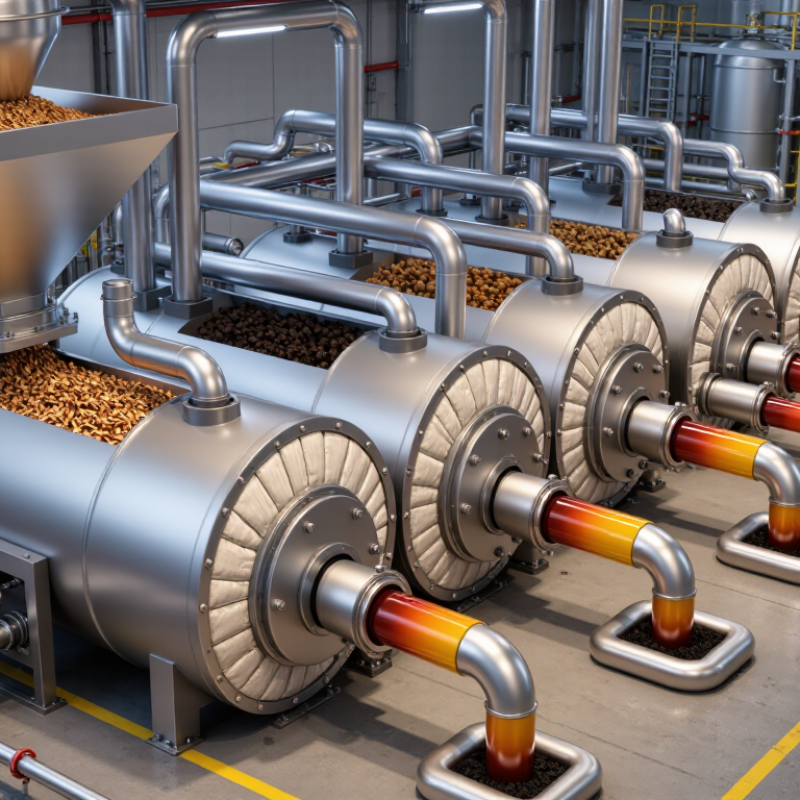
Choosing a fully electric continuous pyrolysis plant starts with its heat-transfer design, not its nameplate capacity. The reactor should separate feeding, drying, pyrolysis, and char cooling into controlled zones. Electric resistance elements can deliver clean, adjustable heat around the reactor shell or through protected internal assemblies. Even heating matters. Cold pockets can leave unconverted feedstock, while hot spots may damage vapors or create unstable operation. A slow-speed screw or paddle system must maintain steady residence time. Feed rate, moisture, particle size, and bulk density directly affect that time.

During operation, sealed feeders limit air entry and protect the oxygen-limited environment. Temperature sensors should read several zones, not only the outlet. Pressure control, oxygen monitoring, and automatic shutdowns provide practical protection when feed conditions change. Vapors leave the reactor through heated lines, then pass through staged condensation or controlled gas handling. Non-condensable gas may support process heating after cleaning and stable pressure control. Char needs cooling before discharge. Otherwise, it can reheat in contact with air. Small details matter.

When comparing plants, request heat-balance data, electrical-load curves, residence-time tests, and independent material analyses. Ask how the system behaves during a wet-feed upset or a brief power interruption. Backup controls and safe cooling procedures are more valuable than impressive output figures. Maintenance access should be visible, with replaceable seals, insulated terminals, and clear sensor calibration records.

One point deserves skepticism:

“fully electric” does not automatically mean low-impact operation.

Electricity source, insulation quality, and downtime determine real performance. Operators should trace each claim to a sensor, test, or maintenance record.


Key Feedstock Requirements and Material Preparation

How to Choose a Fully Electric Continuous Pyrolysis Plant?

Feedstock preparation should guide plant selection, not the other way around. A continuous electric pyrolysis system needs a steady, uniform material flow. For dry biomass, moisture below 10% is commonly targeted, because excess water consumes heat before pyrolysis begins. IEA Bioenergy technical reviews identify moisture, ash, and particle size as major process variables. In practice, chips around 10–30 millimetres often feed more consistently than long fibres or dusty fines. A simple screen and magnetic separator can prevent blockages, sparks, and uneven heating.

Waste composition is less predictable. The World Bank’s What a Waste 2.0 report estimated 2.01 billion tonnes of municipal solid waste generated globally in 2016, with at least 33% unmanaged. That scale does not mean every waste stream is suitable. Remove stones, metals, soil, and wet food residues before feeding. Plastics require polymer sorting, while chlorine-containing materials need strict control and compliant emissions management. Feedstock testing should include moisture, ash, fixed carbon, volatile matter, chlorine, and particle distribution.

A perfect feedstock rarely exists. I would not trust a supplier’s average analysis alone. Request samples from different seasons and test them separately. This may expose an inconvenient truth: the cheapest material can require the most drying, sorting, and electricity. Choose a plant with adjustable feeding, temperature, residence time, and safe shutdown controls. That flexibility matters when real waste differs from laboratory samples.

How to Choose a Fully Electric Continuous Pyrolysis Plant? - Key Feedstock Requirements and Material Preparation

Feedstock Preferred Feed Condition Recommended Moisture Typical Particle Size Key Contaminant Controls Main Preparation Steps Electric-Heating Considerations
End-of-life tires Uniform tire-derived rubber chips or granules with stable composition. Preferably ≤1–3 wt% Approximately 10–50 mm, depending on the reactor and feeding system. Remove loose soil, stones, excessive steel, and free textile fibers. Control water and fine dust. Inspect, bead-wire remove where required, shred, magnetically separate steel, screen fines, and store under cover. Low moisture reduces electrical energy consumption and improves temperature control. Fine rubber dust may require dust-tight conveying and fire protection.
PE and PP plastics Predominantly polyolefin material with consistent composition and limited non-plastic content. Preferably ≤1 wt% Approximately 10–30 mm flakes or pieces. Segregate PVC and other chlorine-containing plastics. Remove metals, glass, stones, PET, and excessive dirt. Sort by polymer type, shred, wash if necessary, drain, dry, screen, and use magnets or eddy-current separation for metals. Low and stable moisture helps prevent steam formation, feed bridging, and fluctuations in electrical load.
Mixed polyolefin film Clean, shredded film with controlled levels of labels, paper, and multilayer packaging. Preferably ≤3 wt% Approximately 20–50 mm; avoid long strands that can wrap around conveyors. Control PVC, aluminum laminates, paper, food residue, sand, and fine dust. Pre-sort, shred, remove metals, wash when required, mechanically dewater, hot-air dry, and agglomerate only if needed for stable feeding. Film has low bulk density and may bridge in hoppers; use a suitable compactor, loss-in-weight feeder, or controlled densification system.
Waste wood and wood chips Consistent untreated wood or separately controlled waste-wood grades. Typically ≤10–15 wt%; lower moisture improves efficiency. Approximately 5–30 mm, with limited oversize material. Remove stones, metals, soil, treated or painted wood, halogenated materials, and excessive bark or ash. Debark where appropriate, screen, magnetically separate metals, chip, and dry using controlled low-temperature air. Moisture directly increases the electrical duty required for evaporation. Uniform particle size supports stable residence time and heat transfer.
Agricultural residues Dry, screened straw, corn residues, shells, or similar biomass with consistent ash content. Generally ≤10–15 wt% Approximately 5–25 mm; fiber length should be controlled to prevent bridging. Control soil, stones, sand, metals, pesticides, and high-ash mineral matter. Bale breaking, shredding, screening, magnetic separation, drying, and optional pelletizing or briquetting for better flow. High ash can increase solids handling and fouling. Stable bulk density is important for continuous electric-heating control.
Sewage sludge or high-moisture organic waste Only suitable when the plant is specifically designed for dried sludge or prepared organic solids. Usually requires drying to approximately ≤10–20 wt% Typically 5–20 mm after drying and granulation. Analyze chlorine, sulfur, nitrogen, heavy metals, ash, and potentially hazardous contaminants. Dewater, thermally dry, homogenize, screen, test for hazardous constituents, and use enclosed dust and odor control. High initial water content can consume substantial electrical energy and reduce throughput; a dedicated drying stage is normally required.
General selection guidance: The final feed specification should be confirmed through representative laboratory testing and a pilot or process-design review. Important tests commonly include moisture, ash, volatile matter, particle-size distribution, bulk density, chlorine, sulfur, nitrogen, metals, and calorific value. Actual limits vary with reactor design, feeding system, residence time, emission controls, and product specifications.

How to Compare Heating Systems, Capacity, and Energy Efficiency

A practical evaluation starts with the heating system, not the advertised output. Electric resistance heaters are simple, responsive, and easy to zone across the reactor wall. Induction heating can deliver rapid, targeted heat, but coil design and material compatibility need careful checking. Microwave systems may heat uneven feedstock differently, requiring tests with actual moisture and particle sizes. Ask for temperature maps, control response times, heater replacement intervals, and electrical protection details. Small details matter.

Capacity should match your feedstock, operating schedule, and available electrical supply. Continuous capacity is not just the reactor’s maximum hourly rating. It also depends on moisture, particle size, residence time, and feeding stability. Request performance data from comparable materials, preferably from an independent test. A larger reactor is not automatically better. Oversizing can increase idle power, maintenance costs, and startup losses.

Compare energy efficiency using kilowatt-hours per tonne, not broad percentage claims. Include the reactor, feeding system, gas handling, cooling, and control equipment in the calculation. Check insulation thickness, heat recovery, automatic temperature control, and standby consumption. Ask whether results were measured at full load or under ideal conditions. In my view, real operating data matters more than a polished brochure. Some suppliers may lack complete measurements, so leave room for verification and a monitored trial. That uncertainty deserves attention.

How to Choose a Fully Electric Continuous Pyrolysis Plant?

Comparison of heating systems, practical throughput, thermal efficiency, and electricity demand

The reference operating points compare common fully electric heating approaches for continuous pyrolysis. Direct resistance heating generally offers simple control and stable operation, while induction-assisted heating can reduce heat-transfer losses when the reactor and susceptor are properly designed. Microwave heating may provide rapid internal heating but usually requires more specialized equipment and feedstock preparation. Lower electricity consumption and higher thermal efficiency are preferable, but final selection should also consider feedstock moisture, reactor insulation, residence time, and required production capacity.

Safety Controls, Emission Management, and Process Reliability

How to Choose a Fully Electric Continuous Pyrolysis Plant?

A practical evaluation starts with safety controls, not heating capacity. Fully electric heating removes direct combustion, but it does not remove process risks. Check whether the system includes pressure relief, oxygen monitoring, gas leak detection, and automatic shutdown interlocks. Emergency stops should be reachable from several operating areas. They should also remain effective during sensor failure. Ask for documented risk assessments, commissioning records, and operator training procedures. These details often reveal more than impressive output figures.

Emission management requires careful attention. Pyrolysis gases, condensable vapors, and fine particles still need controlled treatment. Look for sealed transfer points, stable negative pressure, condensers, filtration, and suitable gas-cleaning stages. Continuous monitoring should track temperature, pressure, oxygen levels, and key exhaust indicators. Independent sampling can verify whether actual emissions match design claims. Do not accept “zero emissions” language without test conditions. It sounds attractive, but it is rarely precise.

Process reliability depends on steady feeding and consistent temperature control. Multiple heating zones can reduce cold spots and uneven conversion. Torque monitoring may detect blockages before they damage the feeding system. Data logging helps operators identify drift over time. Maintenance access matters too. A system can be technically advanced yet frustrating to service. In my view, feedstock variation deserves more attention. Many performance problems begin there, not in the reactor. No design is flawless. Require realistic trials, documented acceptance criteria, and a clear plan for unexpected shutdowns.

Installation, Maintenance, and Total Operating Cost Considerations

Choosing a fully electric continuous pyrolysis plant requires more than comparing purchase prices. Installation conditions can determine long-term performance. Check available electrical capacity, transformer limits, cable sizing, and local grid stability before ordering. The system also needs level foundations, safe access, ventilation, and suitable space for feedstock and recovered materials. Moisture control matters. Wet feedstock increases electrical demand and can reduce throughput.

Maintenance planning should begin during installation. Inspect heating elements, thermocouples, insulation, seals, bearings, and conveyor flights at scheduled intervals. Keep spare sensors and critical electrical components on site. Small failures can create expensive downtime. Operators should record temperature trends, motor loads, feed rates, and product quality each shift. These records support troubleshooting and demonstrate controlled operation. However, maintenance intervals should not be copied blindly from another facility. Local dust, feedstock variation, and operating hours change wear rates.

Total operating cost includes electricity, labor, replacement parts, cleaning, waste handling, and lost production. Calculate energy use per tonne under realistic moisture and loading conditions. Grid electricity may produce fewer onsite emissions, but its environmental benefit depends on the power source. A low-cost tariff is not always enough if interruptions stop continuous processing. Include demand charges and backup planning. A spreadsheet can still mislead. Test the assumptions with a small production trial and several months of operating data. Reliable decisions come from measured performance, documented maintenance, and compliance with applicable safety and environmental requirements.

Members of