Choosing a dry type transformer in 2026 requires more than comparing kVA ratings and purchase prices. Modern facilities face rising electricity demand, stricter efficiency expectations, limited indoor space, and higher fire-safety concerns. The International Energy Agency’s Electricity 2024 report projects global electricity demand to grow strongly through 2026, driven by data centers, industry, cooling, and electrification. That pressure makes transformer losses, thermal performance, and service life financially important.
Begin with the load profile. Record peak demand, harmonics, motor starting current, ambient temperature, altitude, and future expansion. A 1,000 kVA unit may look adequate on paper, yet repeated overloads can raise winding temperature and shorten insulation life. No checklist is perfect. Real operating conditions matter.
IEEE Fellow John D. McDonald, a recognized power-system engineer and transformer author, offers a practical principle: “Start with the load profile, not the transformer brochure.” That advice should guide every specification. Compare cast-resin and VPI designs, then verify compliance with IEC 60076-11 or applicable IEEE standards. Review noise data, enclosure protection, partial-discharge performance, cooling class, and maintenance access.
Industry research also signals sustained demand. MarketsandMarkets has forecast continued growth in the dry-type transformer market, supported by renewable projects, commercial buildings, and infrastructure upgrades. However, market growth does not guarantee a suitable product. A lower initial price can hide ventilation costs, harmonic derating, difficult replacement access, or weak after-sales support.
This guide explains how to select a dry type transformer that fits the electrical system, installation environment, safety objectives, and realistic operating future.
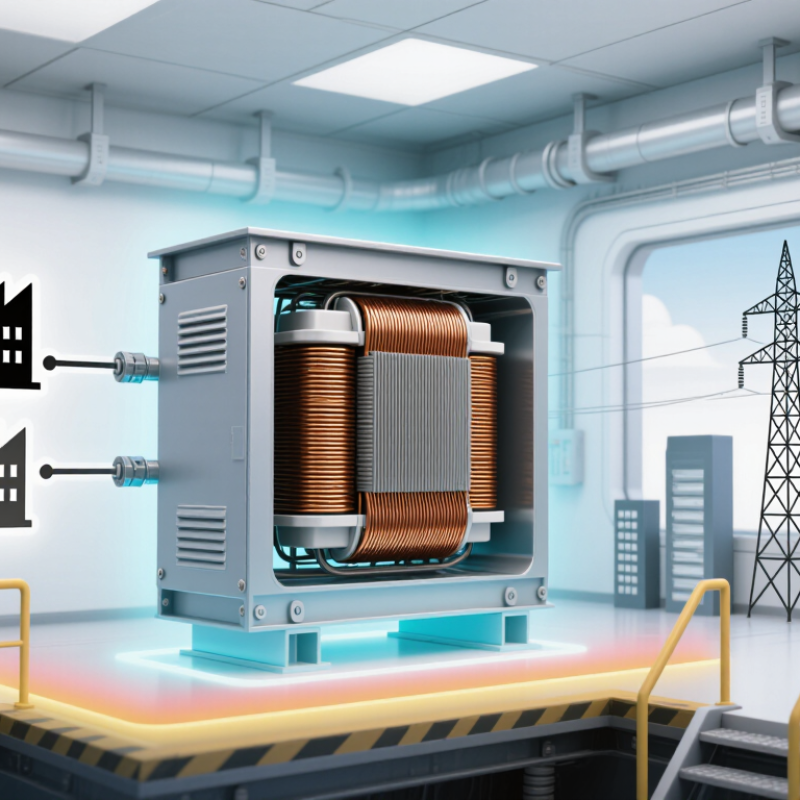
How to Choose a Dry Type Transformer in 2026?
Define Dry-Type Transformers and Their Main Applications
A dry-type transformer transfers electrical energy without liquid insulation or cooling oil. Its windings use air, resin, or solid insulation materials for electrical separation. This design reduces leakage risks and simplifies indoor installation. It is often selected for buildings where fire safety and clean operation matter.
Common applications include hospitals, schools, offices, factories, data centers, and underground facilities. Dry-type units also support solar plants, battery systems, and industrial control equipment. A hospital may place one near critical loads, while a factory may use it beside motor control panels. Each location has different demands for noise, heat, dust, and available space.
Choosing the correct unit requires more than checking voltage and capacity. Engineers should review load patterns, harmonic currents, ambient temperature, altitude, enclosure rating, and ventilation. Standards such as IEC 60076-11 and IEEE C57.12.01 can support a reliable technical evaluation. Field inspections often reveal a simple problem: the room has enough floor space, but not enough cooling airflow. That detail is easy to miss.
A practical selection also considers future expansion. Oversizing can increase cost and reduce efficiency at light loads. Undersizing can cause overheating during peak operation. The first estimate is not always right. Measure real demand, discuss operating conditions, and confirm protection settings before installation.

Typical dry-type transformer rating ranges by main application
Dry-type transformers transfer electrical power without liquid insulation, using air and solid insulation systems instead. They are commonly selected for indoor commercial buildings, data centers, healthcare facilities, industrial plants, and renewable-energy installations. The ranges shown are typical engineering selection ranges in kVA; the final choice depends on load demand, voltage, short-circuit level, cooling method, installation environment, efficiency, and required temperature rise.
Choosing a dry type transformer in 2026 starts with electrical requirements, not cabinet size. The IEA Electricity 2024 report forecasts global electricity demand to grow by about 4% annually through 2026. That growth makes future loading important. Record the primary and secondary voltage, frequency, phase, available fault current, and required kVA. A neat kVA match is not enough. Motors, variable-speed drives, and data equipment can create inrush current or harmonics. Check the transformer’s impedance, temperature-rise rating, short-circuit strength, and neutral capacity under real operating conditions.
Then examine the installation environment. IEC 60076-11 covers dry-type transformer requirements, including insulation systems and environmental considerations. Specify altitude, ambient temperature, dust, moisture, ventilation, and indoor or outdoor exposure. A clean electrical room may still collect conductive dust near construction areas. That detail is easy to miss.
Use an enclosure and cooling method suited to the site, while maintaining manufacturer-specified clearances. For sensitive facilities, compare sound levels and fire performance with the project’s safety requirements, rather than relying on generic “low-noise” language.
Load behavior deserves a practical review. Estimate normal demand, continuous loading, emergency loading, and expected expansion over ten years. The U.S. Department of Energy’s 2024 distribution-transformer efficiency rule reinforces the importance of reducing no-load and load losses across equipment life. However, higher efficiency does not correct poor sizing. I would request measured harmonic data when possible, then review it with the design engineer. Guessing is cheaper at first, but it can produce heat, nuisance trips, and disappointing service life.
Choosing a dry type transformer starts with the load, not the catalog. Record voltage, frequency, starting current, harmonics, and daily operating hours. A cast-resin design suits damp or dusty rooms because its sealed windings resist moisture. VPI designs can offer efficient heat transfer and easier inspection. The best design depends on location, maintenance access, and fault exposure. Start with the load.
Insulation class determines how much thermal stress the windings can tolerate. Class F supports higher temperatures than Class B, while Class H provides greater thermal margin. However, a higher class does not automatically improve service life. Ambient temperature, altitude, and ventilation still control winding temperature. Measure twice. In one factory assessment, a transformer met the nameplate rating but overheated near a blocked wall grille. Installation space mattered more than expected.
Cooling methods should match the real heat pattern. AN cooling uses natural air movement and suits moderate loads with clear airflow. AF cooling adds fans for temporary overloads or compact installations. Fans also create noise, maintenance needs, and failure points. Check whether the control system can alarm on fan failure. I would not select forced air only for a short overload that rarely occurs. That choice may increase complexity without meaningful value. Review test reports, temperature-rise data, noise limits, and local electrical requirements before approval.
Efficiency should be checked under real load, not only at rated capacity. Ask for no-load and load-loss data from the test report. The U.S. Department of Energy estimates that its distribution transformer standards could save about 3.63 quadrillion British thermal units over 30 years. That figure shows why small efficiency differences matter. IEC 60076-11 and IEEE C57.12.01 provide useful technical references. Still, a compliant transformer may perform poorly in a hot, dusty room.
Safety features deserve equal attention. Temperature sensors, winding alarms, automatic shutdown, and fire-resistant insulation can reduce operational risk. A sealed enclosure may suit dusty areas, while ventilated designs need clean airflow. Check altitude, humidity, noise limits, short-circuit strength, and available clearance. NFPA 70 requirements may apply in the United States, but local installation rules can differ. That part is easy to overlook.
Tips: Match the transformer to the measured load profile. Leave practical space for cable bending and inspection. Confirm the enclosure rating before ordering. Request routine-test results, thermal data, and installation instructions. During site visits, I have seen ventilation blocked by storage boxes. The specification was correct. The installation was not. Also, oversizing feels safer, but it can increase losses and cost during lightly loaded operation. Use lifecycle calculations, not purchase price alone.
Selecting a dry type transformer now requires more than comparing purchase prices. Specify voltage, load profile, harmonics, altitude, enclosure rating, and required cooling class. Ask suppliers for routine test records, temperature-rise results, short-circuit withstand data, and applicable IEC 60076-11 or IEEE documentation. A credible supplier explains assumptions clearly. Vague answers are warning signs.
The U.S. Department of Energy’s 2024 distribution-transformer analysis estimated 3.6 quadrillion Btu in energy savings over 30 years from updated efficiency standards. Efficiency matters, but operating conditions matter too. Request verified no-load and load-loss figures, not brochure estimates. Check production traceability, factory quality controls, spare-part availability, and local service response. A cheap unit can become expensive during a three-day shutdown.
Maintenance planning should begin before delivery. NFPA 70B emphasizes a documented electrical-equipment maintenance program, while IEEE guidance supports inspection and testing for dry-type transformers. Build a schedule around infrared scans, ventilation checks, torque verification, insulation resistance, and cleaning dust from cooling channels. Record ambient temperature and loading during each inspection. Keep critical spares on site. This is often overlooked. I would also challenge fixed annual intervals; heavily polluted or highly loaded sites may need shorter cycles. Supplier support after commissioning should include baseline measurements, alarm settings, training, and clear warranty conditions. A technically strong transformer still fails when maintenance ownership is unclear.
Please share your email with us to see your results.