Choosing the right tools is crucial for any project. A Ball End Mill is an essential tool for machinists and hobbyists alike. It offers unique shapes that can create intricate designs and smooth contours on materials.
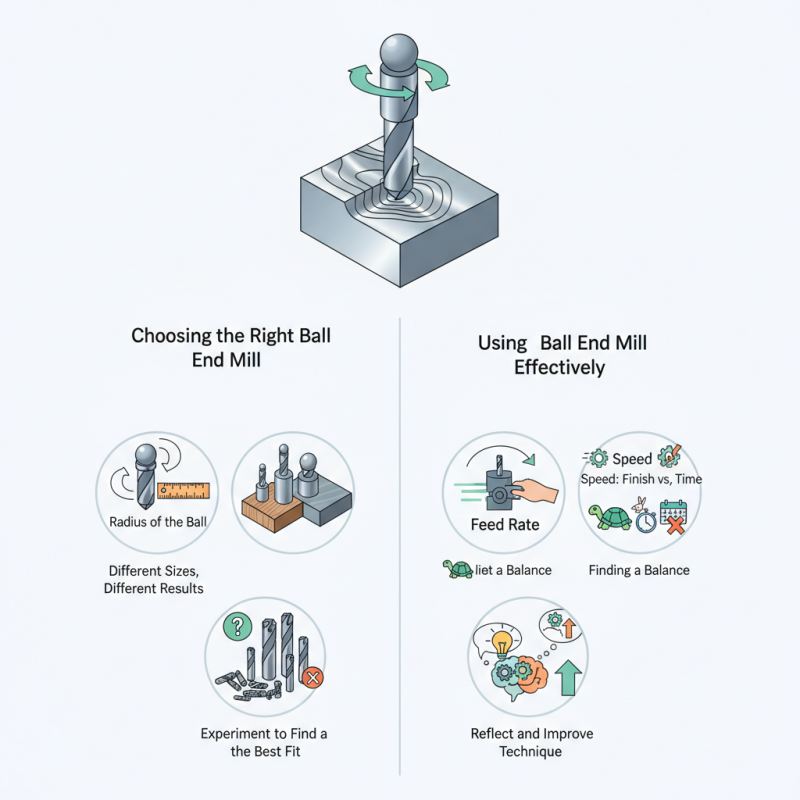
When you use a Ball End Mill, understanding its features is vital. The radius of the ball can affect the surface finish and depth of cut. Different sizes can lead to different results. You might need to experiment to find the best fit for your specific project. Missing the right size could impact your results significantly.
Using a Ball End Mill requires a thoughtful approach. Too much speed can lead to poor finishes or tool damage. A slow feed rate is safe, but it can also extend project time unexpectedly. Finding a balance is part of the learning curve. Reflection on what works best will help improve your technique over time.
Ball end mills are versatile tools used in various machining applications. They feature a rounded end, ideal for contouring, carving, and creating smooth surfaces. Understanding the types and specifications of ball end mills can significantly impact the effectiveness of your projects.
There are two primary types of ball end mills: single-ended and double-ended. Single-ended mills have a cutting surface at one end, while double-ended ones provide two cutting surfaces. The diameter of the mill affects the detail and precision of your work. Smaller diameters excel in intricate designs, while larger ones are better for removal of material. Considering the flute number is also essential. Fewer flutes provide better chip removal, while more flutes offer finer finishes.
When choosing a ball end mill, its material is crucial. High-speed steel (HSS) is common, but carbide is more durable. Mistaking one for the other can lead to poor performance. Predicting how various specifications will affect your project is sometimes tricky. Experimentation and reflection on your results can lead to better tool choices in the future. Don't hesitate to try different options and learn from your mistakes. They can lead to unexpected improvements.

When choosing a ball end mill, several factors come into play. First, consider the diameter of the mill. A smaller diameter allows for intricate designs, while larger sizes are better for more robust materials. The cutting edge geometry is another crucial aspect. It affects how smoothly the mill cuts through various materials. Angular designs can optimize performance, but they may not be suitable for all applications.
The material of the ball end mill is also essential. High-speed steel offers good flexibility, but carbide provides more durability. Durability is key when working on tough projects. Think about the specific task you'll be tackling. Will precision or longevity be more critical? This dilemma can impact your choice significantly.
Lastly, pay attention to the coating on the end mill. Different coatings can enhance performance for specific materials. However, using a coated mill can add complexity to your decision-making. Sometimes, it’s tempting to overlook the finer details. But these small factors can lead to a big difference in your project's success. Reflect on your previous experiences to help guide your decision.
When working with a ball end mill, proper techniques are crucial for achieving optimal results. A ball end mill excels in creating complex shapes, contours, and fillets, making it invaluable in CNC machining. According to industry data, about 70% of engineers opt for ball end mills for toolpath programming, highlighting their relevance in precision machining.
Proper feed rates and speeds are essential. A slower feed rate can improve surface finish, while a higher speed can enhance material removal. Keep in mind that using a ramped approach when entering materials can minimize tool wear. It's also important to regularly check for chip buildup. Ignoring this can lead to chatter and affect your final product.
Tips: Monitor your coolant flow. Insufficient coolant can cause overheating and tool failure. Consider experimenting with different stair-stepping techniques for creating deeper pockets. Just remember, what works for one project may not suit another. Always assess the results. Reflection on past projects can guide you to make better choices next time.
Ball end mills are essential for creating curved surfaces and intricate shapes. However, they require proper maintenance to ensure their effectiveness and longevity. According to industry reports, tooling wear can significantly affect machining precision. Regularly inspecting your ball end mills for wear can prevent costly mistakes.
Sharpening tools is a crucial part of maintenance. Dull cutting edges lead to poor surface finishes and reduced efficiency. It's recommended to sharpen after every 10 hours of use, or when sparks appear during processing. Additionally, using the correct coolant can enhance tool life. A recent study indicated that using high-quality coolant can increase tool longevity by up to 30%.
Storage also plays a vital role. If ball end mills are stored improperly, they may get damaged. Use protective cases and avoid moisture. Rust can quickly ruin a perfectly good tool. Routine cleaning of your milling equipment should not be overlooked. Even minor debris can cause significant wear. Paying attention to these details may seem tedious, but neglecting proper care can lead to performance issues.
Ball end mills are versatile tools widely used in various industries. They excel in creating contoured surfaces, intricate shapes, and complex geometries. This makes them ideal for applications in aerospace, automotive, and mold-making sectors. For instance, in the aerospace industry, they are used for high-precision components like turbine blades. These tools help achieve the desired aerodynamic profiles through smooth, flowing curves.
When using a ball end mill, consider the material you’re working with. Harder materials require slower speeds to prevent overheating. Always ensure the tool is sharp for better efficiency. If you notice increased chatter, it might be time for a replacement. Monitor your feed rate carefully to avoid damaging the workpiece.
Tips for selecting the right ball end mill include assessing the diameter and radius. A smaller diameter offers better detail but may take longer to complete a job. On the other hand, larger diameters can speed up the process but might sacrifice precision. Testing on scrap material can help fine-tune your settings and find the right approach for your project.
Please share your email with us to see your results.