Top Aluminum MIG Welder Manufacturers in China
China’s welding industry serves manufacturers across automotive, shipbuilding, construction, and fabrication. Choosing an Aluminum Mig Welder supplier, however, takes more than comparing price lists. Buyers need to assess arc stability, wire feeding, duty cycle, service support, and performance on thin aluminum sheet. Small details matter. A steady feed can reduce interruptions; poor settings may leave uneven beads or excess spatter.
Industry reports help explain the market context. The International Aluminium Institute reported approximately 70.6 million tonnes of global primary aluminum production in 2023, underscoring the material’s industrial scale. Fortune Business Insights’ welding equipment market report also tracks continued market growth, reflecting demand across multiple manufacturing sectors. These figures do not prove that any single supplier is reliable. They do show why equipment capability and dependable technical support deserve careful review.
This guide introduces leading aluminum MIG welder manufacturers in China and the practical factors behind a sound shortlist. It considers product range, stated specifications, customization, quality systems, and export support. Buyers should verify each claim through current datasheets, sample welds, and direct discussions with engineering teams. A polished catalogue is not enough. Even a capable factory may not suit every workshop, and comparisons can miss important differences in setup or after-sales response. That deserves a closer look.
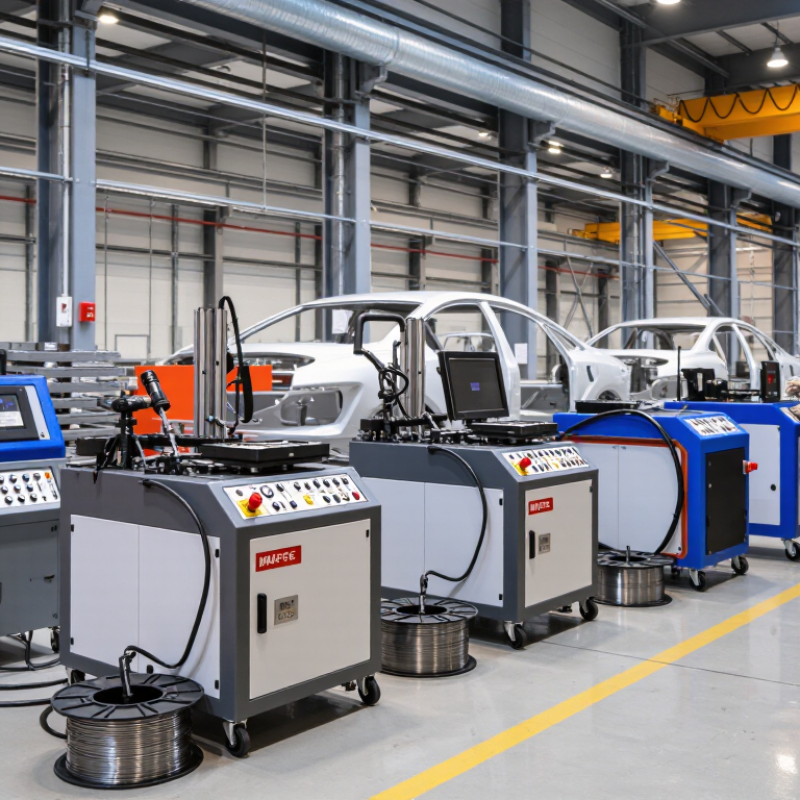
Aluminum MIG Welding: Process, Equipment, and Applications
Aluminum MIG welding uses a continuously fed wire electrode and shielding gas to join aluminum parts. The process moves quickly, but the metal demands careful preparation. Its oxide layer melts at a much higher temperature than the aluminum underneath, so clean the joint with a dedicated stainless-steel brush and remove oil before welding. Small details matter.
A typical setup includes a constant-voltage power source, a spool gun or push-pull feeder, and pure argon shielding gas. These feeding systems help prevent soft aluminum wire from buckling in the liner. Match wire alloy and diameter to the base metal, then check the equipment manual for suitable voltage and wire-feed ranges. There is no magic setting. Alloy, thickness, joint design, and position all affect the result.
During welding, maintain a steady travel speed and watch the puddle rather than relying only on sound. Excessive heat can distort thin sheet; insufficient heat may leave incomplete fusion. Pulse-capable equipment can help control heat input on some jobs, though it still requires practice. Aluminum MIG appears in vehicle bodies, trailers, marine structures, frames, and fabrication shops. Before production, test on matching scrap and inspect the bead for porosity, uneven edges, or lack of fusion. A neat surface can still hide a weak joint.
How to Evaluate Chinese Aluminum MIG Welder Manufacturers
Evaluate a Chinese aluminum MIG welder manufacturer through test records, not catalogue claims. Ask for a live demonstration using the same alloy and thickness you plan to weld. On a 3 mm aluminum plate, watch the arc start, wire feed, and bead consistency. Request the stated duty cycle at the exact current setting; a headline rating alone can mislead. Small details matter.
Check whether the manufacturer documents torch, feeder, and parameter configurations, and whether technicians can explain pulse settings without relying on vague claims. Ask for repeat welds, then inspect porosity, spatter, and penetration. Test it cold. Aluminum’s oxide layer and high heat conductivity make clean material preparation and stable feeding especially important. A polished sample proves little if it cannot be reproduced on another shift.
The International Aluminium Institute reported about 70.6 million tonnes of global primary aluminum production in 2023. That figure signals a large, diverse supply chain, not a quality guarantee for any welder. Verify traceability for key components, incoming inspection records, and spare-part availability. Ask how faults are diagnosed and how quickly replacement parts can reach your workshop. I would also request an unedited test video, though an in-person trial is stronger. Some factories may resist sharing process details; that hesitation deserves a closer look, but it is not proof of poor quality.
Leading Aluminum MIG Welder Manufacturers in China
Leading aluminum MIG welder manufacturers in China typically focus on stable wire feeding, controlled heat input, and dependable pulsed welding modes. These features matter when joining thin aluminum sheet, where excess heat can distort a panel or burn through an edge. A workshop test should include several material thicknesses, not just a clean sample plate. Fit matters.
Experienced manufacturers also pay attention to the complete welding setup. Push-pull torches, suitable contact tips, and consistent gas delivery can reduce feeding problems with soft aluminum wire. Ask how machines are tested under sustained use, and whether technical support can help operators adjust pulse settings for different joints. Clear manuals and accessible spare parts are practical signs of a reliable supplier, though they do not guarantee every machine will suit every job.
Before choosing a manufacturer, compare duty-cycle information, wire-feed consistency, and the availability of service documentation. If possible, inspect a live weld on the alloy and thickness you plan to use. A polished sample is useful, but real production conditions are less forgiving. No machine removes the need for clean material, sound technique, and regular maintenance; that part is easy to underestimate. Manufacturers that discuss limitations openly may offer a more useful basis for a long-term purchasing decision.
Product Range, Technical Capabilities, and Quality Standards
Top Aluminum MIG Welder Manufacturers in China
Product Range, Technical Capabilities, and Quality Standards
Chinese manufacturers offer aluminum MIG welders for repair shops, fabrication lines, and heavier production work. Product ranges may include compact inverter units, synergic welders, and pulse MIG systems. For thin aluminum sheet, stable arc control and reliable wire feeding matter more than a long feature list. Push-pull torches or spool guns can help reduce soft-wire feeding problems. Check which accessories come with the machine. Small details affect setup time.
Technical capability is not just maximum amperage. Compare duty cycle, pulse settings, wire-feed adjustment, and the machine’s stated aluminum thickness range. Ask for test welds on the alloy and thickness you actually use. Quality checks should cover electrical safety, repeatable output, and wire-feed performance across a production run. Manufacturers may use formal quality management systems, but verify current certificates and their scope. A polished specification sheet is not enough. I would still want to inspect weld consistency; that step is easy to skip when schedules are tight.
Tips: Request a sample weld and a clear warranty document. Confirm local service access, spare-part lead times, and the recommended torch setup before ordering. Check the fine print.
Comparing Suppliers for Procurement and After-Sales Support
When comparing aluminum MIG welder manufacturers in China, procurement teams should look beyond the quoted price. Ask suppliers to confirm output range, duty cycle, wire-feed stability, and compatibility with the aluminum wire sizes used in your shop. Request a sample weld using your actual alloy and material thickness. A clean bead in a showroom is useful, but it does not prove consistent results across a full shift. Check whether the quotation lists the torch, liner, rollers, cables, and consumables. Missing small parts can delay commissioning.
After-sales support deserves equal weight. Ask how service requests are handled, which spare parts are stocked, and whether remote troubleshooting includes wiring diagrams and parameter guidance. Confirm warranty coverage in writing, including transport responsibilities and exclusions. Manuals, parts lists, and operator training can reduce downtime, especially when local technicians are unfamiliar with the machine. “Fast support” sounds reassuring. It is not a service plan. No checklist catches everything, so review the quotation again before placing an order.
Tips: Compare suppliers using the same test checklist. Keep weld samples, settings, and service replies together. Ask who pays for replacement parts during the warranty period. Small checks matter.