China Top 10 Puff Pastry Machine Manufacturers?

China’s puff pastry equipment sector has grown from basic sheeting units into highly integrated production systems. Today, a Puff Pastry Machine may include dough sheeting, fat layering, folding, cutting, filling, and conveyor transfer. The real question is not simply which factory offers the lowest price. It is whether the machine can produce even layers during long, demanding shifts.

This guide examines ten Chinese manufacturers from a practical buyer’s perspective. We consider forming accuracy, stainless-steel construction, PLC controls, cleaning access, energy use, and after-sales support. We also look at production capacity. A small bakery needs different equipment from a frozen-food factory. That sounds obvious. It is often overlooked.

Pastry production consultant Jeffrey Hamelman has stated, “Baking is both a science and an art.” This principle remains valuable when evaluating automation. A machine must control pressure, temperature, and dough handling. However, it cannot correct poor ingredient quality or careless setup. That limitation deserves attention.

Our comparison relies on manufacturer documentation, operating experience, technical specifications, and service considerations. Buyers should still request trial runs with their own dough formula. Photos are not enough. Ask for layer samples, noise measurements, maintenance schedules, and references from comparable bakeries. Some suppliers communicate clearly before payment, then respond slowly after installation. That risk is real, though not universal.

The manufacturers listed here may differ in specialization, export experience, customization, and pricing. No single supplier fits every bakery. A reliable decision requires patience, technical questions, and a willingness to challenge attractive claims.
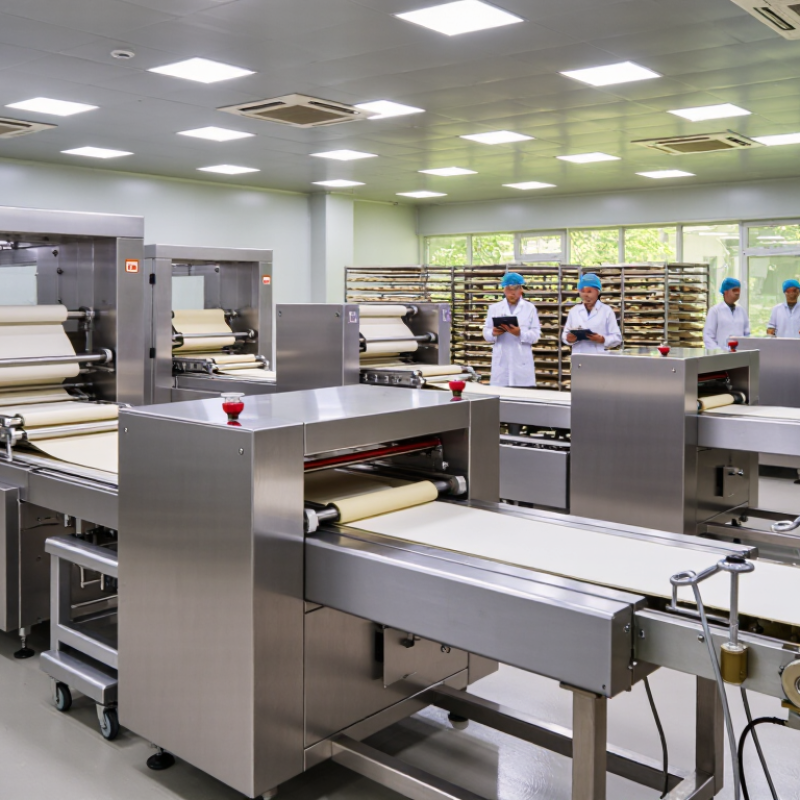
China Top 10 Puff Pastry Machine Manufacturers?

China’s Puff Pastry Machine Manufacturing Industry Overview

China’s puff pastry machine manufacturing industry has grown through practical engineering and strong production capacity. Manufacturers now supply equipment for bakeries, central kitchens, and industrial food plants. The market includes compact sheeters, filling systems, folding units, and complete pastry lines. A “top 10” list should not rely on popularity alone. It should consider dough handling accuracy, stainless-steel construction, output stability, maintenance support, and documented testing.

In real production, small details matter. Rollers must keep even pressure across the dough sheet. Sensors should respond quickly when dough thickness changes. A reliable machine also needs accessible belts, clear controls, and washable surfaces. Some suppliers provide excellent machinery but weak technical documents. That gap can slow installation and training. Buyers should examine factory experience, quality records, spare-parts availability, and export service before making a decision. Product videos are useful, but they cannot replace a live trial with the buyer’s own dough recipe.

Tips: Request a sample test using your flour, fat, and target pastry size. Check output after several continuous hours, not only during a short demonstration. Ask for noise levels, power requirements, cleaning procedures, and realistic delivery times. Leave room for doubt. A polished quotation may hide unsuitable capacity or difficult maintenance. Evaluate the complete operating process, not just the machine’s advertised speed.


Criteria for Selecting China’s Top Puff Pastry Machine Manufacturers

China Top 10 Puff Pastry Machine Manufacturers?

Selecting China’s top ten puff pastry machine manufacturers requires more than comparing catalog photos. Grand View Research’s Bakery Processing Equipment Market report valued the global market at about USD 14.76 billion in 2023. Its 2024 analysis forecasts roughly 5.3% annual growth through 2030. That expansion rewards reliable automation, not merely impressive output claims. Numbers need context. Ask for measured throughput using your dough formula, target thickness, and actual filling weight. Request a factory acceptance test with recorded speed, scrap rate, temperature stability, and layer consistency.

Food safety should shape the shortlist. Check stainless-steel contact surfaces, accessible guards, drainage, lubrication controls, and clean-down time. Documentation should reference ISO 9001 practices and Codex food-hygiene principles. Electrical systems also require destination-market compliance. Ask for risk assessments, wiring diagrams, validation records, and spare-parts lists. Sales promises are not evidence. Evaluate technician response times, remote diagnostics, training, warranty exclusions, and parts availability. These details often determine whether a laminator earns money after installation.

Cost comparisons also need discipline. Include installation, tooling, freight, commissioning, energy use, rejected dough, and five years of maintenance. An inexpensive machine can become costly when rollers drift or sensors fail. I would inspect two operating reference sites, preferably processing similar laminated products. Still, references can be selective. Request time-stamped production records and speak with operators, not only managers. A top-ten list should disclose its scoring method, evidence date, service geography, and technical limitations. Without those checks, the ranking may look authoritative while remaining surprisingly fragile.

Profiles of the Top 10 Chinese Puff Pastry Machine Manufacturers

China’s top ten puff pastry machine manufacturers show different strengths rather than one identical production model. One profile focuses on compact sheeting machines for small bakeries, using adjustable rollers and simple control panels. Another serves industrial plants with continuous laminating lines, automatic flour dusting, and conveyor synchronization. These differences matter during equipment selection.

A third manufacturer is known for customizable pastry lines, including filling, folding, cutting, and tray arranging units. A fourth emphasizes stainless-steel construction and washable contact surfaces. The fifth profile targets export projects, offering multilingual manuals, remote assistance, and spare-parts planning. Useful support, though response quality may vary by region. A sixth supplier develops energy-conscious systems with servo drives and programmable speed control. Operators still need proper training.

The seventh profile specializes in frozen pastry production, where stable temperature control and gentle dough handling are essential. The eighth provides modular machines for growing factories. Modules can reduce early investment, but later expansion requires enough floor space. A ninth manufacturer combines machine production with process testing, helping buyers compare dough thickness, butter distribution, and output consistency. The tenth profile concentrates on heavy-duty equipment for high-volume bakeries, with reinforced frames and automated cleaning options.

Reliable evaluation requires more than a polished catalogue. Buyers should inspect factory records, food-contact materials, test videos, maintenance access, and documented safety procedures. A factory trial with the buyer’s own dough can expose problems that specifications hide. That step is often overlooked.

Comparison of Products, Technologies, Capacities, and Services

When evaluating China’s top ten puff pastry machine manufacturers, compare equipment by output, dough handling, and service depth—not catalogue claims. A compact line may produce 1,000 pastries per hour, while an industrial system can exceed 6,000. Actual capacity depends on dough temperature, filling weight, folding cycles, and operator skill. Ask for tested samples. Products differ in sheeting width, roller adjustment, cutting accuracy, and cleaning access. Servo-driven rollers usually provide steadier thickness than basic mechanical controls. Still, automation is not automatically better. A pastry line with complex settings can slow a small bakery. Inspect a 2.5-millimeter dough sheet, edge definition, and scrap rate during a live trial. Those details reveal more than polished brochures.

Technology comparisons should include PLC control, recipe storage, sensor protection, and emergency stopping systems. Food-contact parts should use suitable stainless steel and allow quick, tool-light sanitation. Energy use matters too. Check motor ratings, cooling demands, and standby consumption under normal production. Capacity figures need context. Request results for your actual flour, butter ratio, product size, and shift length. Service separates reliable suppliers from merely capable fabricators. Look for commissioning, operator training, spare-part lists, response times, and remote troubleshooting. A clear warranty is useful, but local technical support is better. Customization can help, yet excessive modification may delay delivery and complicate maintenance. That trade-off needs written confirmation. Many buyers focus on hourly output and overlook changeover time. It can become an expensive lesson.

China Top 10 Puff Pastry Machine Manufacturers? — Product, Technology, Capacity & Service Comparison

Anonymous capacity benchmark for commonly offered puff pastry and laminated-dough equipment in China. The ranges represent typical published specification bands and are not a ranking of individual companies or brands.

Higher capacity is generally associated with continuous laminating, automatic feeding, servo-controlled forming, recipe-based PLC systems, and integrated proofing or conveying. Actual output varies with product weight, dough formulation, lamination cycles, operator skill, and line configuration.

How to Choose the Right Chinese Puff Pastry Machine Manufacturer

Choosing a Chinese puff pastry machine manufacturer requires more than comparing prices. Study the factory’s production history, engineering team, and export experience. Ask how many similar bakeries operate their machines, and request verifiable references. A polished website is not enough. During a video inspection, examine welding lines, conveyor alignment, guarding, and electrical cabinet labels. Request a live dough test using your flour, butter, and target pastry size. This reveals whether the laminator controls thickness consistently.

Technical documents should state output, dough width, folding method, motor power, and acceptable tolerances. Do not accept vague promises about “high efficiency.” Confirm food-contact materials, cleaning access, spare parts, operator training, and safety documents for your market. Ask whether software settings can be adjusted without hidden fees. Reliable manufacturers explain limitations openly. That matters. A machine rated for 1,000 kilograms hourly may perform differently with cold butter or humid dough. Request test records under comparable conditions.

Check quality control beyond final assembly. Look for incoming-part inspection, serial-number tracking, and documented factory testing. Review payment terms and warranty wording carefully. A clear response suggests professional support. An unclear response is a warning. Compare service response times, not only purchase quotations. Some buyers focus too much on stainless steel appearance. That can be misleading. Control stability, maintenance design, and training usually affect daily costs more. No machine is perfect. A supplier willing to discuss failed tests may deserve closer attention.

China Top 10 Puff Pastry Machine Manufacturers? - How to Choose the Right Chinese Puff Pastry Machine Manufacturer

No. Evaluation Dimension Recommended Benchmark Evidence to Request Importance Buyer Check
1 Machine Type and Process Fit The supplier should offer a complete solution for dough sheeting, fat layering, folding, resting, cutting, and forming. Process-flow diagram, product samples, and a video or report from a production trial. Critical Confirm compatibility with the required pastry recipe and production method.
2 Production Capacity Select a line capacity that matches the target output, commonly specified in kilograms per hour, pieces per hour, or trays per hour. Rated capacity, operating-speed range, product weight range, and test-production records. Critical Compare usable output rather than the maximum no-load speed.
3 Sheeting and Thickness Control The machine should provide adjustable roller gaps and stable thickness across the working width; many industrial designs support sub-millimeter final sheets. Roller-gap range, adjustment method, thickness-tolerance data, and finished-product samples. Critical Check thickness uniformity at the center and both edges of the sheet.
4 Food-Contact Materials Food-contact surfaces should use suitable corrosion-resistant materials, typically stainless steel such as AISI 304; higher corrosion resistance may require AISI 316. Material list, component drawings, surface-finish information, and supplier declarations. Critical Verify which parts are food-contact surfaces and which are painted or coated frames.
5 Electrical Compatibility The electrical design should match the destination country, commonly 220–240 V single-phase or 380–415 V three-phase at 50 Hz, depending on the site. Electrical schematic, total connected load, plug standard, motor details, and control-panel specifications. High Obtain confirmation from the plant electrician before placing the order.
6 Hygienic Design and Cleaning The design should minimize dough traps, provide accessible contact parts, and allow practical cleaning without damaging electrical components. Cleaning procedure, removable-part list, access photographs, and sanitation instructions. High Ask how belts, scrapers, rollers, cutters, and flour-dusting parts are removed and sanitized.
7 Safety and Compliance Documentation The machine should include guarding, emergency-stop devices, safe access controls, risk assessment, and destination-market compliance documentation. Risk assessment, user manual, declaration of conformity where applicable, and safety-circuit description. Critical Do not treat a logo or certificate image alone as proof of compliance.
8 Factory Quality Control A reliable manufacturer should control incoming materials, machining, assembly, electrical testing, trial running, and final inspection. Quality-control checklist, inspection records, calibration records, and factory-audit access. High Request photographs or video evidence of assembly and final testing.
9 Installation, Training, and Service The quotation should define installation responsibility, operator training, remote support, response time, and troubleshooting procedures. Service agreement, training plan, spare-parts list, troubleshooting guide, and support contact details. High Clarify whether commissioning is included and whether support is available in the buyer’s time zone.
10 Commercial Terms and Total Cost Evaluate machine price together with tooling, packaging, freight, taxes, installation, spare parts, energy use, maintenance, and warranty coverage. Itemized quotation, Incoterms, payment schedule, production lead time, warranty terms, and spare-parts prices. Critical Compare total landed cost and lifecycle cost instead of comparing purchase price alone.
Recommended scoring method: Score each dimension from 1 to 5, multiply the score by its importance, and shortlist manufacturers that provide verifiable documentation, successful product trials, transparent commercial terms, and dependable after-sales support.
Members of