China’s hydrogen, chlor-alkali, and water-treatment industries are creating strong demand for advanced Ion Exchange Membrane Equipment. These systems support membrane production, coating, assembly, testing, and process integration. Their performance affects current density, chemical resistance, energy use, and operating stability.
The International Energy Agency’s Global Hydrogen Review 2024 reported that global installed water-electrolysis capacity reached approximately 1.4 gigawatts by the end of 2023. China represented a substantial share of this capacity and continued expanding manufacturing capabilities. The IEA also identified electrolyzer cost, supply-chain maturity, and renewable-power access as key project considerations. Meanwhile, the U.S. Department of Energy’s Hydrogen and Fuel Cell Technologies Office highlights membrane durability, gas crossover control, and scalable manufacturing as important technical priorities.
This article examines ten notable Chinese manufacturers connected with Ion Exchange Membrane Equipment. The evaluation considers product range, engineering experience, membrane compatibility, automation, quality control, service coverage, and evidence from industrial projects. Company websites, technical documents, industry reports, and publicly available project information provide the research foundation. Claims can change quickly, however. Some production figures remain difficult to verify independently.
No ranking is perfectly neutral.
A reliable supplier should provide more than a polished brochure. Buyers should inspect electrode uniformity, sealing details, control-panel quality, spare-parts support, and commissioning records. A small pilot line can reveal problems hidden by impressive capacity claims. This guide therefore offers a practical starting point, not an official certification. Readers should confirm specifications, certifications, delivery records, and after-sales responsibilities before making procurement decisions.
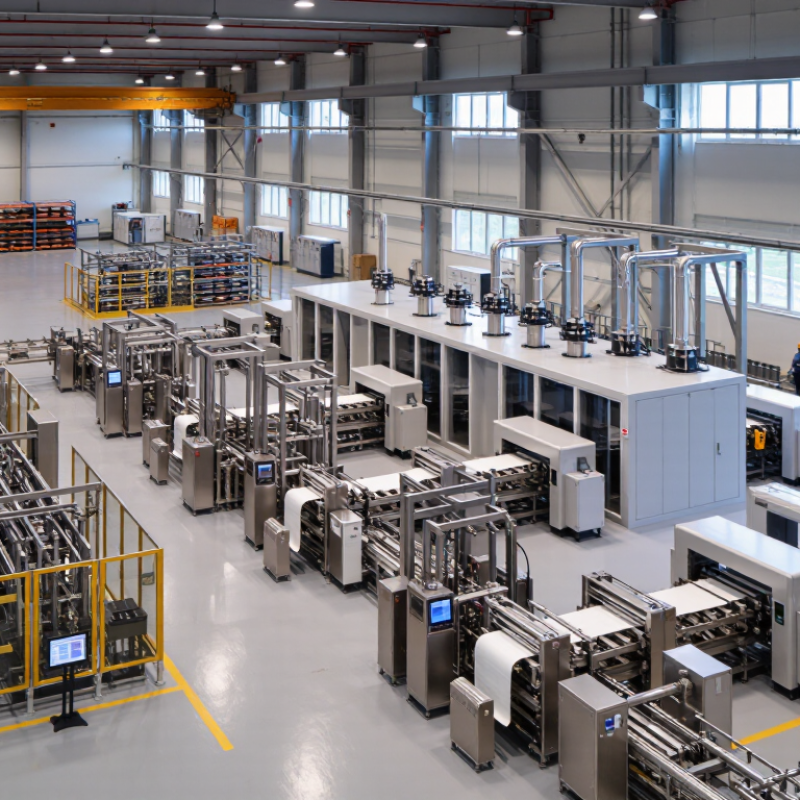
Ion exchange membrane equipment is a process system designed to move selected ions through specialized membranes. It usually includes membrane stacks, pumps, spacers, sensors, piping, and control units. The membranes carry fixed electrical charges. These charges allow positive or negative ions to pass while limiting unwanted species. The equipment does not simply filter water. It separates ions through controlled electrical and hydraulic conditions.
In practical operation, electrodialysis equipment can reduce dissolved salts, recover useful acids, or produce concentrated chemical streams. A stable feed flow is essential. Excessive pressure may deform spacers or increase leakage between compartments. Low flow can create concentration polarization and uneven membrane loading. Operators should monitor conductivity, voltage, temperature, pressure, and flow rate at suitable intervals. Small changes often reveal fouling before performance drops sharply. Clean water and correct pretreatment also protect membrane surfaces.
Equipment selection depends on ion concentration, recovery targets, temperature, and required production capacity. Polymeric materials must resist the process solution and repeated cleaning cycles. A useful design includes accessible sampling points and clear maintenance records. These details support traceability and safer decisions. No system is perfect. Membrane aging, scaling, and sensor drift can still affect results. In my view, many failures come from ignoring daily operating habits rather than choosing the wrong membrane type. A short inspection can expose blocked channels, unusual noise, or an unexpected pressure difference. That evidence deserves attention before increasing electrical power.

Ion exchange membrane manufacturing depends on controlled chemistry and precise equipment. Polymer selection sets the membrane’s mechanical strength, water uptake, and ion conductivity. Functional groups are introduced through sulfonation, quaternization, or other carefully monitored reactions. Small changes in reaction temperature can alter membrane performance.
Automated mixing systems help disperse polymers, solvents, and additives evenly. Vacuum degassing removes trapped bubbles before casting or extrusion. During film formation, coating heads control thickness across the moving web. Even a slight thickness variation can increase electrical resistance. Reinforcement fabrics may be embedded to improve dimensional stability, especially during hydration and drying cycles. Drying ovens must manage temperature, airflow, and residence time without creating surface cracks.
Surface treatment can improve selectivity, fouling resistance, or chemical stability. Plasma treatment, grafting, and thin protective coatings require consistent energy and coating control. Online cameras measure defects, while sensors track thickness and web tension. Laboratory testing then checks conductivity, water absorption, tensile strength, and ion selectivity. A reliable manufacturer connects these results with production data, not visual inspection alone.
The process is still imperfect. A clean-looking membrane may fail after repeated wet-dry cycling. This is why pilot trials, cross-sectional microscopy, and long-duration testing remain valuable. Better automation helps, but experienced engineers must still question unusual data.
Selecting China’s leading ion exchange membrane equipment manufacturers requires more than comparing online rankings. Buyers should examine real engineering experience, process knowledge, and after-sales reliability. A capable manufacturer should explain membrane resistance, current density, flow distribution, electrode materials, and temperature control in practical terms. Vague answers deserve caution.
Evaluate equipment through documented testing. Ask for pilot data, operating records, maintenance intervals, and acceptance standards. Check whether the system supports stable voltage, accurate dosing, automatic alarms, and easy membrane replacement. Stainless steel quality matters, especially where acidic or alkaline solutions are used. Factory audits can reveal welding quality, cleanliness, and assembly discipline. Certifications help, but they never replace performance evidence.
Tips: Request a sample test with your actual solution. Compare energy use, output stability, and membrane wear. Speak with technical users, not only sales staff. A polished brochure proves little.
Reliable suppliers also provide clear drawings, spare-part lists, training, and response times. Their engineers should identify limits instead of promising perfect results. This is important because membrane life depends on water quality, impurities, pressure, and daily operating habits. Some buyers focus too heavily on purchase price. That can be a costly mistake. I would also record every assumption before signing, including capacity, recovery rate, warranty scope, and expected service life. Even experienced teams sometimes overlook installation conditions or operator skills. A careful selection process leaves room for testing, revision, and honest technical disagreement.
Editorial evaluation framework for comparing equipment suppliers without using company or brand data
The chart presents a practical weighting model for evaluating ion exchange membrane equipment manufacturers. Process consistency, membrane quality control, after-sales service, customization capability, compliance, delivery reliability, and total cost are key considerations when selecting a supplier for coating, drying, assembly, testing, or related membrane-production equipment.
China’s Top 10 Ion Exchange Membrane Equipment Manufacturers
China’s top 10 ion exchange membrane equipment manufacturers are often evaluated through engineering capability, production consistency, and service experience. Leading suppliers usually provide membrane testing systems, electrode assemblies, filtration units, and complete electrochemical equipment. Their projects may support water treatment, chlor-alkali production, hydrogen systems, and resource recovery. A reliable manufacturer should explain material compatibility, current density, pressure limits, and expected membrane life. Factory visits can reveal more than polished brochures. Look for clean assembly areas, traceable components, and documented inspection records.
Tips: Request a sample test report and a clear equipment layout. Compare energy consumption, maintenance access, spare-part availability, and commissioning support. Ask how the supplier handles membrane swelling, leakage, or uneven flow. These details affect long-term operating costs.
Experience matters because laboratory performance does not always match continuous industrial operation. Professional suppliers should offer pilot testing before final selection. They should also provide safety documentation and practical training for operators. However, no top-ten list is perfect. Rankings may change with project scale, membrane chemistry, and regional service capacity. Some manufacturers perform well in custom systems but lack large-scale delivery experience. Others offer strong equipment, yet their after-sales response may be slow. Buyers should verify references, test data, and contract terms independently. A careful comparison reduces technical surprises, although it cannot remove every risk.
Anonymized comparison of leading Chinese equipment-manufacturing profiles for ion exchange membrane electrolysis and related separation systems.
| Rank | Manufacturer Profile | Primary Equipment Focus | Ion Exchange Membrane Process | Typical System Scale | Main Applications | Core Materials | Control and Safety Features | Common Delivery Scope |
|---|---|---|---|---|---|---|---|---|
| 1 | Profile 01 | Industrial chlor-alkali electrolyzers and complete membrane-cell skids | Cation-exchange membrane Brine electrolysis for chlorine, hydrogen and caustic soda production | Multi-cell systems from pilot scale to large industrial trains | Chlor-alkali plants, chemical parks, water-treatment chemical production | Nickel cathodes, titanium-based anodes, fluoropolymer-compatible wetted parts | PLC or DCS control, differential-pressure monitoring, gas separation and emergency shutdown | Cell stacks, rectifiers, brine systems, gas handling, commissioning support |
| 2 | Profile 02 | PEM water-electrolysis equipment and hydrogen-generation packages | Proton-exchange membrane High-purity water splitting for hydrogen and oxygen | Containerized and skid-mounted systems from laboratory units to megawatt-class projects | Green hydrogen, renewable-energy storage, laboratory and industrial gas supply | PFSA membrane assemblies, porous transport layers, titanium flow fields | Water-quality control, leak detection, pressure regulation, hydrogen-purity monitoring | Electrolyzer stack, water purification, power supply, gas drying and control cabinet |
| 3 | Profile 03 | Alkaline water-electrolysis systems with diaphragm or ion-conducting separator technology | Anion-conducting separator Alkaline electrolysis using aqueous potassium hydroxide or equivalent electrolyte | Modular systems ranging from demonstration equipment to multi-megawatt installations | Hydrogen production, ammonia projects, industrial decarbonization | Nickel-based electrodes, porous diaphragms, alkaline-resistant seals | Electrolyte circulation control, gas-liquid separation, pressure interlocks | Electrolyzer frames, electrolyte loop, gas separators, rectifier and automation |
| 4 | Profile 04 | Electrodialysis and electrodialysis-reversal systems | Cation and anion exchange membranes Electrically driven ion separation and concentration | Pilot, laboratory, municipal and continuous industrial treatment systems | Desalination, salt recovery, acid-base recovery, wastewater reuse | Ion-exchange membrane stacks, polypropylene or FRP housings, corrosion-resistant electrodes | Polarity reversal, conductivity monitoring, flow balancing and automatic flushing | Membrane stack, feed pumps, pretreatment, electrical control and monitoring instruments |
| 5 | Profile 05 | Bipolar-membrane electrodialysis equipment | Bipolar membrane Conversion of dissolved salts into corresponding acids and bases | Batch and continuous systems for pilot and specialty-chemical production | Acid and alkali recovery, resource recycling, zero-liquid-discharge processes | Bipolar membranes, cation-exchange membranes, anion-exchange membranes | pH control, conductivity measurement, current-density management and chemical-resistant piping | Membrane stack, circulation tanks, dosing equipment, rectifier and process controls |
| 6 | Profile 06 | Membrane-electrode assemblies and electrochemical reactor modules | Ion-conducting membrane assembly Integrated membrane, catalyst layer, porous transport layer and bipolar plate design | Single-cell testing, short stacks and customized multi-cell modules | Hydrogen production, fuel-cell testing, electrochemical synthesis and research | PFSA or alkaline ionomer systems, platinum-group or nickel-based catalysts | Temperature, pressure, current and voltage data acquisition | MEA or stack assembly, test station, gas and water management, performance validation |
| 7 | Profile 07 | Membrane-cell equipment for high-purity chemical production | Selective ion-exchange membrane Electrochemical separation for high-purity acids, bases and salts | Customized laboratory, pilot and production-scale process lines | Electronic chemicals, pharmaceutical intermediates, specialty salts | Fluorinated ion-exchange membranes, titanium or nickel electrodes, engineered polymer frames | Clean-in-place procedures, chemical compatibility controls and online conductivity measurement | Reactor cells, filtration, circulation system, instrumentation and installation engineering |
| 8 | Profile 08 | Compact ion-exchange membrane systems for water and wastewater treatment | Electrodialysis membrane stack Removal or concentration of ionic contaminants under direct current | Small packaged units through municipal and industrial treatment modules | Industrial wastewater, brackish-water treatment, reuse and resource recovery | Ion-exchange membranes, FRP or stainless-steel piping, inert electrode assemblies | Automatic conductivity and flow control, alarms, interlocks and remote monitoring options | Pretreatment, membrane stack, pumps, power supply, control panel and commissioning |
| 9 | Profile 09 | Custom electrolysis test rigs and membrane-stack validation equipment | PEM, AEM and cation-exchange membranes Flexible platforms for evaluating membranes, catalysts and operating parameters | Laboratory and pilot systems with configurable cell areas and stack sizes | Universities, research institutes, catalyst development and process optimization | Interchangeable membrane assemblies, titanium, nickel and graphite current collectors | Precise current and voltage control, thermal management and multi-channel data logging | Test cell, gas and liquid handling, power source, sensors and software interface |
| 10 | Profile 10 | Integrated membrane-electrolysis balance-of-plant systems | Ion-exchange membrane electrolysis Integration of stack, power, fluid, gas and safety subsystems | Modular skid and containerized systems for distributed or centralized operation | Renewable hydrogen, chemical processing, industrial gas and energy-storage projects | Membrane stack, corrosion-resistant piping, heat exchangers and industrial instrumentation | SCADA integration, remote diagnostics, pressure relief, ventilation and gas detection | Engineering design, fabrication, factory testing, site installation and after-sales service |
China’s top ion exchange membrane equipment manufacturers serve chlor-alkali production, water treatment, acid recovery, and electrochemical processing. Their equipment includes membrane cells, electrode systems, circulation units, and automated control panels. In practice, buyers should examine current density, energy consumption, leakage protection, and maintenance access. A polished appearance means little without stable operating data.
Industry standards strongly influence equipment selection. Manufacturers commonly align designs with relevant GB, ISO, and IEC requirements, while export projects may require additional electrical, pressure, and environmental certifications. Factory acceptance testing should check membrane flatness, electrode spacing, pressure stability, and insulation performance. Small defects matter. A weak seal can interrupt an entire production line.
Future development is moving toward lower energy use, modular systems, digital monitoring, and longer membrane service life. Sensors can track voltage changes, temperature, flow rate, and differential pressure in real time. Data support predictive maintenance, although poor calibration can create misleading warnings. More equipment will likely combine cleaner materials with compact layouts and automated cleaning cycles. The ranking is never perfectly stable. Some comparisons remain too broad, because application conditions differ sharply between coastal chemical plants and inland water-treatment facilities.
Please share your email with us to see your results.