China Top Handheld Tyre Inflator Suppliers Guide

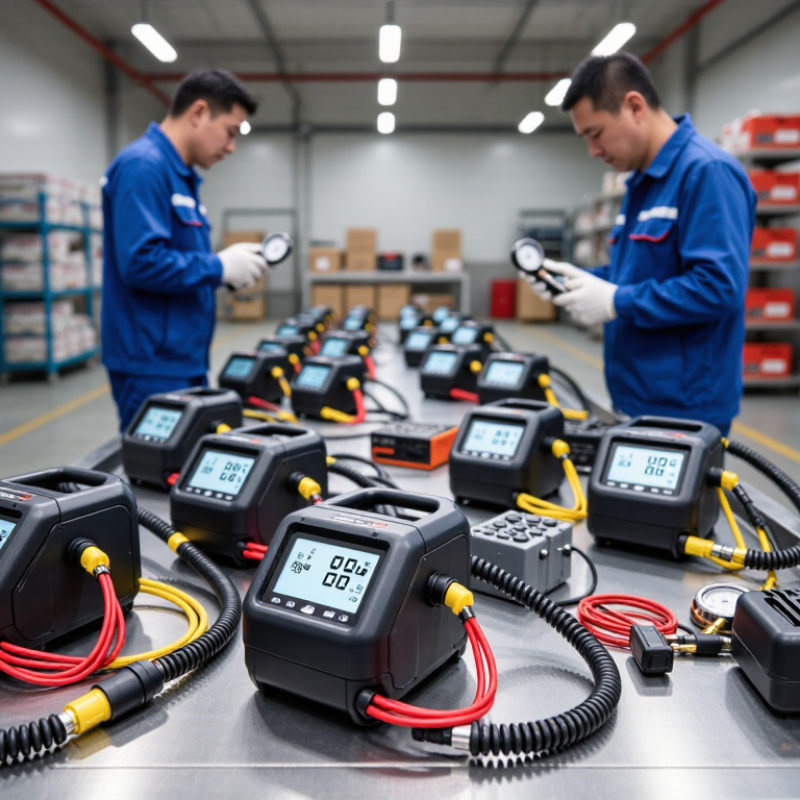
Choosing a reliable Handheld Tyre Inflator supplier in China requires more than comparing catalogue prices. Product quality often appears in small details: a clear pressure display, a firm air hose, heat-resistant wiring, and a battery that survives repeated inflation cycles. This guide introduces leading supplier types, evaluation points, and practical questions for international buyers.

Real experience matters. A supplier may provide attractive samples, yet production consistency can change between batches. Buyers should inspect factory capabilities, quality-control records, packaging protection, and after-sales communication. Requesting test reports, product specifications, and sample performance data can reduce avoidable risks. Check inflation time with a standard vehicle tyre, not only a laboratory demonstration.

Look closely.

A professional supplier should explain motor power, maximum pressure, battery capacity, charging options, noise levels, and safety protections. Relevant certifications should be verified for the destination market. Claims about fast inflation or long battery life need practical evidence. Marketing language alone is not enough.

No supplier is perfect. Even a strong manufacturer may have slower responses during peak seasons or limited customization experience. That weakness deserves honest consideration. This guide therefore focuses on dependable evidence, not impressive promises. It also considers communication, minimum order quantities, private-label support, spare parts, and delivery reliability. With careful comparison, importers, retailers, and automotive brands can identify a China-based partner suited to their customers and operating conditions. The final decision should reflect real testing, documented standards, and the supplier’s willingness to correct problems when they appear.
China Top Handheld Tyre Inflator Suppliers Guide

China Handheld Tyre Inflator Market: 12V–20V Power and 150 PSI Standards

China’s handheld tyre inflator market is increasingly shaped by 12V–20V power systems and 150 PSI rated designs. These figures matter, but they need careful interpretation. A higher voltage can support faster inflation, while actual performance depends on motor efficiency, battery capacity, hose length, and heat control.

When evaluating suppliers, request test data for a common tyre size, such as a compact car tyre from 30 to 36 PSI. Reliable suppliers should provide inflation time, duty-cycle limits, pressure accuracy, battery details, and noise measurements.

A 150 PSI rating describes the maximum pressure capability, not a suitable operating pressure for everyday tyres. In practical use, most drivers need far less.

A useful inspection checks the digital gauge against a calibrated reference, then repeats the test after the unit warms up. Temperature can affect readings. It can also reduce output.

Some suppliers report impressive laboratory times, but field results may differ with cold batteries or narrow valve connections. That gap deserves attention.

Look for clear manuals, stable charging protection, replaceable hoses, and traceable quality records. Ask how many units were tested and whether failed samples were documented.

Not every supplier will answer fully. That is a warning, though not always a rejection.

A well-built inflator should feel balanced in one hand, connect firmly, and stop near the selected pressure without sudden overshoot. Perfect consistency is uncommon, so buyers should leave room for real-world variation.


Supplier Verification: ISO 9001, CE, RoHS, and Factory Audit Records

China Top Handheld Tyre Inflator Suppliers Guide

Supplier Verification: ISO 9001, CE, RoHS, and Factory Audit Records

A reliable supplier should provide more than attractive product photos and fast replies. Request a current ISO 9001 certificate with the factory’s legal name, address, scope, and expiry date. Confirm the certificate through the issuing organization when possible. A certificate covering unrelated operations may not prove strong inflator quality control.

For CE compliance, review the EU Declaration of Conformity and supporting test reports. Check whether the documents match the exact model, battery type, charger, and accessories. RoHS evidence should identify restricted-substance testing and the tested materials. Pay attention to plastic housings, circuit boards, cables, and solder joints. Small details matter here.

Ask for recent factory audit records, not only a polished summary. Useful records show inspection dates, corrective actions, closure evidence, and responsible departments. During a video or on-site audit, observe incoming-material checks, torque testing, pressure calibration, aging tests, and final packaging. Ask to compare production samples with the approved sample. They may differ. That is a warning.

I have seen excellent documents paired with weak process control. Documents can expire. Audits also capture one moment, not every shipment. Keep batch records, calibration dates, and inspection photos in the purchasing file. A supplier that accepts these checks usually understands that reliability is built on evidence, not promises.

China Handheld Tyre Inflator Supplier Verification Checklist

Core evidence checks for ISO 9001, CE, RoHS, and factory audit verification

This practical screening benchmark counts the main evidence items buyers should review rather than measuring company performance or market share. ISO 9001 verification should include certificate scope and validity; CE verification should focus on the applicable conformity assessment and Declaration of Conformity; RoHS verification commonly requires material declarations and relevant test evidence; factory audits should cover production capability, quality control, traceability, and corrective actions.

Product Evaluation: Airflow, Inflation Time, Battery Capacity, and IP Ratings

China Top Handheld Tyre Inflator Suppliers Guide

When evaluating Chinese handheld tyre inflator suppliers, request measured airflow data, not only maximum pressure claims. Airflow affects how quickly a tyre reaches its target pressure. A practical test uses the same tyre, starting pressure, and room temperature. Record the time needed to rise from 30 to 36 PSI. One-minute inflation sounds impressive, but testing conditions can hide important differences. Larger tyres may need much longer.

Battery capacity needs careful interpretation. A 2,000 mAh battery may not outperform a larger pack if voltage, motor efficiency, or protection settings differ. Ask suppliers to provide watt-hours, charging time, cycle testing, and usable inflation counts. Test several tyres after a full charge. My first comparison ignored cooling pauses, so the results were too optimistic. Real users often inflate more than one tyre.

IP ratings also deserve verification. IPX4 generally indicates resistance to water splashes, while higher ratings may offer stronger protection. However, an IP rating does not prove resistance to dust, impact, heat, or poor storage. Request laboratory reports linked to the exact model and production version. Inspect the charging port seal and hose connection physically. Small gaps can matter. Suppliers with traceable test records, clear tolerances, and responsive technical teams provide more dependable evidence than polished specifications alone.

OEM/ODM Comparison: MOQ, Lead Time, Annual Capacity, and Custom Options

China’s handheld tyre inflator suppliers differ sharply in OEM and ODM capability. A basic OEM order often starts near 500–1,000 units, while ODM projects may require 2,000–5,000 units. Confirm this in writing. MOQ changes with batteries, molds, packaging, and certification needs.

Lead time usually reaches 25–40 days for stocked designs. New housings, displays, or custom firmware can extend production to 60–90 days. Annual capacity figures may range from 100,000 to over 1 million units. However, impressive numbers can be difficult to verify. Ask for monthly output records, production photographs, and component traceability. A factory producing 20,000 units monthly may be more reliable than one claiming 2 million annually.

Custom options include pressure-unit selection, preset shutoff, LED lighting, hose length, battery capacity, color, and retail packaging. Request a sample showing pressure accuracy after repeated cycles. The U.S. Department of Energy’s FuelEconomy.gov states that correctly inflated tyres can improve fuel economy by up to 3.3%, giving pressure accuracy commercial importance. NHTSA tyre-safety data also links poor tyre maintenance with recurring road risks. Procurement teams should therefore compare accuracy, heat control, battery testing, and warranty returns—not only unit price. One weakness remains: supplier capacity data is often self-reported, so independent factory audits are worth the cost.

China Top Handheld Tyre Inflator Suppliers Guide - OEM/ODM Comparison: MOQ, Lead Time, Annual Capacity, and Custom Options
Supplier Profile Typical Product Focus Typical MOQ Sample Lead Time Mass-Production Lead Time Indicative Annual Capacity Power and Battery Options OEM/ODM Custom Options Common Compliance Support Best Fit
Profile 1: Entry-Level Portable Inflator Compact cordless inflator for bicycles, motorcycles, balls, and emergency car use 500–1,000 units 7–12 days 25–40 days 100,000–250,000 units/year 12 V or 16 V rechargeable battery; USB-C or USB-A charging; digital pressure display Logo printing, color adjustment, retail box, user manual, carrying pouch, standard nozzle set CE, RoHS, EMC, UN38.3 and MSDS support for lithium-battery models Online retailers, promotional programs, and value-focused private labels
Profile 2: Mid-Range Automotive Inflator Portable inflator designed for passenger cars, SUVs, bicycles, and sports equipment 300–800 units 10–15 days 30–45 days 150,000–400,000 units/year 12 V DC vehicle cable, rechargeable battery, 120–150 PSI rated pressure, auto-stop function Housing color, control-panel layout, display language, battery capacity, packaging structure, accessory configuration CE, FCC, RoHS, EMC, LVD where applicable, UN38.3 and transport documentation Automotive accessory distributors and established e-commerce brands
Profile 3: High-Performance Dual-Power Inflator Higher-airflow unit for frequent passenger-car, SUV, van, and recreational-vehicle use 200–500 units 12–18 days 35–50 days 80,000–220,000 units/year 12 V DC and rechargeable operation; metal cylinder; thermal protection; memory pressure setting Motor specification, airflow tuning, battery pack, hose length, connector type, mold revision, custom firmware CE, FCC, RoHS, EMC, UN38.3, MSDS, and battery-pack test reports when applicable Professional automotive channels and premium private-label programs
Profile 4: Heavy-Duty Portable Inflator Large-cylinder inflator for SUVs, light trucks, vans, trailers, and off-road applications 100–300 units 15–25 days 40–60 days 50,000–150,000 units/year 12 V or 24 V vehicle power; high-current motor; extended-duty cooling; long air hose Metal or reinforced housing, pressure gauge, hose assembly, alligator clips, branded case, structural modifications CE, EMC, RoHS, selected market electrical-safety documentation, battery compliance where applicable Off-road retailers, fleet-service suppliers, and commercial vehicle accessory channels
Profile 5: Smart Connected Inflator App-enabled or digitally integrated inflator with pressure presets and usage data 500–1,000 units 20–35 days 45–70 days 60,000–180,000 units/year Rechargeable lithium battery; Bluetooth connectivity; digital sensor; USB-C charging; LED work light Mobile-app interface, firmware, language localization, pressure presets, cloud functions, packaging, industrial design CE, FCC, RoHS, RED or radio approval where applicable, UN38.3 and MSDS Technology-focused brands and connected automotive accessory programs
Profile 6: Promotional and Retail Gift Inflator Small-format inflator optimized for campaign distribution and branded retail bundles 1,000–3,000 units 7–14 days 25–40 days 200,000–500,000 units/year Compact rechargeable battery or 12 V cable; basic digital display; standard inflation modes One-color or full-color logo, customized sleeve, gift box, barcode label, manual, pouch, bundled accessories CE, RoHS, EMC, UN38.3 and MSDS support depending on destination market Corporate gifts, seasonal promotions, automotive service campaigns, and mass retail bundles
Profile 7: Industrial OEM/ODM Development Partner Custom-engineered inflator platform with modified mechanics, electronics, and tooling 1,000–5,000 units 30–60 days 60–100 days 30,000–120,000 units/year per customized platform Application-specific motor, battery, power input, pressure sensor, thermal system, and control board New enclosure, tooling, PCB design, firmware, motor tuning, mold ownership, packaging engineering, exclusive configuration Target-market testing coordination, CE, FCC, RoHS, EMC, LVD or RED where applicable, battery documentation Long-term programs requiring product differentiation and engineering control
Figures are indicative China manufacturing-market ranges for handheld tyre inflators. Actual MOQ, lead time, capacity, certification scope, tooling cost, battery configuration, and customization availability should be confirmed through a supplier quotation and pre-production sample approval.

Purchasing Checks: Sample Tests, Warranty Terms, Safety Data, and Pricing

When choosing a handheld tyre inflator supplier, request physical samples before discussing large orders. Test each unit on a cold tyre and record inflation time, pressure accuracy, noise, and battery performance. Repeat the test after several cycles. Heat can expose weak motors or poor ventilation. A clear test record supports professional purchasing decisions.

Review the warranty in writing, including coverage length, replacement procedures, and exclusions. Ask whether spare batteries, hoses, chargers, and pressure sensors remain available. Reliable suppliers should provide safety data for batteries, chargers, plastics, and electrical components. Check protection against overcharging, overheating, short circuits, and incorrect pressure readings. No sample test predicts every field condition. That limitation matters.

Tips: Compare at least three quotations with identical specifications. Separate product price from tooling, packaging, testing, and shipping costs. Ask for production samples from the same batch as future orders. A very low quotation may hide weaker materials or limited warranty support. I would also keep one sample for later review, because memory becomes unreliable after months. That small step can prevent an expensive mistake.

Members of