7 Best Waterproof Drones for Sale in 2026?

Choosing a Waterproof Drone in 2026 starts with a practical question: where do you expect to fly? Over a lake, beside a boat, or in damp coastal air, the risks differ. Water changes everything. Yet the label “waterproof” can hide important limits. Some models resist splashes, while others may float or tolerate brief immersion, depending on their design. These claims are not interchangeable, and a sealed body does not automatically protect every component. Read the fine print.

This guide to seven drones for sale looks beyond bold product labels. It considers manufacturer water-resistance information, camera capability, flight time, control range, and how the aircraft is intended to be used. It also asks practical questions: Can you replace damaged seals? Are batteries and connectors protected? Does the drone need a separate flotation accessory? Clear answers matter more than a dramatic product photo. Specifications can vary by model and region, so confirm details with the manufacturer or seller before buying.

A water-ready drone can make useful footage possible in places where ordinary aircraft may feel too vulnerable. But no rating removes the need for care. Salt spray, grit, impact damage, and poor maintenance can still cause trouble. Small details count. A wet landing can turn into a repair. The picks in this roundup are starting points, not guarantees of safe operation in every condition. Match each option to your environment, check its limits, and leave a margin for changing weather. Even careful research cannot predict every splash.
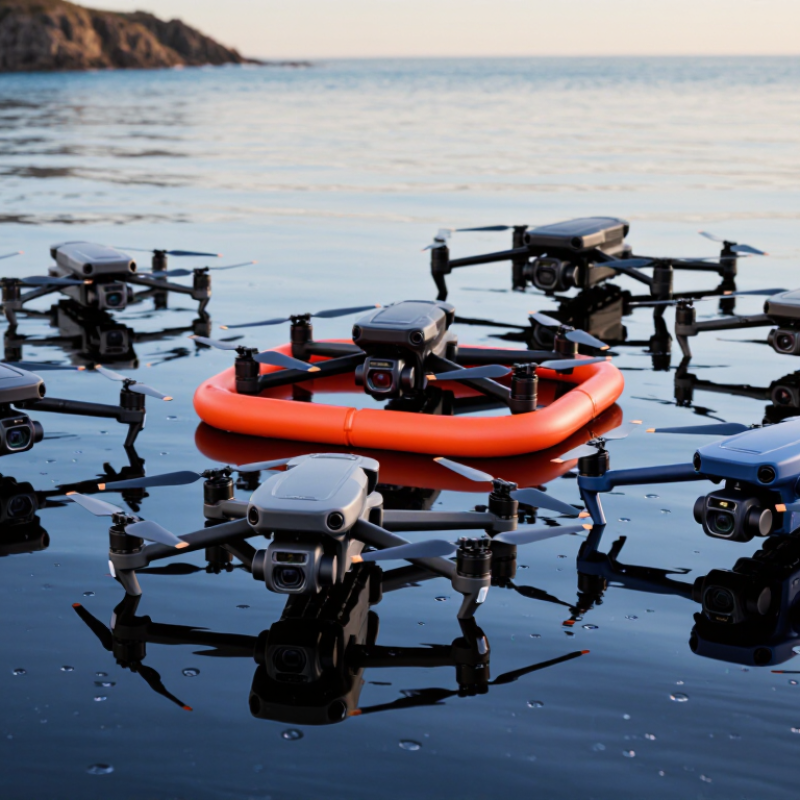
7 Best Waterproof Drones for Sale in 2026?

How IEC 60529 Rates Waterproof Drones: IP67 Means 1 m for 30 Minutes

For buyers comparing waterproof drones in 2026, IP67 is a useful starting point, not a promise of unlimited water protection. Under IEC 60529, the first digit, 6, means the enclosure is dust-tight. The second digit, 7, indicates protection against temporary immersion under specified test conditions: typically 1 meter of water for 30 minutes. That’s the key measurement. It describes a controlled enclosure test, not every flight scenario.

A drone’s real exposure can be harsher. Waves, fast movement, hard landings, damaged seals, and repeated use may affect water resistance. IEC 60529 does not, by itself, certify safe flight while submerged or prove protection against saltwater corrosion. Check whether the rating covers the complete assembled aircraft, including battery doors and camera covers. I’d treat the label as a boundary, not a dare. One detail is easy to miss: a device that passes a fresh-water test may still need careful rinsing and drying after coastal use.

Tips: Before flying near water, inspect seals for grit or hairline cracks. Keep the battery compartment closed and dry, and follow the maker’s stated immersion limits. After a splash, power down and check connectors before charging. Small precautions matter.

Which Seven Waterproof Drones Are for Sale in 2026?

In 2026, waterproof-drone listings include several distinct designs, not one standard category. A sealed camera quadcopter suits rain-prone filming; a float-equipped quadcopter can land on calm water. A waterproof FPV model prioritizes responsive control, while a sealed foldable quadcopter is easier to pack. These are different trade-offs. Check whether each listing describes water resistance, safe landing, or actual immersion protection.

Other options include an industrial inspection quadcopter for wet structures, a compact mapping quadcopter with weather-sealed electronics, and an amphibious air-and-water craft designed for surface operation. Availability varies by region and seller, and these categories do not guarantee seven specific models are in stock. Read the manual before flying near water. A rating such as IP67 has limits; it does not mean unlimited depth, duration, or saltwater protection.

Compare flight time, payload, replacement-part access, and the stated ingress rating. Look for clear testing conditions, not just a “waterproof” label. A spec sheet can look reassuring; seals still need inspection, especially after a hard landing. Wind, waves, and cold batteries can also shorten a safe flight. Keep the aircraft within permitted operating areas, and avoid treating emergency claims as proof of suitability.

Compare IP Ratings and Check Whether IP68 Uses Different Test Conditions

When comparing waterproof drones for sale in 2026, read the full IP code, not just “waterproof.” The first digit rates protection from solids; 6 means dust-tight. The second rates water exposure. IPX7 covers temporary immersion under specified conditions, while IPX8 covers immersion under conditions agreed for that product. It does not automatically mean deeper, longer, or safer in every situation. Check the stated depth and duration.

IP68 can use different test conditions across products. One drone might be tested at a stated depth for 30 minutes; another may specify a different depth, duration, or operating state. Look for details in the manual, and check whether the rating covers the complete aircraft, battery, camera, and fitted covers. A drone may pass with sealed ports closed, but not with a hatch open. Saltwater, moving water, impacts, and aging seals add risks that an IP test may not represent. IPX8 isn’t permission to improvise. After a wet flight, inspect seals and dry connectors as directed. A label can still mislead. I would compare documented test conditions and seal-replacement guidance before trusting a rating on a costly water flight.

Waterproof Drone Ratings: Compare IP Water-Protection Levels

The chart shows the numbered water-protection level in each rating—not a shared measurement of depth or exposure time. Under IEC 60529, IPX7 covers temporary immersion up to 1 m for 30 minutes. IPX8 is for immersion beyond 1 m under conditions specified for the product; its depth and duration are not universal. Check the exact test conditions for any drone listing, especially before using a device in water.

Assess Flight Time, Payload, and Wind Limits from Manufacturer Specifications

When comparing waterproof drones for sale in 2026, read the specification sheet beyond the water-resistance claim. Check whether the aircraft can handle rain, splashes, or temporary immersion; these are not interchangeable conditions. Numbers matter. A sealed body may still have limits around ports, battery doors, and repeated exposure.

Treat stated flight time as a best-case reference, not a promise. Manufacturers may measure it in calm conditions with a light or no payload. A camera, sensor, or drop-resistant housing adds weight and can shorten each flight. Compare maximum payload with total takeoff weight, then leave room for a safe battery reserve. A few extra minutes on paper may disappear in cold air or steady wind.

Wind limits deserve the same scrutiny. Look for both the maximum sustained wind and any guidance on gusts; a single headline figure may not explain recovery performance. A drone near its limit can drift while returning over open water. That gap matters. In practice, inspect seals after use and keep notes on flight time with your actual equipment. Manufacturer specifications provide a useful baseline, but real conditions can be less tidy than a test sheet.

Check Saltwater Corrosion Protection, Warranty Terms, and 2026 Prices

Waterproof ratings do not automatically mean saltwater-safe. Salt crystals can settle around motor shafts, battery contacts, charging ports, and camera seals. Look for explicit corrosion protection, sealed connectors, and clear maintenance instructions. A splash-resistant shell is not enough. After coastal flights, rinse exposed parts with fresh water only if the manual permits it, then dry them fully before charging. Small details matter.

Read warranty terms before comparing prices. Some policies cover manufacturing faults but exclude water damage, salt exposure, or gradual seal wear. Check the coverage period, battery exclusions, repair process, and whether registration is required. Save the product page and warranty document. That sounds fussy. It can prevent an expensive surprise.

For 2026, compare current prices for the complete kit, not just the aircraft. A roughly $400–$800 budget may suit simpler waterproof models; advanced camera or survey configurations can exceed $1,000. These are planning ranges, not verified quotes, and seasonal discounts can shift them. Include spare batteries, replacement seals, shipping, and service costs. A low sticker price may hide weak corrosion protection or limited support. Ask the seller for written confirmation of saltwater-related coverage.

7 Best Waterproof Drones for Sale in 2026? — Check Saltwater Corrosion Protection, Warranty Terms, and 2026 Prices

Comparison note: These are equipment categories, not brand or model endorsements. “Waterproof” claims vary by design and test conditions; an IP rating alone does not establish protection against saltwater corrosion.

Option Best suited for Water-protection considerations Saltwater corrosion checks Warranty terms to verify Indicative 2026 price (USD)
1. Sealed beginner / toy quadcopter Casual practice near pools and calm freshwater; typically limited camera and flight capability. Confirm whether the aircraft is designed for immersion or only splash resistance. A protective shell does not necessarily seal motors, connectors, or battery contacts. Check whether metal fasteners, motor parts, and electrical contacts are corrosion-resistant. Rinse only as directed by the maker and dry fully before charging. Ask whether water entry is covered, what proof of purchase is required, and whether crash damage or battery wear is excluded. $100–$400
2. Waterproof FPV quadcopter FPV practice and short flights in wet conditions, where the airframe is specifically designed for water exposure. Check protection for the flight controller, camera, video transmitter, motors, and battery connections. “Water-resistant” should not be treated as permission for prolonged submersion. Ask about saltwater testing, corrosion-resistant components, and post-flight cleaning instructions; salt deposits can remain after water evaporates. Confirm whether water damage is covered for the assembled aircraft and separately sourced components. Repairs may depend on the builder or seller. $300–$1,200
3. Purpose-built waterproof camera quadcopter Photography or observation over water when a sealed airframe and usable camera are both priorities. Verify the exact water-protection rating and its test conditions. Check that camera gimbals, vents, and removable covers are included in the stated protection. Look for explicit saltwater-use guidance, compatible rinse procedures, and corrosion inspection requirements—not just a general waterproof claim. Get written confirmation on water-ingress coverage, repair turnaround, and whether saltwater exposure voids coverage. $1,000–$4,000
4. Industrial sealed multirotor Inspection, mapping, or work in rain and other demanding environments, subject to the aircraft’s stated operating limits. Compare the published IP rating with the planned exposure. Ratings describe defined test conditions and do not by themselves guarantee safe operation in every wet environment. Request details on coatings, connectors, fasteners, and maintenance after marine use. Confirm whether salt spray or saltwater exposure is specifically addressed. Review commercial-use eligibility, scheduled maintenance requirements, water-damage exclusions, and any service-plan conditions. $5,000–$20,000
5. Marine-survey multirotor with payload support Professional coastal surveys using compatible mapping, thermal, or inspection payloads. Assess the aircraft and payload separately; a protected airframe does not make an attached camera or sensor waterproof. Check saltwater operating limits, cleaning and drying procedures, connector protection, and the availability of replacement corrosion-prone parts. Confirm coverage for the aircraft, payload, and accessories individually. Ask whether marine operations require a service agreement. $8,000–$30,000
6. Standard camera drone with flotation gear Water recovery or emergency flotation where the aircraft itself is not designed to fly in rain or survive immersion. Flotation devices can help keep an aircraft on the surface but do not make its electronics waterproof. Added gear may affect balance, handling, or safe operation. Assume saltwater contact can cause damage unless the manufacturer explicitly says otherwise. Recover promptly and follow the aircraft’s approved maintenance guidance. Check whether third-party flotation gear affects coverage and whether any water contact is excluded from the aircraft warranty. $400–$3,000
7. Tethered or ship-inspection multirotor system Controlled inspections around vessels or infrastructure, typically for trained operators and specialized workflows. Evaluate the aircraft, tether, power system, and control equipment as separate components. Verify environmental limits for the complete system. Ask whether the system is intended for marine environments and how the tether, connectors, and exposed metal parts should be cleaned and inspected. Review system-wide service terms, operator requirements, repair logistics, and exclusions for saltwater or corrosive environments. $10,000–$50,000+

Price and warranty disclaimer: Price ranges are broad 2026 budget estimates in USD, not verified live listings or guaranteed transaction prices; configuration, payloads, batteries, training, and service plans can change the total. Warranty coverage is seller- and model-specific. Before purchase, obtain the current written warranty and confirm saltwater exposure, water ingress, maintenance, and corrosion exclusions directly with the seller or manufacturer.

Members of