Choosing among China’s Natural Gas Steam Boiler manufacturers requires more than comparing catalog prices. “Best” depends on the required steam output, operating pressure, fuel conditions, and installation environment. A food plant may prioritize stable, clean steam, while a workshop may need compact equipment and straightforward controls. Details matter.
A useful comparison starts with the boiler’s rated capacity, thermal efficiency, burner design, and control system. Ask how performance is tested and whether the manufacturer can provide clear technical drawings, inspection records, and operating instructions. Check the proposed feedwater requirements, maintenance intervals, spare-parts availability, and response times for service. These details can affect reliability long after delivery.
Manufacturer claims deserve careful review. A polished brochure is not proof of real-world performance. Request customer references for similar applications, and, where practical, arrange a factory visit or equipment inspection. Confirm that the proposed configuration matches your site conditions rather than relying on a generic quotation. Local support also matters; a strong product with slow technical assistance can create avoidable downtime. No checklist removes every risk. Specifications may change, and operating costs depend on actual usage. This guide outlines practical criteria for comparing Chinese suppliers, asking better questions, and judging whether a Natural Gas Steam Boiler fits your facility.
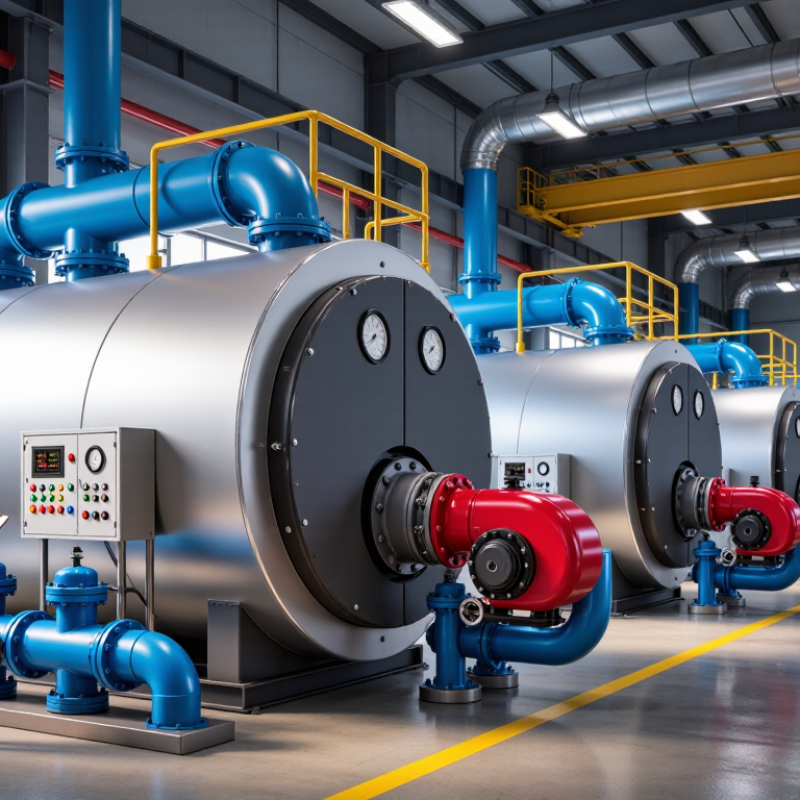
A natural gas steam boiler turns fuel energy into pressurized steam. A burner mixes natural gas with air and ignites it inside a combustion chamber. The hot gases pass through heat-transfer surfaces, warming water held in a pressure vessel. As the water boils, steam leaves through a pipe to serve heating or process equipment. It is a simple path on paper. Real operation is less tidy.
Controls regulate fuel, air, water level, and steam pressure. A pressure gauge and sight glass give operators useful clues, but they do not replace regular inspection. Poor combustion tuning can waste fuel, while scale on heat-transfer surfaces slows heat transfer.
The U.S. Department of Energy’s Improving Steam System Performance: A Sourcebook for Industry estimates that steam systems account for about 30% of energy used in U.S. manufacturing. This figure covers industrial steam systems broadly, not natural gas boilers alone. That distinction matters.
After steam releases its heat, condensate may return to the boiler as feedwater. Returning it can reduce the energy needed to heat incoming water, though leaks and contamination can undermine the benefit. A boiler’s efficiency therefore depends on more than its burner. Water treatment, insulation, operating pressure, and maintenance all matter.
Small details matter. Engineers should assess actual load patterns before sizing equipment; an oversized boiler can cycle inefficiently, even when its specifications look impressive.

In China, natural gas steam boiler production begins with engineering, not assembly alone. Designers calculate steam capacity, operating pressure, water quality, and expected fuel use. These choices shape the furnace, heat-transfer surfaces, and control system. Good planning matters.
Steel plates and tubes are checked against material records before cutting and forming. Skilled workers fit and weld pressure parts using documented procedures. Inspectors may examine welds with visual checks and suitable non-destructive testing. The details count. A small fit-up error can complicate later assembly. After fabrication, the boiler shell and connected pressure components undergo a hydrostatic test to check for leaks and structural weaknesses.
The burner, gas train, sensors, and control cabinet are then integrated and tested together. Technicians check ignition, flame detection, pressure controls, and shutdown responses under controlled conditions. They also record test results for traceability. A factory test is useful, but it cannot reproduce every installation, water condition, or operating pattern. That gap deserves attention. On-site commissioning should confirm combustion settings and stable steam output; even a carefully made boiler may need adjustment once connected to its actual system.
China’s natural-gas boiler makers are distinguished less by polished brochures than by standards, testing, and controls. The National Development and Reform Commission reported Chinese natural-gas consumption of 394.5 billion cubic metres in 2023, up 7.6% year on year. That expanding demand makes combustion efficiency and emissions control practical purchasing criteria. Details matter.
For Chinese boilers, GB/T 16508 covers shell boilers, while GB 13271-2014 sets air-pollutant emission requirements. TSG 11-2020 provides safety and supervision rules. Buyers should check which standards apply to the specific boiler, then request test records for its stated fuel and operating load.
Low-NOx burners, economizers, and oxygen-trim controls can improve performance, but installed results depend on water quality, maintenance, and load variation. A specification sheet can still flatter performance. Ask for measured efficiency, emissions, turndown range, and heat-recovery data, not just equipment options.
Condensing recovery may help when return-water temperatures are low; it is not automatically beneficial in every system. Factory inspection matters, but commissioning measurements matter too.
Comparing natural gas steam boiler manufacturers starts with operating data, not brochure claims. Ask each supplier for verified steam output, fuel consumption, turndown range, and efficiency at your actual pressure and load. A boiler serving a steady process may need different controls from one facing sharp morning peaks. Request test conditions, too. A percentage without its measurement basis is hard to compare.
Check how performance is measured and maintained. The U.S. Department of Energy’s Steam Tip Sheet #4, Improve Your Boiler’s Combustion Efficiency, estimates that a 40°F reduction in stack temperature can improve boiler efficiency by about 1%, under suitable conditions. Ask whether the quoted efficiency comes from a test, and whether it includes standby losses. Small details matter. Compare burner controls, emissions monitoring, water-treatment guidance, commissioning, and access to replacement parts. Request a sample maintenance schedule and a written response-time commitment.
Then speak with operators running similar steam loads. Ask about startup time, pressure stability, fuel use, and recurring service needs—not only whether the unit “works.” A reference site with comparable operating hours is more useful than a polished case study. Compare total ownership costs over a stated period, including installation, fuel assumptions, maintenance, and downtime. I would still treat any forecast cautiously; real plants rarely behave like spreadsheets.
Use a consistent steam-output benchmark when reviewing manufacturers’ efficiency and fuel-consumption claims.
At about 1 atmosphere, producing 1 kg of saturated steam from feedwater at 20°C requires approximately 335 kJ to heat the water to its boiling point and 2,257 kJ to vaporize it. These approximate steam-table values represent ideal heat transferred to the water, not a boiler’s fuel input. Compare manufacturers using the same steam pressure, feedwater temperature, rated steam output, and efficiency basis; also check what operating conditions and losses are included in each quoted figure.
Natural gas steam boilers made in China serve industries that need steady process heat rather than direct flame contact. Food and beverage plants use steam for cooking, blanching, pasteurizing, and cleaning equipment. Clean steam matters. A dairy may need reliable heat for a production line, while a bakery often values quick warm-up during short shifts. These different schedules affect boiler sizing.
Textile mills use steam for dyeing, fabric finishing, and drying. Paper factories rely on it to heat rollers and support pulp processing. Chemical manufacturers may use steam in reactors or for temperature control, while hospitals and commercial laundries need it for sterilization and washing. Hotels, campuses, and larger kitchens also use boilers for hot water and laundry loads. The demand can change sharply by hour.
The country of manufacture alone does not confirm that a boiler suits a particular site. Buyers should compare output, pressure range, fuel quality, water treatment needs, controls, and maintenance access. A unit can look suitable on paper and still cycle too often when demand is low. That detail is easy to miss. Site measurements and experienced commissioning help reveal such mismatches, though operating conditions may change after installation.
| Industry | Common Steam Applications | Typical Demand Pattern | Selection Considerations |
|---|---|---|---|
| Food and Beverage | Cooking, blanching, pasteurization, cleaning, and heating process vessels | Demand can vary with production schedules and batch processes; food-contact processes may require clean steam generated through suitable equipment. | Check steam quality requirements, load variation, water treatment, hygiene needs, and applicable food-safety procedures. |
| Textiles and Garments | Dyeing, washing, finishing, drying, and fabric-setting processes | Steam demand is often linked to production shifts and multiple process machines operating at once. | Assess peak and average loads, pressure requirements, condensate recovery, and the effect of changing production runs. |
| Pharmaceuticals | Process heating, equipment cleaning, sterilization systems, and humidification | Demand depends on validated processes and may include short periods of high steam use. | Confirm whether clean or pure steam is required; standard boiler steam is not automatically suitable for direct product contact or sterilization. |
| Hospitals and Healthcare Facilities | Laundry, kitchen services, building heating, and steam supplied to sterilization equipment | Some services run throughout the day, while sterilization and laundry loads can create demand peaks. | Consider reliability, standby capacity, maintenance access, local healthcare requirements, and the specifications of connected equipment. |
| Paper and Pulp | Stock preparation, process heating, and steam supply to paper-drying sections | Processes may require a steady steam supply, with demand affected by line speed and product changes. | Evaluate continuous-load capability, steam pressure stability, condensate return, and integration with existing plant systems. |
| Chemicals and Petrochemicals | Reactor heating, distillation, tank heating, and general process utility steam | Demand varies by process design and may include continuous operation or intermittent batch loads. | Match boiler output and steam conditions to the process; review fuel-gas specifications, site safety rules, and emissions permits. |
| Commercial Laundries | Washer-extractors, steam presses, dryers, and hot-water generation | Usage typically follows laundry throughput, with busy periods producing higher simultaneous demand. | Compare boiler capacity with equipment demand, and review condensate recovery, water quality, and operating hours. |
| Building and District Heating | Heating hot-water systems through heat exchangers and supplying central plant services | Demand is seasonal and generally rises during colder weather or periods of high occupancy. | Check seasonal turndown, system temperature requirements, controls, backup arrangements, and local fuel and emissions rules. |
Applications and operating requirements vary by facility. Boiler capacity, pressure, emissions performance, and fuel-system design should be confirmed against the site’s process needs and local regulations.
Please share your email with us to see your results.