What Are the Best Ground Screws in 2026?

Choosing the best Ground Screws in 2026 is not just a matter of comparing prices or advertised load ratings. Soil conditions, corrosion exposure, installation equipment, and structural loads all affect performance. Ground matters. A screw suited to firm, dry soil may behave differently in loose, wet, or rocky ground. No single product is best everywhere.

The scale of renewable construction makes foundation choices increasingly practical. IRENA’s Renewable Capacity Statistics 2024 reports that renewable power capacity grew by 473 GW in 2023, representing 86% of total capacity additions that year. That figure does not measure ground-screw sales, but it shows the expanding infrastructure context in which mounting systems are selected. For a fair comparison, this guide considers published technical specifications, material and coating details, installation requirements, and independent testing where available. It also distinguishes manufacturer claims from evidence that can be checked.

Still, a neat comparison table can hide important differences. A stated load capacity may depend on soil tests, embedment depth, and installation quality. Readers should verify site conditions and consult a qualified structural professional before choosing a foundation. The strongest option on paper may not be the most suitable on site. This guide therefore treats “best” as a match between the product, the ground, and the project—not a universal ranking.
What Are the Best Ground Screws in 2026?

Ground Screws Explained: How They Work and Where They Are Used

What Are the Best Ground Screws in 2026?

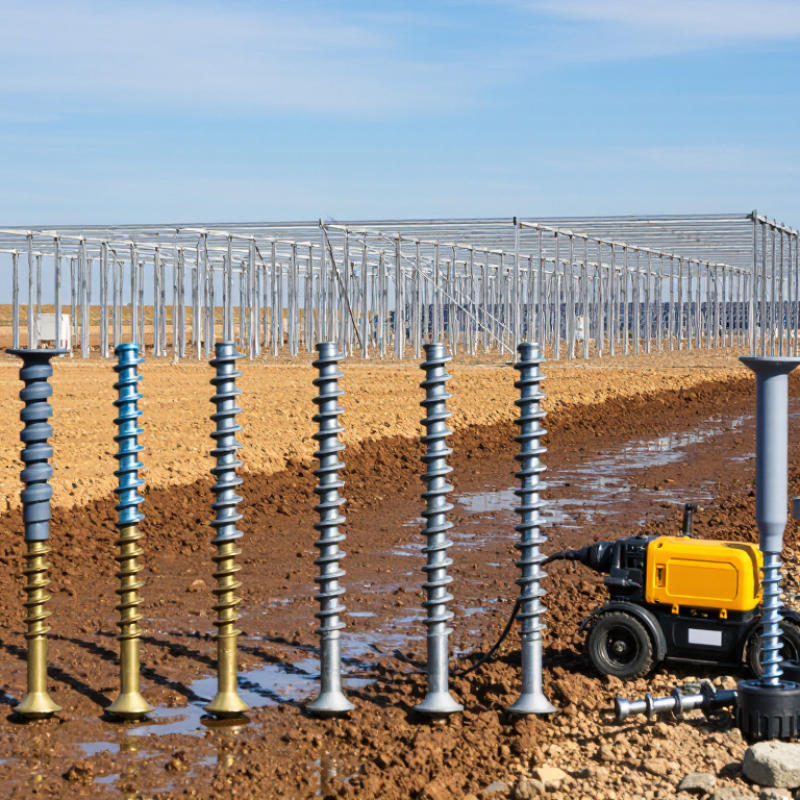
Ground screws are steel shafts with helical plates that cut into the soil as they are turned. The plates help transfer structural loads into the ground. A crew typically installs them with a handheld or machine-driven tool, then checks alignment and depth. Unlike concrete footings, they can often be installed with less excavation. That matters on a sloped garden or a site where digging would disturb roots.

Ground screws are used for decks, sheds, fences, signs, and some lightweight solar structures. The best option depends on the soil, expected loads, corrosion exposure, and the structure’s design—not just screw length. Dense, stony, or variable ground may complicate installation. A site assessment and the manufacturer’s load data help guide sizing; local engineering advice may be needed for demanding projects. Installation assumptions can be wrong. Soil changes over a few metres.

Tips: Check for buried services before driving any screw. Keep each shaft plumb, and record installation depth and torque when specified. If a screw turns too easily or hits an obstruction, stop and reassess rather than forcing it.


How Soil, Loads, and Project Size Shape Ground Screw Choice

The best ground screw depends less on a product label than on what the soil can support. Dense, well-drained gravel may accept a different shaft and installation method than soft clay or loose fill. A simple hand check can reveal surface conditions, but it cannot confirm bearing capacity. For uncertain ground, use a qualified site assessment before choosing screw length or spacing.

Loads matter just as much. A garden shed mostly needs stable support, while a carport must resist wind uplift and sideways forces. Ask for the project’s dead, live, and environmental load requirements, then match them to documented screw capacities. Check local frost depth and drainage, too. Small details matter. I would not assume that a longer screw automatically solves weak soil; installation torque and soil consistency also affect performance.

Project size shapes the practical choice. A few supports for a small deck may be installed with compact equipment, while a larger building can require coordinated layout, machinery, and engineering review. Keep access in mind: tight corners, buried services, and uneven ground can slow installation. It is tempting to choose by price alone, but that comparison misses testing, corrosion protection, and capacity data. Specifications can still leave questions, so confirm them against actual site conditions before work begins.

Key Features to Compare When Evaluating Ground Screws in 2026

What Are the Best Ground Screws in 2026?

When comparing ground screws, start with the ground, not the product label. A short screw may work in dense, stable soil, while loose fill or frequent frost movement can call for a different design. Ask for load data that matches the intended use and soil conditions. A rating without its test assumptions tells you little.

Check the steel, protective coating, shaft diameter, and helix size. These affect durability and how the screw engages the soil. Look for clear corrosion-resistance information, especially for damp or coastal sites. Also compare the connection head with your frame: holes should line up, and fasteners should be accessible. Small mismatch, big headache.

Installation details matter. The screw should be driven to its specified depth, and recorded torque can help confirm consistent installation, though it is not a substitute for proper design. Soil varies within one site. Really. Check whether the supplier provides installation guidance, inspection criteria, and independent test documentation. I would be cautious about choosing by price or length alone; I might still miss a site-specific issue without a soil assessment. A qualified installer can help verify suitability before work begins.

What Are the Best Ground Screws in 2026? — Key Features to Compare

Ground Screw Type Typical Configuration Best Suited For Soil and Site Conditions Load Considerations Corrosion Protection Key Checks Before Choosing
Light-duty, narrow-shaft screw Relatively small shaft and helix; commonly supplied in shorter lengths for light structures. Small garden structures, signs, and other low-load applications where the design permits screw foundations. Generally more suitable for penetrable, reasonably consistent soil than for dense gravel, cobbles, or shallow bedrock. Confirm compression, uplift, and lateral resistance separately. Do not select by shaft diameter alone. Check coating type, coating thickness, cut-edge treatment, and suitability for the site’s soil and moisture conditions. Verify the required embedment, connection detail, and whether the site has adequate access for installation equipment.
Medium-duty, standard-shaft screw Intermediate shaft and helix sizes; available in multiple lengths and head or bracket configurations. Decks, small outbuildings, walkways, and similar structures when supported by project-specific design. Can suit many ordinary soil profiles, but actual performance depends on soil strength, layering, groundwater, and installation depth. Request design resistance for the relevant load direction and the assumptions behind it; account for spacing and group effects. Hot-dip galvanized steel is a common option for outdoor use; confirm the applicable specification and exposure suitability. Compare verified load data, available lengths, head compatibility, and installation records for the proposed soil conditions.
Heavy-duty, larger-shaft screw Larger shaft and/or helix, often with a more substantial head connection and installation torque requirement. Heavier structures or higher design loads where a qualified designer confirms a screw foundation is appropriate. May be considered for stronger soils, but dense or obstructed ground can require specialist assessment or a different foundation method. Capacity must be established for the specific screw, soil, embedment, and installation procedure. Higher torque alone is not a universal capacity guarantee. Specify protection for the expected service environment, including soil chemistry, persistent moisture, and any dissimilar-metal connections. Check structural design data, installation torque limits, equipment capability, and whether proof or verification testing is required.
Long or extension-compatible screw Longer shaft or a system using compatible extensions to reach the required bearing depth. Sites where competent soil lies below a weaker surface layer, subject to engineering review. Potentially useful where the near-surface profile is unsuitable, provided the screw can be installed to the specified layer and depth. Depth does not automatically ensure adequate capacity; check shaft behavior, helix placement, connection strength, and design assumptions. Ensure extensions and couplers have compatible corrosion protection and are suitable for burial. Confirm extension-joint strength, total installed length, verticality tolerances, and access for installation and inspection.
Adjustable-head screw Screw with a head or bracket that allows limited height adjustment or alignment after installation. Projects needing accurate post-installation leveling, such as frames, platforms, or modular structures. Site suitability still depends on soil conditions and the selected screw’s embedment; adjustability does not improve ground capacity. Check the adjustment range, locking method, connection capacity, and resistance to movement under the project’s loads. Inspect the head, fasteners, and adjustment components for appropriate outdoor and ground-adjacent protection. Confirm that the adjustment mechanism is included in the structural design and remains accessible for installation and maintenance.
Specialist screw for difficult or obstructed ground Purpose-selected geometry or installation method; configuration varies with the ground investigation and design. Sites with unusual strata, dense gravel, fill, or other conditions that need specialist evaluation. Not a general-purpose choice for rock, large cobbles, or unknown obstructions; a trial installation or alternative foundation may be necessary. Use site-specific design values and installation verification. Stop or reassess if refusal, unexpected torque changes, or significant deviation occurs. Choose protection based on measured or assessed ground corrosivity and the intended service life. Arrange a ground assessment, define refusal criteria, and agree on installation and testing procedures before construction.

Important: These descriptions are general comparison guidance, not product ratings. Ground-screw capacity is site- and design-specific; obtain verified compression, uplift, and lateral resistance data for the actual screw, soil profile, embedment, installation method, and applicable building requirements. Hot-dip galvanizing is commonly specified for steel exposed to outdoor conditions, but the appropriate corrosion protection depends on the environment and project design.

Ground Screw Types for Fences, Decks, Solar Panels, and Buildings

Ground screws are not one-size-fits-all supports. For fences, short helical screws with U-shaped post brackets can hold timber or metal posts above wet ground. The bracket should match the post dimensions, while the screw length and shaft diameter should suit the soil and expected loads. Small details matter. A loose fit can let a fence wobble in wind.

Decks often need larger screws with adjustable heads or flat mounting plates. These help level beams across uneven ground, but adjustment cannot compensate for weak soil or poor spacing. Check buried utilities, drainage, and frost conditions before installation. A quick look at the surface is not enough; clay, fill, and loose gravel behave differently under load.

Solar panel supports commonly use flanged or bolted heads that connect to rails, with screw placement planned around the panel layout and wind exposure. Small buildings may require heavy-duty screws, engineered brackets, and documented load checks. Installation torque can offer useful feedback, but it does not prove capacity by itself. That part is easy to overlook. Soil testing and guidance from a qualified structural professional are sensible when loads are substantial or ground conditions are uncertain. I would not treat any screw size as a universal answer.

Ground Screw Sizes by Typical Application

Representative nominal shaft diameters commonly encountered—not universal averages or design recommendations. The right screw depends on soil, loads, frost depth, and the screw’s tested capacity.

Fences often use smaller screws, while decks, solar arrays, and buildings may require larger diameters or different configurations. Confirm suitability with a qualified professional and project-specific engineering data.

How to Select and Install the Right Ground Screw for Your Project

What Are the Best Ground Screws in 2026?

Choosing the right ground screw starts with the project, not the product label. A small shed and a tall, wind-exposed deck need different support. Check the expected loads, post dimensions, screw length, shaft diameter, and corrosion protection. No universal winner. Soil matters just as much: dense clay, loose fill, and stony ground can behave very differently. A simple site check helps, but it cannot replace a proper assessment for heavily loaded structures.

Before ordering, confirm buried utilities and review local building requirements. If the project carries substantial loads, ask a qualified structural professional to specify the foundation. Measure twice. During installation, keep each screw aligned and follow its installation instructions, including any guidance on pilot holes and driving torque. Do not assume that extra force means a stronger footing; it may signal an obstruction or unsuitable soil. Check the finished height and spacing before attaching the frame.

A practical installation depends on preparation. Mark every footing location, clear loose surface material, and use the correct drive tool. Recheck alignment as the screw enters the ground, not just at the end. Small deviations add up. Ground conditions can be inconsistent even across a short distance, so pause if a screw stops unexpectedly or tilts. The less glamorous truth is that site checks are never perfect; careful measurements and sensible adjustments matter more than chasing a “best” screw by size alone.

Members of