Best Cold Rolled Steel Suppliers in China

Finding the best Cold Rolled Steel suppliers in China takes more than comparing prices. Buyers need to check grade, thickness tolerance, width, surface finish, and delivery consistency. A coil may look bright in a sample photo, yet show scratches or uneven edges on arrival. Details matter.

Steelmaking pioneer Henry Bessemer once wrote, “I had no fixed ideas ... to control and bias my mind.” That spirit suits supplier research: test assumptions, ask specific questions, and verify claims. Request mill test certificates, confirm material traceability, and review packaging details such as coil protection and labeling. When possible, inspect a sample before placing a large order. No checklist is perfect.

This guide examines Chinese suppliers through practical sourcing factors, including product range, quality controls, export experience, and communication. It also highlights questions to ask about production capacity and lead times. A polished website is not proof of reliable performance. Nor is one delayed shipment enough to judge a factory fairly. Supplier comparisons need context. Some details may remain uncertain until buyers verify them directly, and that deserves honest attention. The goal is not to name a winner for every application, but to help readers identify a supplier whose capabilities match their specifications and expectations.
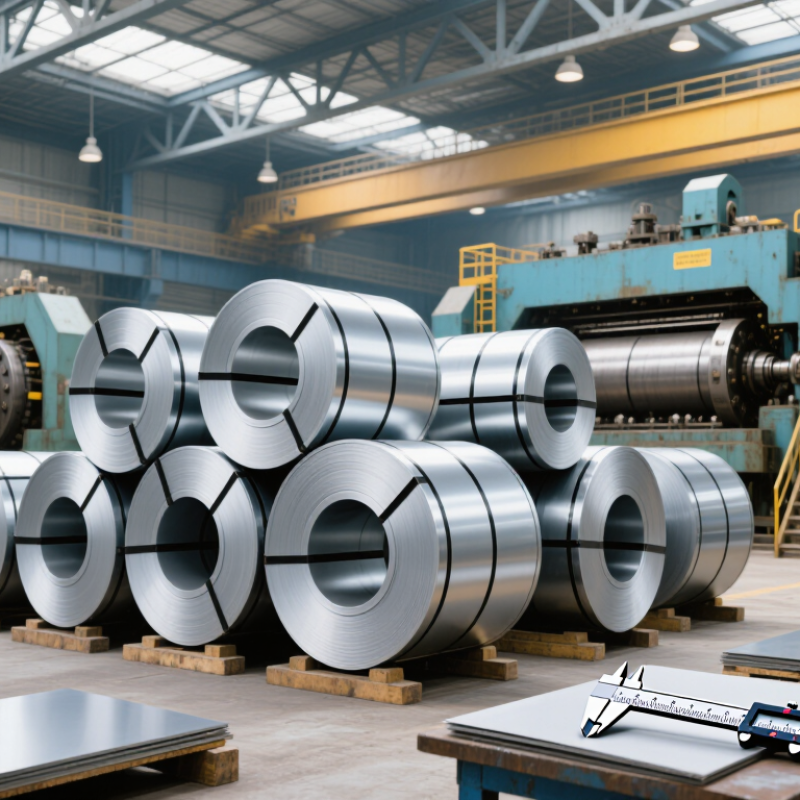
Best Cold Rolled Steel Suppliers in China

What Cold Rolled Steel Is and Where It Is Used

Cold rolled steel begins as hot rolled steel, then passes through rollers at or near room temperature. This process reduces thickness and usually creates a smoother surface with tighter dimensional tolerances. The sheet may feel more consistent beneath a fingertip, though it is not automatically rust-resistant. That distinction matters.

Rolling can also make steel harder and less formable. Some products are annealed afterward to restore ductility, while the right choice depends on the part’s shape and forming process. A supplier’s grade, thickness range, and surface condition should match the intended job. Small variations can affect a deep-drawn panel.

You will find cold rolled steel in appliance housings, office furniture, automotive panels, and electrical cabinets. It suits visible parts that need a clean finish and accurate dimensions. For example, a cabinet door may need a flat surface, while a formed bracket may need more flexibility. These needs can conflict. Buyers comparing suppliers in China can ask for coil or sheet specifications, sample measurements, and inspection records. I would also check edge quality and packaging; a neat surface can still arrive scratched after poor handling.


Cold-Rolled Steel: Standard Gauge and Sheet Thickness

Cold-rolled steel is widely used for formed sheet-metal parts, including appliance panels, furniture, and automotive components. This chart shows nominal thicknesses for common U.S. steel sheet gauges; gauge conventions can vary by standard and product.

How China’s Cold Rolled Steel Supply Market Is Organized

China’s cold rolled steel supply market is organized in layers, not through one simple supplier channel. Large mills produce hot rolled coil, which is pickled and cold reduced into thinner, smoother material. Downstream processors may then anneal, temper, slit, or cut it to length. For buyers, this means a “supplier” could be a mill, a processor, or a trading company. Know which one you are dealing with.

Scale matters, but it does not prove consistent quality. The World Steel Association reported that China produced 1,019.1 million tonnes of crude steel in 2023. China’s General Administration of Customs recorded 110.72 million tonnes of steel exports in 2024. These figures show the market’s reach, but neither figure represents cold rolled steel alone. That distinction is easy to miss. Buyers should request mill test certificates, coating details, thickness tolerances, and packing photos before placing repeat orders.

Between mills and overseas buyers, service centers often provide practical flexibility: narrower widths, smaller lots, and mixed specifications. Export traders can coordinate shipping and documents, yet their stock may come from multiple mills. Ask for the original producer and batch traceability. Check sample dimensions against the purchase specification, not just the quotation. A small gap can become costly. Even careful checks have limits, especially when inspection happens only after loading.

Key Criteria for Assessing Chinese Steel Suppliers

Assessing a Chinese cold-rolled steel supplier starts with evidence, not a polished brochure. The World Steel Association’s World Steel in Figures 2025 reports that China produced 1,005.1 million tonnes of crude steel in 2024. That scale signals a deep industrial base, not uniform product quality. Ask which mill produced the coil, then match its mill test certificate to the heat and coil numbers.

Check the specified grade, thickness tolerance, width, flatness, and surface finish against your purchase requirements. Request recent inspection records and a sample, then verify critical properties through an independent laboratory when the application warrants it. A certificate is useful. It is not proof that every coil is defect-free. Ask how the supplier handles nonconforming material, including response times, evidence requirements, and replacement terms.

Delivery capability deserves separate scrutiny. The World Bank’s 2023 Logistics Performance Index ranked China 19th among 139 economies, but a national ranking cannot guarantee one supplier’s schedule. Request shipment histories, packaging photos, and a written production timeline; check whether edge protection and moisture barriers suit your route. A trial order can reveal problems. It can also be too small to expose inconsistent batches, so compare inspection results across multiple coils.

Notable Cold Rolled Steel Suppliers in China

China’s cold-rolled steel supply base includes integrated mills, specialist rolling plants, and service centers. Their strengths differ: some offer broad grade ranges, while others focus on cut-to-length processing or export-ready coils. The World Steel Association’s World Steel in Figures 2025 reports that China produced 1,005.1 million tonnes of crude steel in 2024. That figure signals industrial scale, not cold-rolled output or supplier quality. Details matter.

Notable suppliers are best judged by measurable capability, not catalogue size. Ask for the exact steel grade, thickness tolerance, surface finish, and monthly production capacity. Request recent mill test certificates and confirm that heat numbers remain traceable through slitting and packing. A buyer should also clarify whether rolling happens in-house or through a subcontractor. That detail can affect lead time and consistency.

For a first order, inspect sample sheets under neutral lighting; oil marks and waviness can be easy to miss in photographs. Check coil weight, inner diameter, edge condition, and moisture-resistant packaging against your handling needs. One caveat: online specifications may describe the best achievable tolerance, not every shipment. Confirm the agreed limits in writing, then compare them with inspection records. A neat brochure is not evidence of a stable process.

How to Compare Suppliers by Quality, Price, and Delivery

When comparing cold rolled steel suppliers in China, match each offer to your required grade, thickness, width, and surface finish. Ask for recent mill test certificates and confirm that the reported chemistry and mechanical properties match your specification. Check thickness tolerance across the coil, not only at one point. Surface defects can be easier to spot on a sample sheet than in a product photo.

Small details matter.

Compare prices on the same basis: material grade, dimensions, quantity, packaging, and delivery terms. A low quote may exclude export packing or inspection costs, so request an itemized offer. For delivery, ask whether stock is available or production is required, then request a realistic schedule with loading and transit estimates.

Dates can slip.

Confirm how coils are protected against moisture and edge damage, especially if they will travel a long distance. Keep written records of specifications and agreed tolerances.

One imperfect part of supplier comparison is that certificates and polished samples cannot prove every shipment will be consistent. Consider independent inspection for high-volume orders, and weigh its cost against the risk of receiving material that needs rework.

Members of