What Is the Best China Electric Stacker for Global Buyers?

Choosing the best Electric Stacker for global buyers is not a simple brand comparison. Warehouse floors, pallet sizes, aisle widths, and working temperatures can change the right decision. A compact walkie stacker may suit a small distribution center. A ride-on model may perform better during long shifts and heavy pallet movement. The details matter.

Martin McVicar, a recognized materials-handling expert and Combilift CEO, has expressed the core principle clearly: “The best truck is the one that fits the application.” That idea should guide every international purchase. Buyers should examine rated capacity, lift height, battery chemistry, charging time, turning radius, mast visibility, and operator controls. A 1.5-ton capacity may sound adequate, but capacity decreases as the load rises. Product labels can hide this practical limitation.

Reliable evaluation also includes after-sales support. Ask about spare parts, technician training, warranty coverage, and response times in the destination market. Request test reports, operating manuals, safety certifications, and clear voltage specifications. Lithium-ion batteries offer convenient charging, yet they may not be ideal for every climate or budget. Lead-acid systems remain useful in some demanding operations.

There is no perfect choice. Even experienced buyers can overlook floor conditions or local service access. A careful comparison should include a real warehouse trial, not only a spreadsheet. The strongest Electric Stacker is the one that moves safely, efficiently, and consistently after delivery. That standard is less dramatic, but far more dependable.
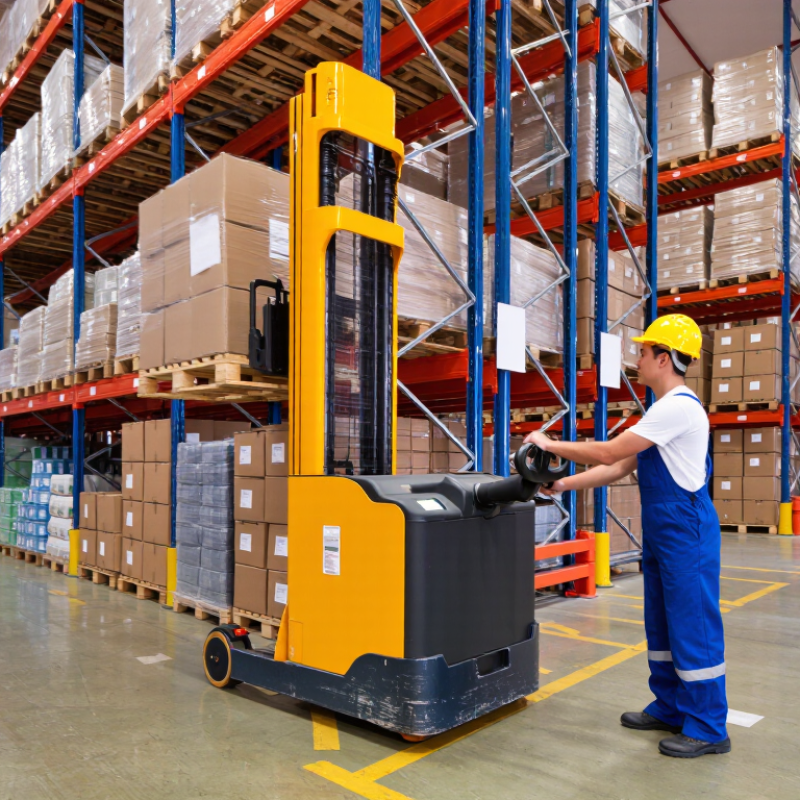
What Is the Best China Electric Stacker for Global Buyers?

What Is a China Electric Stacker and How Does It Work?

A China electric stacker is a compact warehouse machine designed to lift, move, and position palletized goods. It normally uses a battery-powered motor, hydraulic lifting system, mast, forks, and steering controls. The operator guides the stacker while the forks slide beneath a pallet. Pressing the lift control raises the load along the mast. Releasing the control stops the movement.

In daily operation, the drive wheel controls forward and reverse travel. A braking system helps stop the machine on warehouse floors or gentle ramps. Load sensors may limit lifting when the pallet exceeds the rated capacity. Battery indicators show remaining power, while emergency switches cut operation quickly. Some models include adjustable fork widths for different pallet sizes. Small details matter here.

A reliable inspection should check lifting speed, brake response, steering accuracy, and mast stability. Buyers should also confirm battery voltage, charging requirements, fork dimensions, and maximum lift height. These specifications affect warehouse compatibility more than appearance. I have found that overseas buyers sometimes focus on price and overlook service documentation. That can create delays when operators need maintenance guidance. Even experienced teams can miss the turning radius during a floor test. A practical trial should use a real pallet, not an empty fork. The floor condition should also match the intended workplace. Machine performance can change noticeably on uneven concrete.


Which Electric Stacker Types Suit Different Global Applications?

What Is the Best China Electric Stacker for Global Buyers?

Which Electric Stacker Types Suit Different Global Applications?

Electric stackers serve different warehouse realities, not one universal requirement. Walkie stackers suit small storerooms, retail backrooms, and short pallet movements. They need less aisle space and usually offer simple controls. Straddle stackers handle standard pallets while supporting wider load legs. Reach stackers work better in higher racking and narrow warehouse aisles. Counterbalance electric stackers are practical near loading docks, where uneven traffic and frequent turning are common.

Battery choice affects daily productivity. Lithium-ion batteries support opportunity charging during short breaks. Lead-acid batteries remain useful where charging routines are predictable. The International Energy Agency reported that global battery demand for electric vehicles reached about 750 GWh in 2023. This broader battery expansion can improve supply knowledge, but industrial battery quality still varies. Fortune Business Insights estimates the global electric forklift market will continue growing strongly through 2030. Estimates differ between reports, so buyers should verify the research method.

Tips: Match rated capacity to the heaviest real load, not the average pallet. Check lift height, aisle width, floor condition, battery charging access, and local service coverage. Ask for tested residual capacity charts.

They matter.

A low purchase price can become an expensive lesson when spare parts arrive slowly. In my experience, operators often overlook visibility and turning radius. That mistake affects safety and speed. Pilot testing remains valuable, especially when warehouse layouts look simple on paper.

How Should Buyers Compare Capacity, Lift Height, and Battery Options?

Global buyers often compare electric stackers by headline capacity. That approach can mislead. A unit rated for 1,500 kilograms may handle much less at maximum lift height. Check the load chart, load center, mast configuration, and residual capacity before making a decision. Measure the pallet dimensions, aisle width, floor condition, and turning space at the actual site. A few centimeters can change daily productivity.

Lift height must match the highest storage beam, not just the warehouse ceiling. Leave safe clearance for lighting, sprinklers, and uneven floors. A taller mast may reduce stability or require a wider operating area. During site evaluations, operators should test visibility with a loaded pallet. Numbers alone cannot show every risk. This is where estimates fail.

Battery choice depends on working rhythm. Lead-acid batteries may suit scheduled shifts and existing charging rooms, but they need ventilation, watering, and replacement space. Lithium batteries support opportunity charging and usually require less routine maintenance. However, they can cost more initially and need compatible charging equipment. Compare voltage, amp-hour capacity, charging time, cycle life, ambient temperature, and service support. In cold storage, battery performance can drop noticeably. A practical trial with real pallets, ramps, and shift patterns is more reliable than a brochure. Some buyers overlook operator training, spare parts availability, and local electrical standards. That oversight deserves a second look.

What Is the Best China Electric Stacker for Global Buyers?

Compare common electric stacker configurations by rated capacity, maximum lift height, and battery capacity. Higher capacity supports heavier loads, while greater lift height and battery capacity improve warehouse flexibility and operating endurance.

The figures represent typical specification points found in mainstream warehouse electric stacker configurations. Actual performance depends on mast design, load center, battery chemistry, duty cycle, floor conditions, and safety requirements.

What Safety Standards and Certifications Should Global Buyers Check?

What Is the Best China Electric Stacker for Global Buyers?

What Safety Standards and Certifications Should Global Buyers Check?

A reliable electric stacker should meet the rules of its destination market, not just carry a certificate. For European imports, check CE marking, the EU Declaration of Conformity, and supporting technical documents. UK buyers may require UKCA compliance. ISO 3691-1 is a useful reference for industrial truck safety. EN 1175 can help verify electrical safety requirements. These documents should match the exact model, battery system, and rated capacity.

For the United States, review OSHA 29 CFR 1910.178 and the applicable ANSI/ITSDF B56.1 requirements. Do not assume OSHA approval exists as a single product certificate. Ask for independent test reports, electrical safety evidence, EMC documentation, and charger compliance records. The file should include serial-number traceability, a load chart, emergency-lowering performance, warning labels, and operator instructions in clear English.

Inspect the machine, too. A smooth demonstration does not prove long-term safety. Check mast movement, brake response, steering control, battery ventilation, and overload protection. Poor translations are warning signs. Paperwork can look complete and still miss a critical limitation. Buyers should verify certification bodies, test dates, factory quality controls, and after-sales training. Local regulations may differ, so confirmation from a qualified compliance professional remains worthwhile. That step feels slow, but one overlooked requirement can make a low-cost purchase expensive.

How Can Buyers Evaluate Chinese Suppliers, Costs, and After-Sales Support?

Choosing the best China electric stacker starts with supplier evaluation, not the lowest quotation. Ask for factory photographs, production records, load-test reports, and export references. A serious supplier should explain battery options, lifting height, capacity, aisle width, and charging requirements clearly. Ask for evidence.

Request a complete landed-cost sheet before comparing offers. It should include the stacker, battery, charger, packaging, inland transport, ocean freight, insurance, duties, and spare parts. A low factory price can become expensive after delivery. Compare warranty terms carefully. Confirm whether labor, travel, and replacement components are included. Small exclusions matter.

After-sales support often separates a dependable supplier from a risky purchase. Check response times, remote troubleshooting procedures, service manuals, and spare-parts availability. Ask whether technicians can guide your team through video calls. For larger fleets, request operator training and preventive-maintenance schedules. I would not trust promises without written service terms and named contacts. One practical test is simple: send detailed questions and measure the quality of the reply. A slow or vague answer may reveal future problems. Still, supplier websites can look convincing, and references may be incomplete. I have learned that even a careful evaluation cannot remove every risk. Build a trial order, inspect the machine on arrival, and record performance under real warehouse conditions.

What Is the Best China Electric Stacker for Global Buyers? - How Can Buyers Evaluate Chinese Suppliers, Costs, and After-Sales Support?

Evaluation Dimension Typical Buyer Requirement Indicative Market Range Documents or Evidence to Request Buyer Evaluation Notes
Rated Load Capacity 1,000–2,000 kg for warehouse pallet handling Common electric stacker classes: 1,000 kg, 1,200 kg, 1,500 kg, and 2,000 kg Rated-capacity plate, load chart, test report, and operating manual Confirm the capacity at the required lift height, not only the maximum rated capacity.
Lift Height 1,600–3,500 mm for standard warehouse racking Manual, semi-electric, and fully electric models commonly cover approximately 1,600–5,500 mm Mast specification, residual-capacity chart, and lifting-cycle test A higher mast can reduce residual capacity and increase the required overhead clearance.
Drive and Lift Configuration Electric travel and electric lifting for frequent pallet movement Walkie stackers, platform stackers, and ride-on stackers are the main configurations Electrical schematic, motor ratings, controller specification, and demonstration video Choose a walkie model for short travel distances and a platform or ride-on model for higher daily operating hours.
Battery System 24 V battery system is common for compact warehouse stackers Lead-acid batteries often range from about 60–240 Ah; lithium-ion options are generally lighter and support opportunity charging Battery datasheet, charger compatibility, safety data sheet, and replacement cost Compare total operating cost, charging time, battery cycle life, ambient temperature limits, and local recycling requirements.
Performance Controlled travel speed and stable lifting under the specified load Typical no-load travel speeds are approximately 4–6 km/h; lifting speeds vary by load and model Factory acceptance test, speed settings, braking test, and loaded lifting test Evaluate productivity together with braking distance, maneuverability, noise, and operator visibility.
Safety and Compliance Compliance with the destination market’s machinery and workplace-safety rules ISO 3691-1 is a key international reference for industrial trucks; additional local requirements may apply Declaration of conformity, risk assessment, safety test records, and applicable electrical reports Do not treat a general certificate as proof of compliance for every destination country.
Indicative Export Price Compare equivalent capacity, mast, battery, charger, and control features Approximately USD 1,500–3,500 for many basic electric walkie stackers; higher-capacity or lithium-ion configurations can exceed USD 5,000 Itemized quotation, Incoterm, packaging details, spare-parts pricing, and payment terms Use the same technical specification and Incoterm when comparing quotations.
Total Landed Cost Budget for transport, insurance, import duty, VAT, inland delivery, and commissioning Landed cost can be materially higher than the factory quotation, depending on destination, shipment size, and customs classification Commercial invoice, packing list, HS code confirmation, freight quotation, and customs documents Request a destination-specific landed-cost calculation before selecting the lowest factory price.
Minimum Order and Lead Time One sample unit for testing, followed by repeat orders if performance is acceptable Stock units may ship within 1–2 weeks; customized or production orders commonly require about 4–8 weeks Written production schedule, sample policy, inspection milestones, and delay provisions Confirm whether the quoted lead time includes battery preparation, testing, export packing, and documentation.
Warranty Coverage Clear coverage for the complete machine and separate terms for battery and wearing parts Many export quotations offer approximately 12 months for the machine, subject to stated exclusions Warranty certificate, exclusion list, claim procedure, response-time commitment, and labor policy Clarify whether freight, labor, replacement parts, and technician travel are included in warranty support.
After-Sales Support Remote troubleshooting plus access to replacement parts and service manuals A practical benchmark is technical reply within 1 business day and parts dispatch within 3–10 business days when stock is available Service-level agreement, parts stock list, wiring diagrams, fault-code guide, and training plan Assess support capability in the buyer’s time zone and language, not only the quoted warranty period.
Spare Parts Availability Fast access to wheels, forks, batteries, chargers, controllers, switches, and hydraulic components Critical wear parts should normally be planned for 12–24 months of expected use Recommended spare-parts list, unit prices, stock location, shelf life, and part-number system Obtain prices for a complete maintenance kit before placing the equipment order.
Supplier Verification Traceable manufacturing capability and consistent export documentation Verify legal registration, production capability, quality controls, export history, and independent inspection results Business license, factory audit, quality-system records, reference shipments, and pre-shipment inspection report Prefer documented evidence and a physical or third-party inspection over online claims alone.
Recommended Selection Method Shortlist at least three technically equivalent quotations Suggested weighting: 30% technical fit, 25% total landed cost, 20% safety and quality, 15% after-sales support, and 10% delivery capability Completed comparison matrix, sample-test record, inspection report, and signed commercial terms The best choice is normally the supplier with the strongest verified total value, not the lowest initial quotation.

Note: Price, lead-time, performance, and service figures are indicative international purchasing benchmarks and should be confirmed against the final configuration, destination country, Incoterm, operating environment, and applicable regulations.

Members of