Commercial humidity is more than an uncomfortable feeling. It can leave condensation on cold pipes, damp patches near storage areas, and musty odors in rooms that stay closed. A Ceiling Dehumidifier can help manage moisture without taking up valuable floor space, which matters in shops, offices, kitchens, and other busy facilities. But choosing one by headline capacity alone can lead to a poor fit.
This guide to the 2026 best ceiling dehumidifier for commercial use looks at the details facility managers should compare: moisture-removal capacity, airflow, operating conditions, drainage, noise, service access, and energy use. A unit that performs well in a small office may struggle in a large, humid workspace. Room size matters. So does the moisture load. Check the manufacturer’s stated test conditions, and confirm that installation requirements suit the ceiling and duct layout. Ask how filters, coils, and drain lines can be reached for routine maintenance. Small details count.
There is no universal winner. Real performance can vary with climate, occupancy, ventilation, and door traffic, so published ratings cannot tell the whole story. Even a strong shortlist needs a second look against the building’s actual conditions. This article offers a practical starting point, not a substitute for a site assessment. Compare verified specifications, warranty terms, and support availability before making a purchase. A little caution now may prevent an expensive mismatch later.
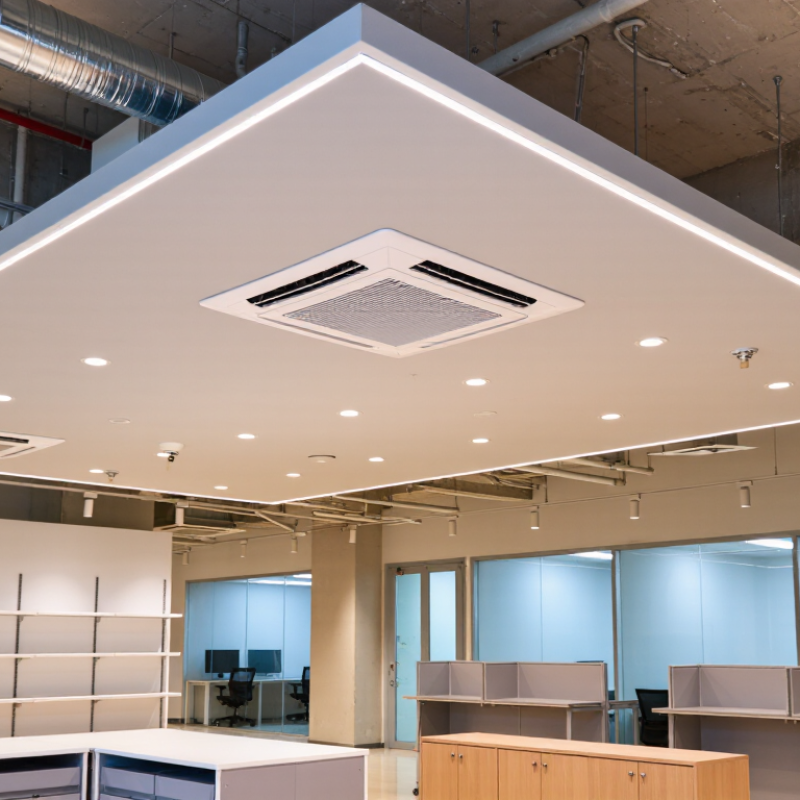
A commercial ceiling dehumidifier removes excess moisture from indoor air while staying above the occupied space. A fan draws humid air through a filter and across a cold evaporator coil. Water condenses on the coil, then drains away through a condensate line. The drier air may be reheated before returning to the room. That is the cycle. Some systems use desiccant material instead, which absorbs moisture and suits certain low-temperature or process environments.
Ceiling units can serve offices, storage rooms, pools, and other spaces where floor area is limited. Proper selection depends on room volume, moisture sources, ventilation, and operating hours—not just the unit’s rated capacity. ASHRAE’s HVAC Systems and Equipment Handbook covers dehumidification as part of building system design.
The U.S. Environmental Protection Agency’s A Brief Guide to Mold, Moisture and Your Home recommends keeping indoor relative humidity below 60%, ideally between 30% and 50%. Those are useful reference points, not a universal setpoint.
Fit matters. A unit that is undersized may run constantly; one that is poorly drained can create new moisture problems. Even a quiet ceiling unit needs accessible filters, a correctly sloped drain, and room for service. Real buildings are messier than product charts.

A commercial ceiling dehumidifier should be selected by moisture load, not floor area alone. Kitchens, pool-adjacent rooms, and storage areas release different amounts of water. Check capacity ratings under conditions close to your site, since temperature and humidity affect performance. A unit that is too small may run constantly; one that is too large may cycle frequently and leave damp corners. That trade-off is easy to miss.
Airflow and external static pressure matter when the unit connects to ductwork. Confirm that it can move air through the planned ducts, bends, and grilles. Quiet operation helps in offices and guest areas, but service access matters just as much. Access matters, too. Look for clear filter access, a practical condensate drain, and controls that let staff set humidity without guesswork. A pump may help where gravity drainage is not possible, but it adds another part to maintain. Choose coils and cabinets suited to the room’s moisture and cleaning conditions. One easy mistake is trusting a single capacity number. Check its test conditions before comparing options; specifications can be less helpful than they appear.
Use these practical selection criteria to compare commercial ceiling-mounted or ceiling-ducted units. Capacity and operating limits vary by design; confirm performance at the stated test conditions and for your project.
| Feature | What to Look For | Why It Matters in Commercial Use | What to Verify Before Purchase |
|---|---|---|---|
| Moisture-removal capacity | A capacity rating suited to the room’s moisture load, expressed in pints or liters per day. | Undersizing can leave humidity high; oversizing may increase cost and cause short cycling. | The rating’s test conditions. Compare ratings only when temperature and relative humidity conditions are comparable. |
| Humidity control | An adjustable humidistat or compatible external control, with a clear operating range. | Stable control helps protect stored goods, building materials, and indoor comfort. | Control accuracy, sensor location, remote-control compatibility, and restart behavior after a power interruption. |
| Airflow and duct compatibility | Published airflow data and permitted external static pressure for the intended duct arrangement. | Duct resistance, bends, and grilles can reduce delivered airflow and dehumidification performance. | Fan performance curves, duct connection sizes, return-air requirements, and installation clearances. |
| Condensate drainage | A continuous-drain connection; a condensate pump where gravity drainage is not practical. | Commercial units may collect substantial water during humid conditions, so reliable drainage is essential. | Drain diameter, required slope, pump lift and discharge limits, overflow protection, and local plumbing requirements. |
| Low-temperature operation | Documented operating-temperature limits and suitable frost or defrost protection when needed. | Cooling-coil icing can interrupt operation in cooler spaces or during seasonal conditions. | Minimum operating temperature, defrost method, and any capacity reduction at lower temperatures. |
| Energy use | Published power consumption and efficiency data at stated operating conditions. | The unit may run for extended periods, making operating cost an important lifecycle consideration. | Electrical input, applicable efficiency metric, supply voltage, circuit requirements, and standby consumption if specified. |
| Noise and vibration | Published sound data and mounting guidance appropriate for the occupied space. | Ceiling installations can transmit fan or compressor vibration into rooms and building structure. | Sound measurement conditions, vibration-isolation requirements, and recommended mounting method. |
| Filter access and maintenance | A cleanable or replaceable filter with practical access for routine service. | Restricted or neglected filters reduce airflow and can impair performance. | Filter type, service interval guidance, access-panel clearance, and availability of replacement parts. |
| Electrical and safety compliance | Electrical ratings and safety approvals appropriate to the installation location and jurisdiction. | Commercial installations must meet applicable electrical, building, and workplace requirements. | Nameplate voltage and current, required overcurrent protection, listing or certification, and local code requirements. |
| Serviceability and warranty | Accessible service components, documented maintenance procedures, and clearly stated warranty terms. | Straightforward servicing can reduce downtime and make long-term ownership easier to plan. | Warranty duration and exclusions, service access, parts support, and recommended professional installation requirements. |
Selection note: Size the unit using the space volume, target humidity, moisture sources, ventilation, and operating conditions. Confirm the final design with the manufacturer’s technical data and a qualified HVAC professional.
A commercial ceiling dehumidifier should be sized for the moisture entering a space, not floor area alone. Start with room volume: measure the length, width, and ceiling height. Then identify moisture sources, including people, wet floors, open loading doors, and outdoor air brought in by ventilation. A gym with showers has a different load from a dry storage room. Small details matter.
Use a humidity meter or data logger to track conditions during busy and quiet periods. Compare the readings with the intended indoor humidity range and the equipment’s stated capacity at similar temperature and humidity conditions. Rated output can fall when a room is cool, so a headline capacity may not reflect real performance. Ask a qualified HVAC professional to assess unusually high moisture loads or sensitive inventory. That estimate is only a start.
Before choosing a ceiling-mounted unit, check airflow coverage, drainage access, and maintenance clearance. A unit hidden above a ceiling can be awkward to service, and poor air circulation may leave damp corners untouched. Confirm that condensate can drain reliably and that the system works with existing ventilation and cooling equipment. Sizing is rarely perfectly tidy; a loading-bay door left open for hours can overturn a neat calculation.
A commercial ceiling dehumidifier needs more than a strong capacity rating. The installation must match the room’s moisture load, ceiling structure, and airflow pattern. Confirm that the mounting frame can support the unit, including vibration during operation. Leave the service clearances specified in the installation manual. Tight ceiling voids can restrict airflow and make routine repairs awkward. Not ideal. Check electrical supply and access panels before closing the ceiling. A qualified installer should verify the connections and commissioning settings.
Drainage deserves careful planning. Condensate lines should maintain a continuous fall to an approved drain, with secure joints and a cleanout where practical. If gravity drainage is impossible, use a suitable condensate pump and test its float switch. A small leak can stain ceiling tiles long before anyone notices the unit. During maintenance, inspect the drain pan, line, filters, coil, and pump. Clear buildup with methods allowed by the manufacturer; harsh cleaners may damage components. Record room humidity and service dates. Readings can vary with weather and occupancy, so one unexpected result is not always a fault. Still, repeated high readings deserve investigation. Check doors, ventilation, and sensor placement too. A sensible schedule helps, though real buildings rarely behave exactly as planned.
How to Compare Commercial Ceiling Dehumidifiers for 2026
Compare units under the same room conditions, not just by advertised capacity. A warehouse at 27°C and 70% relative humidity presents a different load from a cool office. Check moisture-removal ratings at temperatures and humidity levels close to your actual operating conditions. Then estimate the space’s moisture sources, including open doors, wet floors, and busy production areas. Capacity matters. But airflow matters too.
For ceiling-mounted equipment, measure available clearance and inspect the route for ducting, wiring, and condensate drainage. Confirm the unit can move air through the room layout, especially above shelving or equipment. Compare sound levels, energy use, filter access, and control options. Ask how performance changes in cooler conditions, and whether routine servicing can happen safely from the planned access point. Specifications help, but they do not replace a site assessment. I would leave some room for judgment; real buildings rarely behave like neat calculations.
Tips: Request performance data at your expected temperature and humidity. Check drain connections and filter replacement access before installation. Compare like with like. A low purchase price can look less attractive when maintenance access is awkward or operating costs are higher.
Air moisture at the same relative humidity changes with temperature. This chart shows approximate water-vapor density at 60% RH—useful context when comparing dehumidifier performance for a building’s expected operating conditions.
How to compare: Check each unit’s moisture-removal rating at test conditions close to your space’s temperature and humidity, rather than comparing capacity figures taken under different conditions. Also verify airflow, ceiling installation requirements, drainage, controls, and service access. Values shown are approximate psychrometric calculations, not equipment ratings.
Please share your email with us to see your results.