Choosing the right aerosol filling equipment affects product quality, operator safety, and long-term production stability. An Automatic BOV Aerosol Filling Machine offers a controlled approach for bag-on-valve packaging. It can manage filling, crimping, propellant charging, and container handling with consistent timing. This matters when every valve must remain properly aligned.
In a modern production line, sensors check container presence, filling levels, and machine movement. Servo-driven systems can reduce variation between batches and support accurate material dosing. Operators also gain a clearer view of production data, which helps identify faults before they become expensive delays. Practical experience shows that reliable results depend on more than speed. Correct valve specifications, clean compressed air, suitable product viscosity, and regular maintenance all influence performance.
The machine is not a complete solution by itself. That assumption deserves review. Poorly selected components can still cause leakage, uneven filling, or unnecessary downtime. A qualified supplier should provide documented testing, clear operating instructions, training, and responsive technical support. Equipment should also match the product formulation, container size, factory layout, and applicable packaging standards. This includes verified safety controls and appropriate quality procedures.
For manufacturers seeking repeatable BOV aerosol production, automation can improve efficiency without removing human oversight. Skilled operators remain essential for inspection, cleaning, changeovers, and process decisions. The best investment is not always the fastest machine. It is the system that performs consistently, protects product integrity, and supports dependable growth. That is why evaluating an Automatic BOV Aerosol Filling Machine requires evidence, practical testing, and honest attention to its limitations.
Bag-on-valve (BOV) technology separates the product from its propellant. The formula stays inside a flexible pouch. Compressed air or nitrogen surrounds that pouch inside the container. When the actuator is pressed, pressure gently pushes the product outward. The product never directly contacts the propellant.
This design supports cleaner and more consistent dispensing. It can handle creams, foams, gels, and liquid sprays with controlled output. The container may work from different angles. That feature helps users reach narrow surfaces and hard-to-access areas.
Product protection also improves because outside air has less opportunity to enter the pouch.
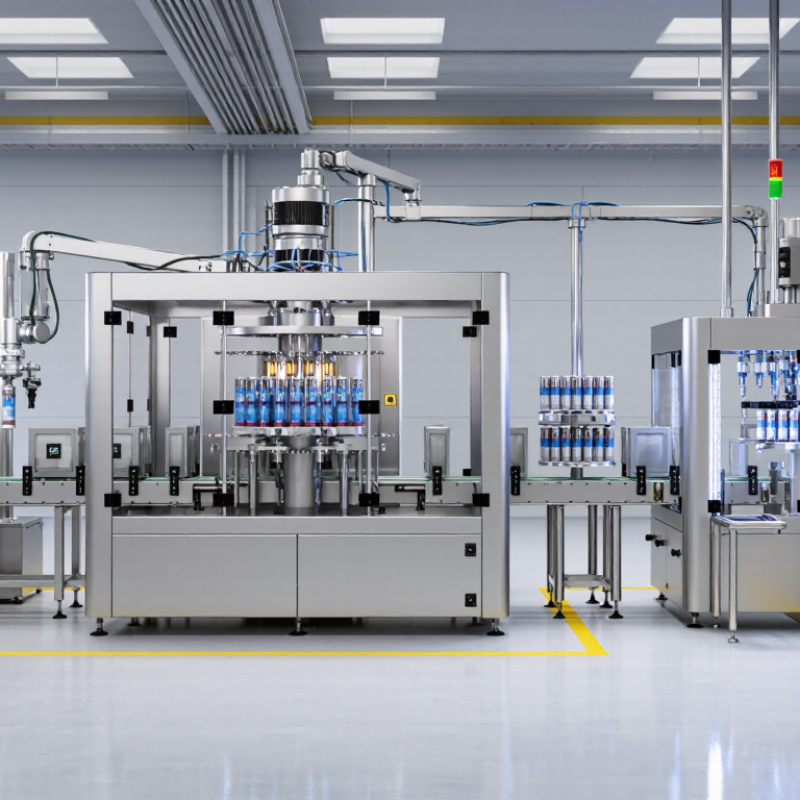
An automatic BOV aerosol filling machine coordinates several precise operations. It fills the product, positions the valve, crimps the container, and adds propellant. Many systems also include weight checks, leak testing, and fill-level monitoring. These controls reduce manual variation during long production runs. Small errors still matter. A poorly adjusted filling valve can create uneven doses or unnecessary material loss.
BOV is not automatically better for every formula. Product viscosity, pouch structure, valve design, and container size require practical testing. Operators should review pressure settings and inspect samples throughout production. Automation improves repeatability, but it cannot replace technical judgment. A stable process needs records, calibration, and occasional reconsideration. Packaging performance is measurable, yet real factory conditions can expose weaknesses that laboratory trials miss.

Why Choose an Automatic BOV Aerosol Filling Machine?
Automatic bag-on-valve filling can deliver typical product-dose accuracy of about ±1% under controlled conditions. That precision begins with a calibrated piston or servo-driven dosing system. Each cycle measures a defined volume before the product enters the container. Sensors then monitor pressure, filling time, and valve performance. The machine can adjust small variations during production. This reduces manual handling and keeps the fill pattern more consistent.
The result is practical, not magical. Product viscosity, temperature, foaming, and container tolerance can still affect accuracy. A trained operator should verify the system with regular weight checks and calibration records. In a production trial, we would compare samples from the beginning, middle, and end of a run. That reveals drift that one inspection may miss. Clean product pathways also matter because residue can change flow resistance. Small details count.
Automatic filling also improves repeatability between operators and shifts. It supports a steadier production rhythm while reducing unnecessary product loss. However, ±1% should be treated as a typical target, not a universal promise. Every formula needs testing at its actual speed and temperature. Sometimes the honest finding is less impressive. That finding is useful, because reliable filling depends on measured evidence rather than optimistic settings.
An automatic BOV aerosol filling machine reaches 30–60 cans per minute through coordinated steps, not one faster pump. At 60 cans per minute, each can receives attention every second. That timing demands stable container feeding, accurate bag filling, valve insertion, and controlled crimping. Servo-driven indexing helps each station maintain position. Sensors confirm can presence before filling begins.
The product is filled into the inner bag first. The valve is then placed and crimped with controlled pressure. A propellant station charges the space between the bag and can wall. Checkweighing verifies fill accuracy, while leak testing removes unsafe units. Automated coding and reject systems protect traceability. Short buffer conveyors also matter. They absorb small timing differences between stations.
PMMI reported U.S. packaging machinery shipments of about 10.2 billion dollars in 2022, showing strong investment in automated production. Industry automation studies also connect higher output with sensor integration, data collection, and reduced manual handling. However, speed alone can mislead. Poor valve alignment or unstable pressure may create repeated rejects. In practice, operators should validate product viscosity, bag material, crimp dimensions, and changeover time. A line may achieve 60 cans per minute during a trial, yet sustain only 30–45 in daily production. That gap deserves honest measurement.
Why Choose an Automatic BOV Aerosol Filling Machine?
How BOV Systems Reduce Propellant Exposure and Improve Operator Safety
A bag-on-valve (BOV) system separates the product from compressed air or nitrogen. This design can reduce direct contact with traditional propellants during filling and operation. Less exposure matters. The Health and Safety Executive reported 561,000 non-fatal workplace injuries in Great Britain during 2023–24. That figure is not aerosol-specific, but it shows why practical controls deserve attention.
An automatic BOV aerosol filling machine encloses key steps, including product dosing, valve placement, crimping, and pressure checks. Sensors can detect incorrect positioning before an operator reaches into the filling area. Interlocked guards add another barrier. According to the European Aerosol Federation’s 2023 statistical report, Europe produced more than five billion aerosol units in 2022. At that scale, small process weaknesses can become repeated exposure points.
BOV technology does not remove every hazard. Pressure, cleaning chemicals, product vapors, and maintenance errors still require control. Automation can also create false confidence. It is not magic. ISO 12100 recommends reducing risks through equipment design before relying on procedures or personal protective equipment. In practice, a safer line combines enclosed filling, local ventilation, pressure relief, clear alarms, and documented operator training. I would still question any system that hides its failure modes. A machine should make unsafe actions difficult, not merely remind people to avoid them.
| Safety and Operational Dimension | Automatic BOV Aerosol Filling Machine | Manual or Semi-Automatic Filling | Operator-Safety Benefit |
|---|---|---|---|
| Propellant handling | Propellant is introduced through a closed, controlled filling circuit after the product and bag assembly are installed. | Operators may perform more direct connections, valve operations, or manual transfers. | Reduces routine contact with pressurized propellant during normal production. |
| Potential release points | Designed to minimize open handling by using dedicated valves, seals, hoses, and automated sequencing. | More manual connection and disconnection steps can create additional opportunities for leaks or short-duration releases. | Fewer routine intervention points can lower the likelihood of operator exposure. |
| Exposure to flammable propellants | Closed transfer and automated controls can limit the amount of propellant released into the work area; ventilation and gas detection remain necessary where applicable. | Greater operator involvement may increase exposure potential if a connection, seal, or container is not properly controlled. | Supports a safer process when combined with approved ventilation, electrical classification, and leak-control procedures. |
| Pressure management | Programmable pressure controls, regulators, sensors, and interlocks help maintain the defined filling sequence. | Pressure may depend more heavily on operator adjustment and observation, depending on equipment design. | Reduces the need for frequent manual pressure adjustments and helps prevent out-of-sequence operations. |
| Filling consistency | Automated timing, metering, and sequence control provide repeatable filling conditions across production cycles. | Results can vary with operator technique, manual timing, and the condition of individual components. | Consistent operation reduces the need for corrective handling and repeated manual adjustments. |
| Operator distance from the process | The operator can supervise the cycle from a control interface while the machine performs the programmed filling steps. | The operator generally remains closer to the container, valve, and filling connections during each cycle. | Increases the opportunity to use physical guarding and distance as additional safety controls. |
| Leak detection and fault response | Sensors, alarms, emergency stops, and cycle interlocks can identify abnormal conditions and stop the process. | Fault recognition and shutdown may depend more on direct operator observation and manual action. | Provides faster, more repeatable responses to defined equipment faults. |
| Ergonomic workload | Automated indexing and filling reduce repetitive valve operation, hose handling, and manual pressure-related tasks. | Repeated loading, connection, inspection, and adjustment tasks may increase hand, wrist, and shoulder strain. | Reduces repetitive manual work when loading and unloading are ergonomically designed. |
| Process traceability | Control systems can record batch settings, alarms, cycle status, and selected process parameters. | Records may rely more on manual entries, operator checks, or separate instruments. | Improves investigation of deviations and supports documented process control. |
| Inspection and quality control | Automated systems can integrate presence checks, pressure verification, reject mechanisms, and defined inspection points. | Inspection frequency and consistency may depend more on operator attention and manual sampling. | Reduces the need to repeatedly handle potentially underfilled, damaged, or improperly sealed containers. |
| Containment and guarding | Can be configured with guards, enclosed filling areas, emergency stops, and controlled access zones. | The level of physical separation depends on the specific equipment and how much of the process is automated. | Creates an additional engineering control between personnel and pressurized operations. |
| Residual risk | Automation does not eliminate hazards from flammable propellants, pressure, static electricity, poor maintenance, or incorrect setup. | The same hazards remain, with potentially greater dependence on operator behavior and manual controls. | Requires risk assessment, training, preventive maintenance, ventilation, grounding, and compliance with applicable regulations. |
Why Choose an Automatic BOV Aerosol Filling Machine?
Quality control decides whether a BOV aerosol performs safely and consistently. The European Aerosol Federation’s latest statistical report records more than five billion aerosol units produced annually in Europe. At this scale, manual inspection alone can miss small process shifts. An automatic filling machine can record pressure, product weight, crimp dimensions, and rejection results for every production batch.
Pressure verification begins after propellant charging. Sensors compare actual pressure with the approved process range, while alarms stop abnormal units. Crimping checks measure valve height, curl, and sealing force. A crimp may look perfect. It may still leak. This is where pressure-decay or immersion testing helps identify weak seals around the valve and BOV pouch. ASTM F2095 and ASTM D3078 provide recognized approaches for pressure-decay and bubble-emission testing, although each method requires product-specific validation.
Fill-weight control uses calibrated checkweighers before and after filling. OIML R 87 provides principles for verifying average quantity and individual package contents. Automatic systems can also track nozzle output and compensate for temperature-related variation. That detail matters because viscosity changes can alter dosing behavior. The machine should retain calibration records and reject limits, not just display green lights. One weakness remains: sensors cannot replace proper maintenance. Blocked filling heads, worn seals, or unstable scales can quietly create false confidence. Human review is still necessary.
Quality-control coverage across the four critical release checks: pressure resistance, crimping integrity, leakage prevention, and fill-weight accuracy.
How to read this chart: A representative automated control plan verifies every filled container for the four key quality points. Pressure and leakage checks protect container safety, crimping checks confirm valve attachment, and fill-weight checks help maintain declared product quantity. Exact limits should be set according to the container design, formulation, and applicable regulations.
Please share your email with us to see your results.