Top Arc MMA Welder Manufacturers for Global Buyers

Choosing an Arc Mma Welder manufacturer involves more than comparing prices or reading a product brochure. Buyers need equipment that suits their power supply, welding tasks, and working conditions. A compact inverter may serve a repair crew well, while a production shop may need higher output and a stronger duty cycle. Small details matter. Check electrode compatibility, rated input voltage, thermal protection, and the clarity of the user manual before making a decision.

This guide introduces manufacturers that serve international buyers and explains how to assess their products with practical criteria. It considers welding performance, quality control, available models, customization, warranty terms, and access to spare parts. For example, a buyer using 2.5 mm and 3.2 mm electrodes should confirm that the machine’s current range fits the intended work. Stable output is valuable, but it does not replace suitable cables, sound setup, and operator skill. Claims about certifications should also be checked against the requirements of the destination market, since standards and acceptance can differ.

There is no perfect shortlist. A well-known brand may offer dependable support but cost more, while a lesser-known supplier may provide useful flexibility with less proven service coverage. That trade-off deserves scrutiny. The following overview aims to help buyers ask better questions, compare suppliers fairly, and select equipment based on documented specifications rather than marketing language alone.
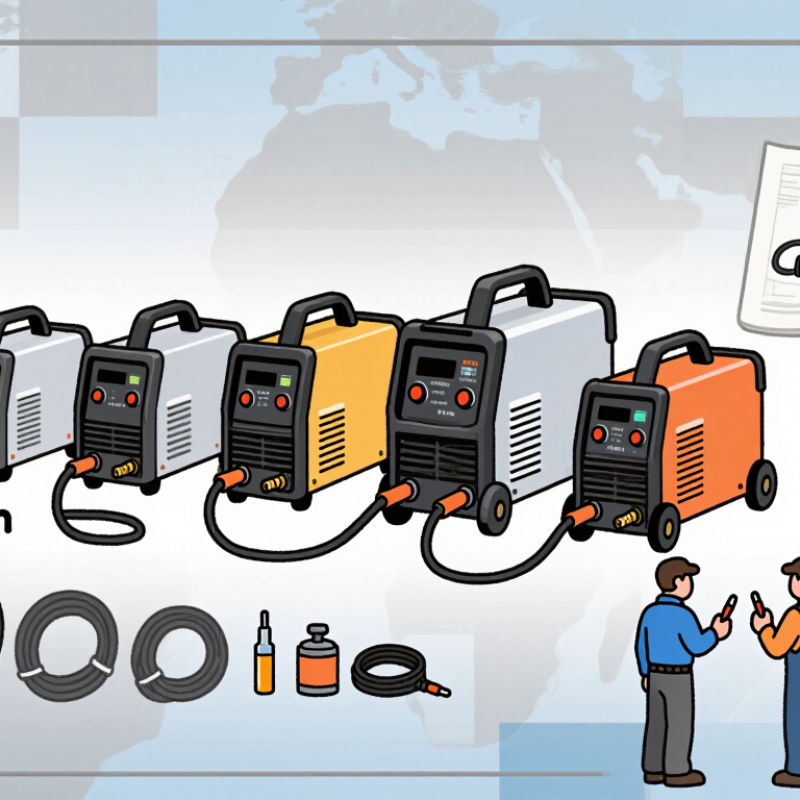
Top Arc MMA Welder Manufacturers for Global Buyers

How Arc MMA Welders Work and Where They Are Used

An arc MMA welder joins metal by creating an electric arc between a coated electrode and the workpiece. The arc’s heat melts both the electrode core and a small area of the base metal. As the coating burns, it releases shielding gases and forms slag over the cooling weld. The slag helps protect the bead, but it must be chipped away for inspection.

MMA welding is common on construction sites, in workshops, and during repairs to steel gates, frames, and farm equipment. Its equipment is relatively portable, and it does not rely on a separate shielding-gas cylinder. That can make it practical outdoors, though strong wind can still affect weld quality. Short welds on a rusty bracket may be manageable, but dirt and paint should be removed from the joint.

The operator must keep a steady arc length and choose an electrode suited to the metal and welding position. Check the machine’s recommended settings and electrode polarity rather than guessing. Wear a welding helmet, gloves, and protective clothing, and provide good ventilation. It is a useful process, not an effortless one. Even a neat-looking bead can hide defects, so inspect the finished joint and practice on scrap metal before critical work.

Key Criteria for Evaluating Arc MMA Welder Manufacturers

A reliable arc MMA welder manufacturer should provide testable specifications, not just impressive catalog figures. Compare rated output, input-voltage tolerance, duty cycle, and electrode range under clearly stated conditions. A 60% duty cycle at a specified ambient temperature means little if the test conditions are missing. Ask for sample inspection records, traceable serial numbers, and documented checks for insulation and thermal protection. Small details matter.

Service capacity deserves equal scrutiny. The U.S. Bureau of Labor Statistics projects 2% employment growth for welders from 2023 to 2033, with about 45,800 openings each year. Its Occupational Outlook Handbook points to continuing workforce demand, making accessible training and replacement-part support practical purchasing criteria. Ask how quickly the supplier can provide circuit diagrams, consumables guidance, and troubleshooting help across time zones. Request evidence, such as response-time records, rather than accepting a broad service promise.

Assess quality consistency across production batches, not only a showroom sample. Request independent test reports and confirm that model-specific documentation matches the unit being quoted. Check how the manufacturer handles warranty claims, firmware or design changes, and recurring failures. A factory visit can help, but it cannot prove every unit performs identically. Even experienced buyers can overvalue a low price; compare total operating costs and verify assumptions with a real trial weld.

Leading Arc MMA Welder Manufacturers in Global Markets

Leading arc MMA welder manufacturers in global markets are judged by more than output claims. Buyers compare stable arc performance, duty cycle, input-voltage tolerance, and access to replacement parts. A machine that starts reliably on a cold morning can matter more than a long feature list. Details matter.

Experienced manufacturers typically offer equipment for different working conditions, from repair benches to outdoor construction sites. Useful signs include clear operating manuals, tested thermal protection, and practical service support in the buyer’s region. Welders should also be evaluated with the electrodes and power supply they will actually use. A smooth demonstration under ideal conditions may not reflect a long shift with fluctuating input power.

Global buyers can ask for test records, warranty terms, spare-part lead times, and training materials before placing an order. These checks help distinguish consistent production from attractive sales language. Still, no single manufacturer suits every workshop. A compact unit may be convenient on site, yet feel limiting for repeated heavy-duty work. Comparing models against real tasks—and speaking with technicians who maintain them—often reveals the trade-offs that catalogs leave out. Admittedly, comparing duty-cycle figures across different test conditions can be confusing, so buyers should request the measurement basis.

Comparing Product Ranges, Certifications, and After-Sales Support

For global buyers, comparing MMA welders starts with the work they must handle: light repairs, site fabrication, or long production shifts. Check output range, duty cycle, input-voltage tolerance, and electrode compatibility. A compact unit may suit field repairs, but its weight and cable reach matter on a crowded jobsite. Grand View Research estimated the global welding equipment market at about US$15.1 billion in 2023, with projected growth of 5.7% annually from 2024 to 2030. This broad market figure is not MMA-specific, but it signals a competitive, expanding sector.

Certifications need careful reading. IEC 60974-1 covers safety and performance requirements for arc-welding power sources; ask for the exact model’s test documentation, not a generic certificate. ISO 9001 concerns quality-management systems, not proof that every welder performs equally. Details matter. Buyers should also confirm input frequency, plug configuration, and spare-parts availability for the destination market. A certificate alone proves little about local repair capacity.

After-sales support can separate similar-looking machines. Compare warranty duration, response times, technician access, and the availability of circuit boards, fans, and electrode holders. Ask how faults are diagnosed when a unit stops during a shift. A clear service process helps. Some supplier claims remain difficult to compare, so request written terms and a sample parts list. Even experienced procurement teams can overlook shipping time for small replacement parts.

Top Arc MMA Welder Manufacturers: A Global Buyer Checklist

Compare suppliers by checking product specifications, relevant compliance documents, and after-sales provisions.

Each bar counts the verification points listed below; it is a checklist, not a manufacturer ranking or market survey. Check product input voltage, output-current range, and duty cycle. For compliance, review IEC 60974-1 (welding power-source safety and performance), IEC 60974-10 (EMC), and, where claimed, ISO 9001 (quality-management systems, not product certification). For after-sales support, confirm warranty terms, spare-parts availability, and service coverage in your region.

How Global Buyers Can Select a Reliable MMA Welder Supplier

Top Arc MMA Welder Manufacturers for Global Buyers
How Global Buyers Can Select a Reliable MMA Welder Supplier

Choosing an MMA welder supplier takes more than comparing prices. Ask for clear specifications covering output range, input voltage, duty cycle, and electrode compatibility. Check that stated performance matches your intended workshop conditions. A machine rated for one duty cycle may behave differently in a hot, dusty work area. Request test records or sample units when practical, and review the instruction manual before placing a large order.

Tips: Confirm spare-part availability, warranty terms, and response times in writing. Ask how the supplier handles fault diagnosis. Small details matter.

A reliable supplier explains limitations as well as strengths. Ask about incoming inspection, production testing, and serial-number traceability. For global shipments, confirm packaging protects the unit from moisture and impact. Also check whether the documentation and power configuration suit your destination and users. Requirements vary by market, so verify applicable conformity documents with qualified local professionals. A polished brochure is not proof of consistent quality. I would still compare actual test evidence with the sales claims; this step can feel slow, but skipping it may cost more later.

Top Arc MMA Welder Manufacturers for Global Buyers - How Global Buyers Can Select a Reliable MMA Welder Supplier

Evaluation Area What to Look For Evidence to Request Buyer Verification Step
Product fit MMA (manual metal arc, or stick) models suited to the required electrode types, material thicknesses, and intended work environment. Model specifications, operating manual, and a clear list of supported processes and applications. Match the stated output range and recommended electrode sizes to the jobs the machine will perform.
Rated output and duty cycle Clearly stated rated welding current, output voltage, and duty cycle at the relevant current. Duty-cycle figures should identify their test conditions. Nameplate information and test documentation referencing the applicable rating method, such as IEC 60974-1. Compare models at the same rated current and test conditions; do not compare duty-cycle percentages in isolation.
Input power compatibility Input voltage, phase, frequency, and allowable voltage variation that match the destination site's electrical supply. Electrical rating label, wiring diagram, and manual specifying input requirements and protection recommendations. Confirm the exact configuration for the intended market and installation; do not assume one model supports every supply voltage.
Safety and conformity Safety documentation for the welding power source and conformity information appropriate to the countries where it will be sold or used. Applicable test reports or declarations, with model references that match the offered equipment. IEC 60974-1 is a relevant arc-welding equipment standard. Check document scope, issuing body, model number, and destination-market requirements independently.
Electromagnetic compatibility EMC information relevant to the equipment and the intended installation environment. Applicable EMC test documentation; IEC 60974-10 covers electromagnetic compatibility requirements for arc-welding equipment. Verify that reports cover the exact model or a documented product family that includes it.
Build quality and protection A documented enclosure rating where relevant, suitable cooling and ventilation, and construction appropriate to the working conditions. Product drawings, specified ingress-protection rating where claimed, and maintenance instructions. Check the rating's scope and installation limitations; an enclosure rating does not by itself establish suitability for every outdoor condition.
Quality management Documented production controls, inspection procedures, and traceability for the supplied units. Current quality-management-system certificate, if claimed, plus examples of final inspection or serial-number traceability records. Confirm the certificate's validity, scope, and certified site; certification does not replace product testing.
Performance validation Repeatable checks of output, controls, thermal protection, and other features claimed in the product specification. Sample test records, inspection criteria, and demonstration results for the quoted model. Arrange a sample evaluation or witnessed test against agreed acceptance criteria before a large order.
Warranty and service Written warranty terms, a defined claim process, access to technical support, and a practical repair or replacement route. Warranty document stating coverage, duration, exclusions, responsibility for transport, and service contact details. Compare the actual terms and local service options; warranty length alone does not indicate service quality.
Spare parts availability Identifiable replacement parts and a clear process for ordering consumable or repair components. Parts list, exploded diagram where available, lead-time estimates, and ordering procedure. Ask which parts are stocked for the target market and how long support is planned for the model.
Export readiness Experience preparing shipment documents and packaging suitable for the agreed transport route and destination requirements. Sample commercial and packing documents, packaging details, and a written explanation of the proposed shipping terms. Confirm responsibilities for freight, insurance, customs documentation, and delivery terms before placing the order.
Quotation transparency A complete quotation that identifies model configuration, included accessories, order quantity, lead time, payment terms, and quoted shipping basis. Itemized quotation and written confirmation of specifications, packaging, delivery schedule, and any optional items. Compare like-for-like configurations and clarify exclusions before evaluating total landed cost.

Use this checklist to compare suppliers against documented requirements. Applicable standards and regulatory obligations depend on the product configuration and destination market.

Members of