A 4x2 Dump Truck is a rigid work vehicle designed to carry and unload loose materials efficiently. Its “4x2” layout means four wheel positions, with power delivered to two wheels on one axle. This configuration is common in construction, landscaping, road maintenance, and local material delivery. It usually offers a practical balance between payload capacity, operating cost, and maneuverability.
The truck uses a chassis, engine, transmission, driven rear axle, and hydraulic tipping system. When the driver activates the hydraulic controls, pressurized fluid extends a lifting cylinder. The cylinder raises the dump body, allowing gravel, sand, soil, or demolition debris to slide from the rear. Gravity does most of the work.
Simple, but not effortless.
Performance depends on axle ratings, body design, tire condition, and load distribution. A professional operator checks the body, tailgate, hydraulic lines, and locking points before work begins. Uneven ground can affect stability during unloading. That detail is sometimes overlooked. It should not be.
This guide explains how a 4x2 Dump Truck transfers engine power, carries materials, and performs a controlled tipping cycle. It also considers traction limits, maintenance needs, fuel efficiency, and workplace safety. Specifications vary between manufacturers, so general descriptions cannot replace the owner’s manual or inspection records. In practice, the best truck is not always the largest one. It is the truck matched correctly to the route, material, and working conditions. Mistakes happen, especially when operators rush. Careful checks remain essential.
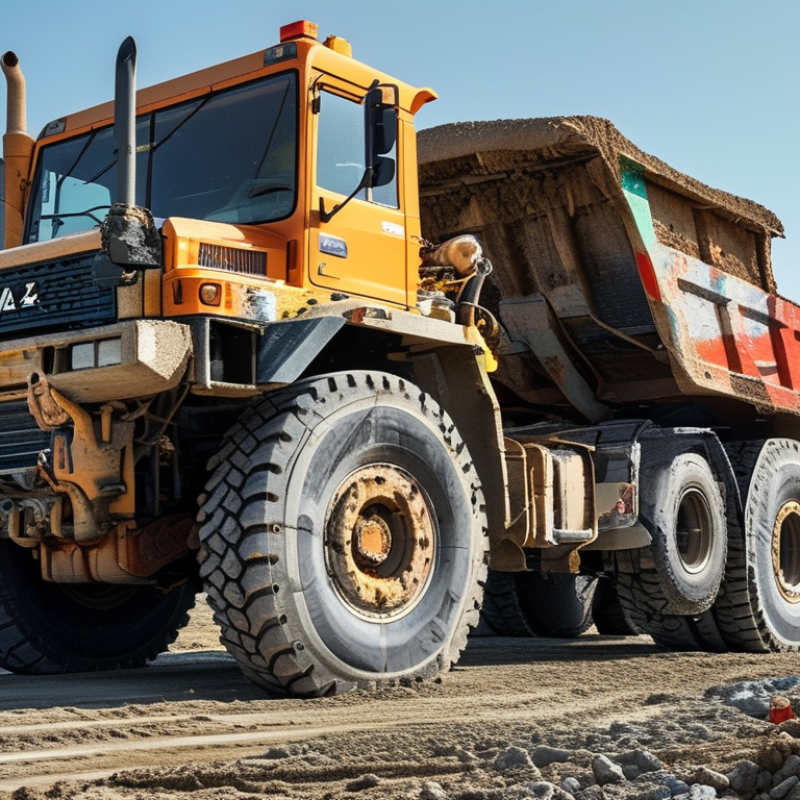
A 4x2 dump truck has two axles and four wheel positions, with one powered rear axle. The front axle steers, while the rear axle drives the vehicle. Its basic layout includes a cab, chassis frame, hydraulic hoist, and open tipping body. The engine sends torque through the transmission and driveshaft to the rear differential. Hydraulic cylinders then raise the body, allowing soil, gravel, or demolition debris to slide out.
The layout is compact and easier to maneuver than a 6x4 truck. That matters on narrow construction sites and urban roads.
Eurostat reported about 1,869 billion tonne-kilometres of EU road freight in 2023, showing the scale of road-based material movement.
However, a 4x2 model is not automatically the best choice. Payload, axle limits, road gradient, and surface conditions must be checked together. A heavily loaded body can reduce traction on wet ground. That detail is often underestimated.
In daily operation, the driver positions the truck, applies the parking brake, and activates the hydraulic control. The pump transfers fluid under pressure, extending the lift cylinder. The body pivots around rear hinges. Operators should keep the ground level and inspect hydraulic lines, hinge pins, tires, and load distribution. The U.S. Federal Highway Administration emphasizes axle-load monitoring because uneven loading can increase pavement stress and vehicle instability. Small mistakes remain possible, especially when the body blocks rear visibility.

A 4x2 dump truck uses one powered rear axle and one steering front axle. This layout reduces weight, cost, and maintenance on paved job sites. According to the Federal Highway Administration’s Freight Facts and Figures 2023, trucks carried about 72% of U.S. freight by weight in 2020. That demand makes dependable components essential.
The chassis carries the cab, engine, suspension, and tipping body. A diesel engine sends power through the transmission, driveshaft, differential, and rear axle. The hydraulic pump pressurizes oil, while hydraulic cylinders lift the steel body. A strong subframe spreads the load across the frame rails. Brakes, tires, lights, and electronic controls complete the working system. The National Association of Fleet Administrators reports that preventive maintenance can reduce unexpected vehicle downtime, although results vary by duty cycle. A 4x2 may perform poorly in mud. That is an easy mistake.
Tips: Check hydraulic hoses for abrasion before each shift. Inspect the hinge pins and body locks closely. Confirm the payload rating from the vehicle certification plate, not visual appearance. The U.S. Department of Transportation links overloaded commercial vehicles with higher road wear and safety risks. Weigh the truck when material density changes. Wet sand can surprise an experienced operator. Tire pressure also deserves attention, because uneven pressure affects steering effort, braking, and axle loading. Keep service records with engine hours, hydraulic repairs, and brake measurements. Clean records often reveal small problems before they become expensive.
A 4x2 dump truck has two axles and four wheels, with power usually sent to the rear axle. Its engine creates rotational force by burning fuel inside the cylinders. That force travels through the flywheel and clutch, or a fluid coupling in an automatic transmission.
The transmission changes torque and speed for different working conditions. Low gears help the truck move when the bed carries gravel, soil, or construction debris. Higher gears reduce engine speed during road travel. A driveshaft then carries power to the rear axle. Inside the axle, the differential allows the rear wheels to turn at different speeds through a corner. This reduces tire scrub and improves control.
The drivetrain must balance strength, traction, and fuel use. A short wheelbase can improve maneuverability on crowded job sites, but it may reduce stability on uneven ground. Rear-wheel drive also works well when the loaded bed presses weight over the drive axle. Still, loose mud can defeat a 4x2 layout. I have seen operators lose momentum by applying too much throttle. Gentle acceleration often works better.
The engine also powers the hydraulic pump for lifting the dump body. Hydraulic fluid moves through valves and cylinders, converting engine power into lifting force. Regular checks matter: worn universal joints, low axle oil, or contaminated hydraulic fluid can quickly reduce performance. Small maintenance mistakes become expensive.
What Is a 4x2 Dump Truck and How Does It Work?
How the Hydraulic Dumping System Operates
A 4x2 dump truck has two axles and four wheels. Power reaches one axle, usually the rear axle. This layout suits construction sites, road maintenance, and moderate hauling work.
Its dumping action begins with a hydraulic pump. The pump receives power through a power take-off connected to the transmission. When the operator moves the control lever, hydraulic fluid leaves the reservoir and enters the lifting cylinder. Pressure then extends the cylinder, raising the front of the dump body.
The body tilts gradually. Material slides toward the open tailgate. A relief valve limits excessive pressure and helps protect the pump, hoses, and cylinder. The operator should check the ground before raising the body. Soft soil or a side slope can make the truck unstable, even with a normal load.
Lowering the body reverses the oil flow. The cylinder retracts under controlled pressure, and the body settles onto its frame. The process should remain steady. Jerky movement may indicate trapped air, low fluid, worn seals, or a restricted filter.
In field inspections, small leaks often appear around hose fittings first. They should not be ignored. A clean hydraulic system usually works more reliably, but perfect performance is never guaranteed. Cold oil can slow the first lifting cycle, while an overloaded body can strain the entire system. Checking fluid level, cylinder pins, hoses, and the locking mechanism before operation remains practical and necessary.
A 4x2 dump truck has two axles, four road wheels, and one driven axle. During unloading, the hydraulic pump sends pressurized oil to a lifting cylinder, which extends and tilts the dump body. This chart shows the theoretical pushing force produced by common cylinder bore sizes at 200 bar hydraulic pressure. Actual lifting force is lower because of friction, linkage geometry, and hydraulic losses.
What Is a 4x2 Dump Truck and How Does It Work?
A 4x2 dump truck has four wheels arranged on two axles, with power sent to one axle. The front axle steers, while the rear axle drives the truck forward. A hydraulic cylinder raises the steel dump body, allowing loose material to slide out through the rear. Gravel, sand, soil, and demolition debris are common loads. Operators usually control unloading from the cab, but they must check ground stability first.
Common Uses, Benefits, and Operating Limits
A 4x2 truck suits paved roads, firm construction entrances, farms, and short delivery routes. Its simpler drivetrain can reduce weight, fuel use, and maintenance demands. It may also turn more easily in crowded yards. However, it has limited traction on mud, snow, steep grades, and loose ground. Payload capacity depends on the chassis, axle ratings, body design, and local road rules. Overloading can damage suspension components and increase braking distance. That benefit is easy to overstate.
Tips: Keep the load evenly distributed and below the body’s safe capacity. Inspect tires, hydraulic lines, brakes, and tailgate latches before each shift. Raise the body only on level, clear ground. Watch overhead cables and nearby workers. A spotter helps in tight areas. I have seen small loading mistakes create large stability problems. Operators should also lower the body before moving, because a raised body changes the truck’s center of gravity. Weather and site conditions can quickly reduce its practical limits.
| Data Dimension | Typical Information | Practical Meaning |
|---|---|---|
| Basic definition | A 4x2 dump truck has four road wheels arranged on two axles, with power delivered to one axle. | It is a two-wheel-drive rigid truck designed primarily for paved roads, construction access roads, and prepared job sites. |
| Driven axle | The rear axle is commonly powered, while the front axle provides steering. | The layout is mechanically simpler and generally lighter than a two-drive-axle configuration. |
| Typical gross vehicle weight rating | Approximately 10,000–26,000 kg, depending on axle ratings, chassis design, and local regulations. | The truck, payload, fuel, fluids, tools, and occupants must remain within the legal and manufacturer-rated limit. |
| Typical payload range | Approximately 4–14 metric tonnes for many medium-duty and heavier rigid 4x2 configurations. | Actual payload is controlled by the rated capacity of the chassis, axles, tires, suspension, and dump body. |
| Engine output | Common working ranges are about 100–300 kW, or approximately 135–400 horsepower. | Higher output improves hill-climbing and acceleration but may increase fuel use, purchase cost, and maintenance demands. |
| Transmission | Manual, automated manual, and fully automatic transmissions are used, depending on the vehicle specification. | Low gears provide pulling power when starting, climbing, or maneuvering with a loaded body. |
| Dump body capacity | Common body volumes are approximately 5–18 m³, with smaller bodies often used on lighter chassis. | The body should be matched to the material density so that volume does not cause the truck to exceed its weight rating. |
| Dumping mechanism | A hydraulic pump sends pressurized fluid to one or more cylinders, which raise the front of the body for rear discharge. | The body must be fully lowered and secured before road travel. |
| Common materials carried | Sand, gravel, soil, crushed stone, asphalt, demolition debris, mulch, and other non-liquid bulk materials. | Material type affects payload weight, body wear, loading method, and unloading safety. |
| Typical operating surfaces | Paved highways, compacted gravel roads, asphalt plants, construction sites, quarries, and prepared industrial yards. | Traction and stability are best on firm, level, and well-maintained surfaces. |
| Typical maximum road speed | Many road-going units are designed for approximately 80–105 km/h, subject to local speed limits and load conditions. | The legal speed limit, tire rating, weather, road condition, and payload always take priority over the vehicle’s capability. |
| Turning and maneuverability | A 4x2 generally has a shorter and simpler layout than many multi-axle trucks, with turning circles commonly around 14–20 m depending on wheelbase. | It can maneuver efficiently in urban streets and confined construction areas, although visibility around the body remains limited. |
| Main operating cycle | Load the body, secure the tailgate, travel to the destination, position on stable ground, raise the body, discharge, lower the body, and inspect before moving. | Correct sequencing reduces rollover risk, hydraulic damage, and accidental material loss. |
| Key benefits | Lower tare weight, simpler drivetrain, potentially lower operating cost, good road efficiency, and straightforward maintenance. | It is often economical for regular hauling routes where extreme off-road traction is not required. |
| Traction limitation | Only one axle supplies engine torque, so traction can be reduced on mud, loose sand, snow, ice, or steep unpaved grades. | A 4x4 or multi-axle drive configuration may be more suitable for consistently difficult terrain. |
| Dumping limits | The body should be raised only on firm, level ground with adequate overhead clearance and no people or obstacles nearby. | Side slopes, soft shoulders, uneven ground, overhead cables, and stuck loads significantly increase rollover or collision risk. |
| Material compatibility | The body is intended for bulk solids and is generally unsuitable for liquids unless specially designed and approved. | Liquid transport requires a properly designed tank, baffling, safety systems, and applicable regulatory approval. |
| Daily inspection priorities | Check tires, wheel fasteners, brakes, steering, lights, mirrors, hydraulic hoses, cylinder mounts, tailgate, body locks, and fluid levels. | Inspection helps identify defects before they cause loss of control, hydraulic failure, or an unsafe dump cycle. |
| Best-fit applications | Municipal material delivery, road maintenance, landscaping, aggregate hauling, asphalt work, excavation support, and general construction. | The configuration is most effective when road travel, moderate payloads, and frequent loading and unloading are central to the job. |
Please share your email with us to see your results.