Choosing the right Mechanical zinc French washer can improve load distribution, protect mating surfaces, and support a more dependable assembly. Yet washer names and dimensions can vary between suppliers. Buyers should confirm the drawing, standard, and product description before comparing quotes.
This 2026 guide examines common options, including flat, wide-pattern, and locking washers where suppliers classify them under French washer listings. It explains how outside diameter, thickness, hole size, and material affect fit and performance. Small details matter. A washer that looks suitable may still interfere with a recessed fastener or fail to cover a soft surface adequately.
Zinc finishes can help protect steel from corrosion in ordinary service, but they are not a universal substitute for stainless steel or a specified protective system. Check the coating type, stated thickness, and intended environment. Fit comes first. Also review packaging, dimensional tolerances, traceability, and inspection documents when consistency matters across production runs. A clear sample check can reveal burrs, uneven plating, or edge damage before a larger order ships.
No catalog label alone proves suitability. Compare measurable specifications, request clarification when terminology is unclear, and test the washer in the actual joint. Even experienced buyers can miss a small mismatch. That is worth admitting. The sections ahead offer a practical framework for comparing washer types and selecting a reliable option for the application.
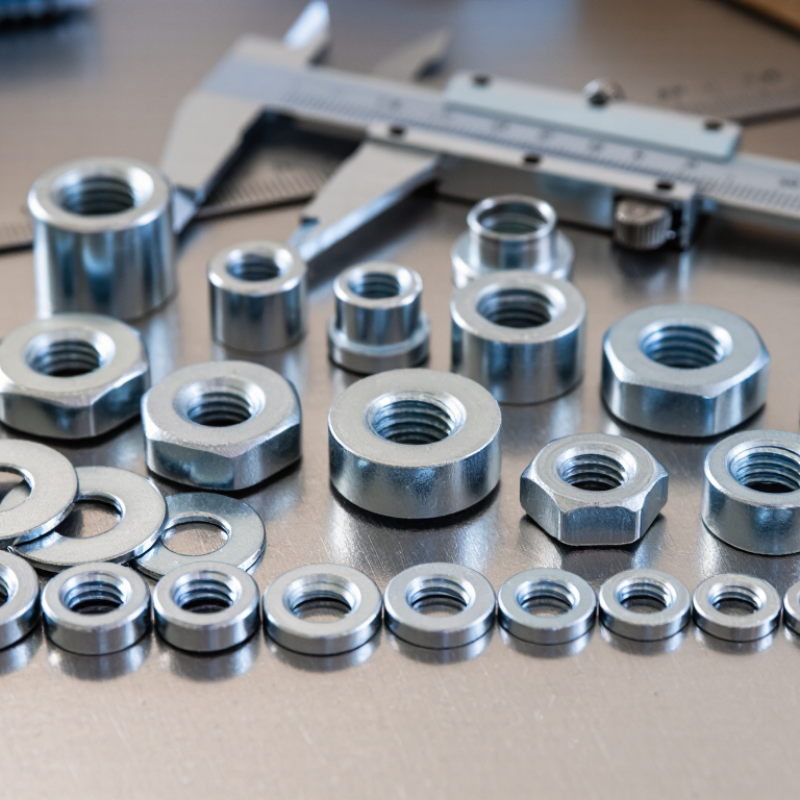
A mechanical zinc French washer should be specified by measurable geometry, base material, and coating—not by its catalog name alone. “French washer” can describe a broad, thin washer, but dimensions may vary by supplier. State the outer diameter, inner diameter, thickness, and permitted tolerances. For example, a washer with a 30 mm outer diameter and a 10 mm bore may spread load differently from a standard narrow washer. Check the mating bolt and contact surface, too. Fit matters.
Then define “mechanical zinc” precisely. Buyers should confirm whether the coating is mechanically deposited or electroplated, and request its thickness, appearance, and corrosion-test requirement. ISO 4042:2022 addresses electroplated coatings on fasteners; ASTM F1941/F1941M covers electrodeposited coatings on threaded fasteners. These references help distinguish coating processes, but they do not replace a washer-specific drawing or purchase specification.
Ask suppliers for coating records and inspection results. Small differences count. A coating requirement without a test method leaves room for interpretation. That detail is easy to miss.
For outdoor or damp service, state the exposure conditions rather than simply asking for “zinc plated.” A sample inspection can reveal burrs, uneven coating, or a tight bore. Not glamorous, but useful.

2026 Top Mechanical Zinc French Washer Types for Buyers
How ISO 7089, 7090, and 7093 Classify Washer Profiles
ISO 7089, ISO 7090, and ISO 7093 distinguish washers mainly by profile and dimensions. ISO 7089 covers normal-series flat washers with a plain, square-edged profile. ISO 7090 describes normal-series washers with a chamfered edge. That small bevel can affect seating and clearance, so check the drawing rather than judging by appearance alone. ISO 7093 covers large-series washers, whose wider outside diameter spreads load over more surface area. The series can help buyers narrow a selection, but it does not replace checking the specified inside diameter, thickness, and tolerance.
These standards describe washer dimensions and form, not the zinc coating itself. For a zinc-plated washer, confirm the coating requirement separately, including the specified finish and any required corrosion performance. In practical assembly, a larger washer may help protect a softer panel, while a chamfered edge may suit a particular mating surface. Still, fit depends on the whole joint. That detail is easy to overlook.
Tips: Compare the standard number with the fastener drawing, then measure a sample washer’s inside and outside diameters. Check the edge profile under good light. If the coating is important, request its specification separately; the ISO washer designation alone does not tell you its corrosion resistance.
2026 Top Mechanical Zinc French Washer Types for Buyers
Matching washer dimensions to fastener size starts with the bolt’s nominal diameter and the material beneath it. ISO 7089:2000 gives a useful dimensional reference: an M6 washer has a nominal 6.4 mm bore, 12 mm outside diameter, and 1.6 mm thickness. An M8 washer measures 8.4 mm, 16 mm, and 1.6 mm. Check actual product tolerances. Zinc coatings and supplier specifications can affect fit.
Load matters just as much. A wider washer spreads clamping force over more surface area, which can help protect softer panels from crushing. But it cannot compensate for weak material or poor joint design. VDI 2230 Part 1:2015 recommends calculating bolted-joint preload and stiffness rather than treating tightening torque as a direct measure of clamp load. Fit matters. For thin sheet, inspect for dishing after tightening; it is easy to overlook.
Choose a washer whose bore clears the fastener without excessive play, then check its outside diameter against the bearing surface. Confirm washer hardness and coating requirements against the assembly specification. ISO 7089 provides dimensions, not a universal load rating. That distinction is useful—and easy to miss when comparing zinc-plated French washer listings.
| Washer type | Reference dimensions (mm) Inside diameter × outside diameter × thickness | Typical fastener match | Useful for | Load and fit guidance | Zinc-finish notes |
|---|---|---|---|---|---|
| Standard flat washer (ISO 7089 dimensional series) | M6: 6.4 × 12 × 1.6 M8: 8.4 × 16 × 1.6 M10: 10.5 × 20 × 2 M12: 13 × 24 × 2.5 | Use the washer size corresponding to the nominal metric bolt or screw size. | General-purpose assemblies where a standard bearing surface and a compact outside diameter are suitable. | A practical default for ordinary clamped joints. Check the material beneath the washer and the required tightening load; a washer does not increase the fastener’s rated strength. | Specify the zinc coating and corrosion-resistance requirement separately. Coating thickness can affect fit, particularly at the hole. |
| Large outside-diameter flat washer (ISO 7093-1 dimensional series) | M6: 6.4 × 18 × 1.6 M8: 8.4 × 24 × 2 M10: 10.5 × 30 × 2.5 M12: 13 × 37 × 3 | Match the washer’s nominal size to the bolt or screw; confirm the larger outside diameter fits the available space. | Spreading bearing pressure over a wider area, such as on thin sheet or softer materials. | The wider bearing face can help reduce local indentation, but it does not replace checking substrate strength, edge distance, or joint design. | Confirm that the selected zinc-plated finish is suitable for the service environment; zinc coatings can be unsuitable for some aggressive or continuously wet conditions. |
| Extra-large flat washer (large bearing-area selection) | Example for M10: 10.5 mm nominal hole with an outside diameter selected above the standard large-washer size; thickness specified to suit the application. | Choose a hole that clears the fastener while limiting excessive clearance; verify the washer does not interfere with nearby features. | Assemblies requiring a broad bearing footprint on thin panels, timber, plastics, or other materials prone to pull-through or surface damage. | Use where the supporting material benefits from a larger contact area. Confirm that the washer itself will remain sufficiently rigid under the expected clamp load. | Dimensions are application-selected rather than a single universal standard size. Request a drawing or dimensional specification when ordering. |
| Thick flat washer | For an M10 fastener, a common standard flat-washer reference is 10.5 × 20 × 2 mm; thicker versions require a specified drawing or product dimension. | Match the hole to the fastener and check that the added thickness does not reduce thread engagement or interfere with the assembly. | Applications needing greater washer stiffness or a more substantial bearing component. | Thickness alone does not establish load capacity. Verify washer material, hardness, bearing surface, fastener strength, and joint design. | Ask whether zinc plating is applied before or after manufacture when coating coverage on edges and cut surfaces matters. |
| Spring lock washer (split type) | Dimensions vary by washer series and specification; select by nominal fastener size and verify the product drawing. | Use only where the joint design specifically calls for this washer type. | Legacy or application-specific assemblies where a split spring washer is specified. | Do not assume it prevents loosening in every joint. For vibration-sensitive assemblies, select a validated locking method and follow the joint designer’s requirements. | Check coating compatibility and avoid mixing finishes where galvanic corrosion or assembly conditions are a concern. |
| Fender-style washer | Commonly selected by a relatively large outside diameter and a hole sized for the fastener; exact dimensions depend on the applicable product specification. | Match the hole to the bolt or screw and confirm the outside diameter suits the panel or material. | Spreading load over a broad area on thin sheet, panels, or soft materials. | Useful when a standard washer provides too little bearing area. Check for panel deformation and adequate support around the hole. | Specify dimensions, base material, and zinc finish explicitly because “fender washer” dimensions are not identical across all product ranges. |
| Selection note: Dimensions shown for ISO 7089 and ISO 7093-1 are representative nominal metric sizes. Confirm the applicable standard edition, tolerances, washer material, hardness, coating, and required load with the supplier or engineering specification before purchase. Washer size alone is not a load rating. | |||||
ISO 4042 covers electroplated coatings on steel fasteners, including washers. In the designation Fe/Zn5, “Fe” identifies the steel base and “Zn” identifies zinc. The number denotes the coating thickness class in micrometres. Fe/Zn12 therefore specifies a thicker zinc layer than Fe/Zn5. A useful detail, but not the whole story.
For French-style washers, coating choice affects more than appearance. A thicker layer can change dimensions at the hole and outer edge, so check fit where clearances are tight. ISO 4042 also addresses supplementary treatments, which can influence corrosion performance. Salt exposure, storage, and handling matter too. A coating code alone cannot promise a fixed service life.
Check the supplier’s stated coating process before comparing quotations. ISO 4042 concerns electroplated coatings; a mechanically applied zinc finish should not automatically be treated as the same process or designation. Ask for the specified thickness class and relevant test documentation. Then verify that the washer’s dimensions still suit the assembly. Small differences count. I would not choose Fe/Zn12 by default: a thicker coating may be unnecessary, and the right choice depends on the actual environment and fit.
For buyers comparing 2026 mechanical zinc French washers, hardness is a compatibility check, not just a catalogue number. A 200 HV washer is commonly selected for lower-strength fastener assemblies, while 300 HV is intended for higher-strength applications. ISO 898-3:2018 specifies mechanical properties for plain washers, including these hardness classes. ISO 898-1:2013 classifies carbon and alloy steel bolts by property class. Together, these standards provide a useful starting point.
In practice, 200 HV washers are generally paired with bolts up to property class 8.8; 300 HV washers are commonly specified with classes 10.9 and 12.9. Confirm the fastener supplier’s requirements and the joint design before ordering. A softer washer beneath a high-strength bolt can deform under bearing pressure, reducing clamp stability. A very hard washer is not automatically better. It still needs suitable dimensions and bearing surfaces.
Look closely at the washer’s test documentation. Check the stated hardness, thickness, and coating details against the purchase specification. Zinc helps resist corrosion, but it does not upgrade the washer’s load capacity. A tidy table cannot settle every joint. Real assemblies vary, and mixed batches can complicate inspection. For critical joints, request lot-specific test records and verify the washer against the applicable ISO requirements.
How 200 HV and 300 HV washer grades compare with common fastener hardness benchmarks
200 HV and 300 HV identify washer hardness grades; higher-hardness washers are generally considered when pairing with harder fasteners. The chart shows reference values, not a guarantee of compatibility: check the applicable washer and fastener standards, fastener diameter, joint design, and coating requirements before selection.
Please share your email with us to see your results.