2026 Best Live Translation Earbuds for Travel?
International travel is moving at scale again. UN Tourism reported about 1.4 billion international tourist arrivals in 2024, roughly 99% of 2019 levels. For many travelers, language friction appears in ordinary moments: asking which platform the train leaves from, confirming a food order, or checking into a small hotel. A translation device can help. It cannot guarantee a perfect conversation.
Live Translation Earbuds promise quick, hands-free speech support, but performance depends on more than a language count. Microphone quality, background noise, connection stability, translation delay, and app compatibility all matter. Battery life matters, too, especially during a long travel day. Offline translation may be useful in places with weak service, though available languages and features can vary by model.
The stakes are practical. CSA Research’s 2020 “Can’t Read, Won’t Buy” study found that 76% of surveyed consumers preferred product information in their own language. That study examined buying preferences, not travel conversations, so its result should not be treated as proof that earbuds translate accurately. Not magic. This 2026 guide will compare leading travel options by supported languages, real-world usability, offline features, comfort, and value. We will also note where product claims deserve a second look. A quiet demo room is not an airport gate.
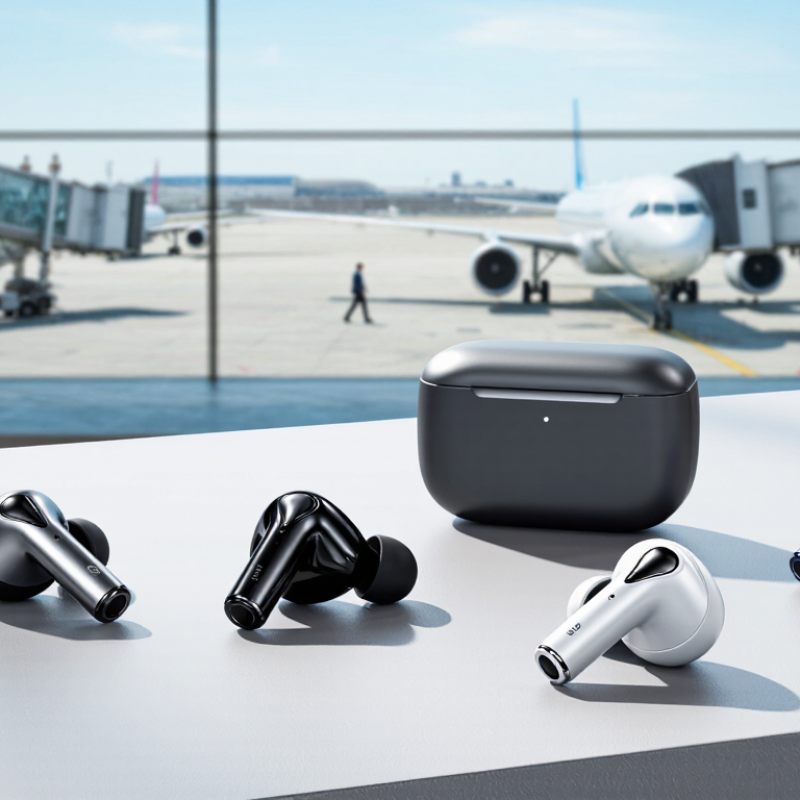
Defining Live Translation Earbuds: Core Features and Travel Use
Live translation earbuds combine microphones, audio processing, and a phone app to convert speech between languages. The earbuds capture a speaker’s words, while software recognizes speech, translates it, and plays the result aloud or through an earpiece. Some systems also display a transcript, which helps when names or numbers sound unclear.
That matters. Travelers should check which languages work offline, whether both speakers need earbuds, and how the app handles pauses and accents. Features vary, so “live” does not always mean instant.
At a busy station, a short question about a platform may translate well; announcements and overlapping conversations are harder. Near a hotel desk, quieter speech gives the system a better chance, but it can still miss a room number. Not magic. Speak in short phrases, leave a beat between turns, and confirm important details by reading them back.
It is wise not to rely on a translation alone for medical needs or other high-stakes conversations. Before a trip, test the language pair and download offline files if available. Also check battery life: a long layover can outlast a small charging case. These tools can make everyday exchanges easier, though a little patience remains part of the experience.
Travel Demand: UN Tourism Recorded 1.4B International Arrivals in 2024
2026 Best Live Translation Earbuds for Travel?
Travel Demand: UN Tourism Recorded 1.4B International Arrivals in 2024
UN Tourism recorded 1.4 billion international tourist arrivals in 2024. That figure highlights how often travelers cross language boundaries. In crowded stations, unfamiliar cafés, and busy markets, a missed word can mean a missed turn. Live translation earbuds may make short conversations easier, especially when checking directions or asking about ingredients.
They are not flawless interpreters. Background noise, accents, and pauses can affect recognition, and some systems need a reliable internet connection. Before choosing a pair, check supported languages, battery life, comfort, and whether offline translation is available for your route. Try them with a travel companion before departure. I might still reach for a phrasebook when the connection drops; that is less convenient, but dependable.
Tips: Download any available language packs before leaving. Keep your phone charged, speak in short phrases, and confirm important details by repeating them aloud. A little patience helps.
2026 Best Live Translation Earbuds for Travel? — Travel Demand: UN Tourism Recorded 1.4B International Arrivals in 2024
Regional travel demand provides context for choosing translation features for international trips. Arrival figures are rounded estimates.
| Region | International Tourist Arrivals in 2024 | Change vs. 2019 | Travel-planning context for translation earbuds |
| Europe | 747 million | +1% | Consider support for conversations in multiple languages when visiting several countries on one trip. |
| Asia and the Pacific | 316 million | −13% | Check which languages are supported and whether offline translation is available for destinations with limited connectivity. |
| The Americas | 213 million | −3% | For cross-border itineraries, verify support for the specific languages and regional speech varieties you expect to encounter. |
| Middle East | 95 million | +32% | Review supported languages and test speech recognition in realistic travel settings before departure. |
| Africa | 74 million | +7% | Confirm that the languages needed for your route are supported; language coverage varies by device and service. |
| Worldwide | About 1.4 billion | 99% of the 2019 level | For any destination, compare language coverage, offline availability, battery life, comfort, and performance in noisy environments. |
Source: UN Tourism, World Tourism Barometer, January 2025. Regional arrival figures and recovery rates are rounded estimates; the worldwide total is reported as approximately 1.4 billion international tourist arrivals in 2024.
Language Coverage: Ethnologue Catalogs 7,164 Living Languages
Ethnologue catalogs 7,164 living languages, a striking reminder that “language support” is not a simple yes-or-no feature. The figure describes languages documented as living, not the number a translation earbud can reliably recognize. Catalog counts and classifications may also change as research develops. Big number. Uneven access.
For travel, check the exact language pair, not a headline total. An earbud may handle standard Spanish but struggle with a regional accent, rapid speech, or a less widely supported language. Ask whether live translation works offline; airport Wi-Fi and mobile data can fail. Test ordinary phrases before departure, then check whether names, dates, and prices come through clearly.
Coverage claims need context: speech recognition, translation, and spoken playback are separate capabilities. A device might support a language in text but not in conversation. In a crowded station, microphone placement and background announcements matter too. I would not treat 7,164 as a promise. It is a useful scale marker, not a travel guarantee. Even a careful test can miss an awkward phrase.
How Translation Works: Speech Recognition, Machine Translation, and Audio
Live translation earbuds work through three linked steps. A microphone first captures speech, then speech recognition turns the sound into text. On a busy station platform, that first step can struggle with announcements, wind, or overlapping voices. Clear speech helps. Pauses help too.
Machine translation then converts the recognized words into another language. The result depends on context: a phrase about a train connection may be mistranslated if the system misses one key word. Some earbuds process speech through a connected phone or online service, while offline options may have fewer languages or less natural phrasing. Check language availability before a trip, and test the setup before you need it. It is not always instant.
Finally, translated text is turned into audio and played through the earbuds or a phone speaker. A short delay can make a conversation feel awkward, especially when both people keep speaking. Taking turns often works better. In a quiet café, the translated voice may be easy to follow; beside traffic, it can disappear beneath the noise. I would still confirm important details, such as a departure time, with a written sign or screen. Translation helps people communicate, but it can miss tone, slang, and small distinctions.
How Translation Earbuds Process Speech
Earbuds capture speech for recognition, send the recognized words to machine translation, then play translated speech through audio output. This chart shows approximate audio frequency ranges—not translation performance. Actual voice ranges vary, and clear recognition also depends on noise, microphones, and software.
Comparing 2026 Models: Accuracy, Latency, Battery Life, and Offline Use
2026 Best Live Translation Earbuds for Travel?
For 2026 models, compare translation accuracy in noise, response delay, battery life, and offline language support. NIST speech-recognition evaluations use word error rate, counting substitutions, omissions, and added words. That is more informative than a vague “accuracy” percentage. Test with announcements, street noise, and short questions; a quiet hotel lobby can flatter any device. Real streets are less polite.
Latency shapes conversation. ITU-T Recommendation G.114 places one-way voice delay below 150 milliseconds in the range acceptable for most applications. Live translation adds recognition and speech generation, so earbuds may take longer. Try a simple exchange and notice whether replies feel natural or repeatedly interrupt the speaker. A small pause matters.
Battery claims need context. Continuous translation uses microphones, wireless links, and sometimes cloud processing, so music-playback figures may not predict a travel day. Compare tested translation runtime, charging-case capacity, and whether offline packs work without a network. Offline use can help on flights or in remote areas, but supported languages and features may differ. Check them before departure. No single score captures comfort, accents, noise, and data access; a fair comparison should publish test conditions and disclose what it did not measure.