The 2026 Best Center Joint Types for Global Buyers guide examines the components that keep excavators moving, turning, and working under pressure. A Center Joint transfers hydraulic oil between the upper and lower structures during continuous rotation. Its performance affects travel speed, steering control, leakage risk, and machine uptime.
Hydraulic systems specialist Daniel Mercer states, “A center joint should protect uptime, not merely complete the parts list.” This practical view matters for global buyers. A joint may appear affordable, yet poor sealing can create oil marks around the swivel body. Contaminated oil may damage internal surfaces. Incorrect port spacing can also delay installation.
This guide compares common Center Joint designs, including compact, multi-port, high-pressure, and customized configurations. It considers operating pressure, flow demand, rotation speed, seal materials, mounting dimensions, and temperature range. Buyers should check technical drawings carefully. Do not rely on photographs alone.
Field conditions change the decision. A quarry machine faces dust and vibration. A coastal excavator may need stronger corrosion protection. Cold regions demand seals that remain flexible below freezing. After-sales support matters too. Spare seals, delivery time, testing records, and warranty terms can determine the real purchase cost.
No selection is perfect. Our comparison has limits, especially when manufacturers use different testing methods. Still, the right Center Joint can reduce downtime and simplify maintenance. Global buyers should match the joint to the machine, not just the price. Small details matter. A missed measurement can become an expensive return.
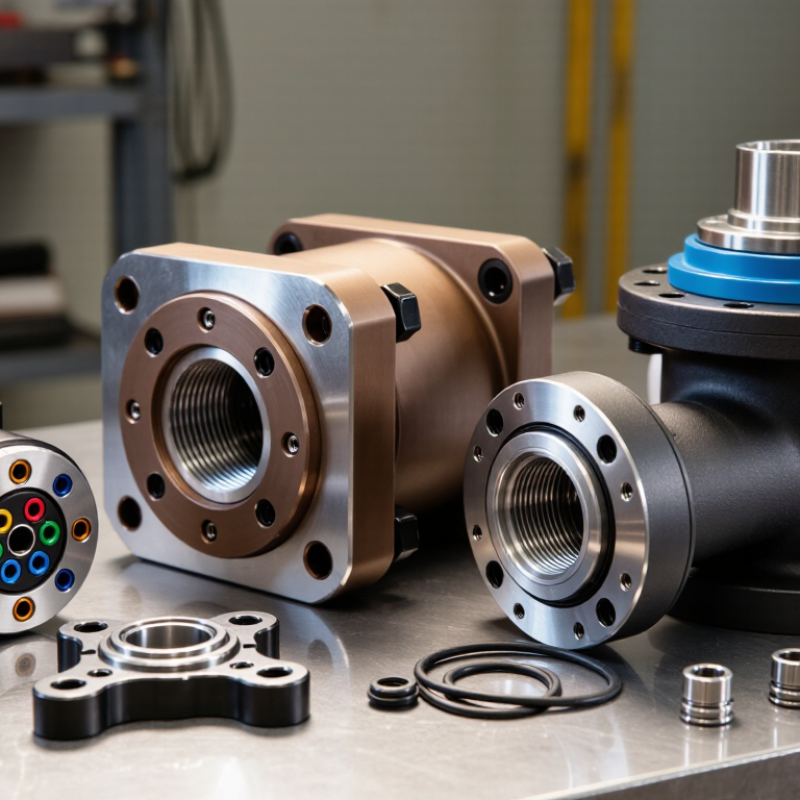
A center joint is the mechanical connection between two main sections of an articulated machine. It allows the front and rear frames to bend relative to each other. This movement helps the machine turn in narrow spaces while keeping its wheels or tracks aligned with uneven ground.
Inside the joint, a large vertical pin carries structural loads. Bushings, bearings, or both guide the rotation and reduce metal-to-metal contact. Seals protect these parts from water, dust, and abrasive soil. Many center joints also contain hydraulic swivel passages. These passages let oil reach steering cylinders without twisting external hoses. Electrical lines may pass through a protected channel as well.
Design choice matters. Pin-and-bushing joints are simple and serviceable, but they need correct lubrication and regular clearance checks. Bearing-supported joints can provide smoother movement, although contamination may damage their precision surfaces. A joint with integrated hydraulic passages gives cleaner routing, but repairs can become more complex. No joint is perfect.
Field inspections often find problems before operators notice them. Uneven tire wear, steering play, metal dust, or a sharp knocking sound may indicate joint wear. Buyers should check load ratings, rotation limits, sealing quality, replacement access, and local service capability. A larger joint is not automatically better. Excessive size can add weight and reduce efficiency. The difficult part is matching the joint to real working conditions, not only to a catalog specification. Soil, impact frequency, maintenance habits, and temperature can change the result.

2026 Best Center Joint Types for Global Buyers
Main Types of Center Joints for Different Applications
Center joints connect stationary and rotating sections while preserving fluid, air, power, or signal transfer. The correct type depends on the machine’s movement and working conditions. A mechanical center joint suits platforms that need stable pivoting and load support. It does not transfer hydraulic oil or electrical signals. A hydraulic rotary center joint is common in excavators, lifting platforms, and mobile equipment. It transfers pressurized oil through rotating passages, allowing continuous movement without twisted hoses.
Pneumatic center joints serve automated fixtures and indexing tables that use compressed air. They usually require clean air and carefully selected seals. Electrical rotary joints, often called slip rings, transfer power or signals across rotating assemblies. Some applications combine hydraulic and electrical passages in one integrated center joint. These are useful in robotics, inspection equipment, and complex construction machinery, but their internal design is more demanding.
In practical selection, engineers should check pressure, flow rate, rotation speed, temperature, port arrangement, sealing material, and contamination risk. Field inspections often reveal a simple problem: the joint fits dimensionally but fails under real vibration. That detail matters. Buyers should request drawings, test data, and maintenance requirements before approval. Terminology also varies between regions, so confirm every port and rotation specification. No selection is perfect. A slightly oversized joint may improve durability, while excessive size can increase cost and installation difficulty.
| Center Joint Type | Main Function | Typical Equipment | Supported Media | Typical Circuit Configuration | Key Advantages | Best-Suited Application | Important Selection Factors |
|---|---|---|---|---|---|---|---|
| Hydraulic-Only Center Joint | Transfers hydraulic oil between the stationary lower frame and the rotating upper frame. | Tracked excavators, compact excavators, forestry machines, and drilling equipment. | Hydraulic oil. | Separate passages for travel motors and auxiliary hydraulic functions; port count varies by machine design. | Simple construction, lower integration complexity, and straightforward maintenance. | Machines requiring hydraulic rotation without electrical or pneumatic signals through the joint. | Number of passages, operating pressure, flow rate, shaft speed, sealing arrangement, and mounting dimensions. |
| Hydraulic and Pilot-Control Center Joint | Transfers working hydraulic circuits together with pilot-control oil circuits. | Medium and large excavators, material handlers, and crawler-mounted special machines. | Hydraulic oil in main and pilot circuits. | High-flow working passages combined with smaller pilot passages in one rotary assembly. | Supports proportional control and reduces the need for separate external hose routing. | Excavators using pilot-operated control valves and multiple hydraulic functions. | Pilot pressure, pressure spikes, internal leakage limits, contamination control, and correct passage identification. |
| Multi-Passage Hydraulic Center Joint | Routes several independent hydraulic circuits through a single rotating center point. | Large excavators, demolition machines, drilling rigs, and machines with hydraulic attachments. | Hydraulic oil, including main, pilot, travel, and auxiliary circuits. | Multiple concentric or stacked passages with separate inlet and outlet ports. | Efficient packaging, fewer external hoses, and improved protection against hose twisting. | High-function machines that operate breakers, grapples, shears, augers, or other hydraulic tools. | Required number of circuits, flow balance, pressure rating of each passage, rotation speed, and port layout. |
| Hydraulic-Electrical Center Joint | Combines hydraulic rotary passages with electrical signal or power transmission. | Electrically controlled excavators, automated handling equipment, and machines with rotating sensors or attachments. | Hydraulic oil plus low-voltage electrical signals or power. | Hydraulic passages integrated with slip-ring contacts or electrical rotary-transfer modules. | Allows continuous rotation while maintaining control signals, feedback, or power connections. | Machines using electrically controlled attachments, cameras, sensors, or rotating instrumentation. | Voltage, current, signal type, contact life, electromagnetic compatibility, insulation, and environmental sealing. |
| Hydraulic-Pneumatic Center Joint | Transfers hydraulic oil and compressed air through a rotating interface. | Special-purpose construction machines, automated tooling systems, and equipment using pneumatic attachments. | Hydraulic oil and compressed air. | Dedicated hydraulic and air passages with seals selected for each medium. | Combines two fluid systems while reducing external hoses and rotary connection points. | Applications requiring hydraulic actuation and pneumatic clamping, cleaning, or tooling. | Air pressure, hydraulic pressure, leakage separation, seal compatibility, temperature, and condensate management. |
| Center Joint with Central Lubrication Passage | Transfers hydraulic circuits and provides a dedicated route for grease or lubrication oil. | Heavy excavators, mining machines, and equipment operating in dusty or high-load conditions. | Hydraulic oil and grease or lubrication oil. | Independent lubrication passage connected to the machine’s centralized lubrication system. | Helps maintain lubrication of the center-joint bearing or related rotating components where the design permits. | High-duty-cycle equipment exposed to abrasive dust, water, shock loads, or long service intervals. | Lubricant type, lubrication pressure, bearing arrangement, contamination protection, and service accessibility. |
| Compact Center Joint | Provides essential rotary fluid transfer in a reduced installation envelope. | Mini excavators, compact track loaders, small drilling machines, and municipal equipment. | Usually hydraulic oil; additional circuits depend on the design. | Low-to-moderate passage count with short axial length and small connection envelope. | Saves installation space and reduces weight in compact undercarriage designs. | Small machines where available mounting space and overall assembly weight are limited. | Envelope dimensions, hose-bending clearance, rated flow, pressure, rotation speed, and resistance to external impact. |
| Heavy-Duty High-Pressure Center Joint | Transfers high-pressure hydraulic power under severe mechanical and environmental loads. | Mining excavators, quarry equipment, large demolition machines, and heavy drilling rigs. | Hydraulic oil, with fluid specifications defined by the machine manufacturer. | Reinforced housing, high-pressure passages, robust bearings, and heavy-duty dynamic seals. | Improved resistance to pressure pulsation, shock loading, vibration, dust, and water exposure. | Continuous-duty machines working with high hydraulic loads and demanding operating cycles. | Continuous and peak pressure, pressure surges, flow rate, shaft loading, bearing capacity, sealing, and material durability. |
Note: Actual pressure, flow, speed, port count, dimensions, and media compatibility must be confirmed against the equipment manufacturer’s technical requirements and the selected center-joint drawing.
Center joints connect major components while carrying loads, absorbing movement, or controlling alignment. The best choice depends on structure, environment, and maintenance access. Fixed center joints suit rigid frames and high-load assemblies. Hinged types allow controlled rotation, while swivel designs manage movement from changing angles. For compact systems, reinforced joints with internal sleeves can improve stability without adding excessive weight.
Material selection strongly affects service life. Stainless steel performs well in humid or salt-exposed areas, but its grade must match the environment. Carbon steel offers strength and cost efficiency, although it needs reliable surface protection. Aluminum reduces weight and resists many forms of corrosion. Engineering polymers can lower noise and friction, yet temperature limits require careful review. A small material mismatch can become a large failure.
Structure matters as much as material. Double-shear designs distribute force more evenly than simple single-plate connections. Replaceable bushings can reduce downtime during servicing. Sealed joints help block dust and water, but poor sealing often traps moisture inside. Check tolerances, fatigue data, coating thickness, and actual load tests. Catalog figures are useful, not complete. In field inspections, I would also examine loosened fasteners, uneven wear, and rust near hidden contact surfaces. Performance claims should be verified under realistic temperature, vibration, and alignment conditions.
When comparing center joint types for global use, start with machine function, not catalog price. A hydraulic center joint suits excavators and loaders that need continuous oil transfer during rotation. An integrated hydraulic-electrical type supports sensors, control lines, and auxiliary circuits. A simpler mechanical design may fit low-duty equipment, but it offers fewer connection options.
Check the technical details carefully. Compare rotation speed, working pressure, port size, allowable leakage, and operating temperature. Seal material matters in deserts, coastal zones, and freezing regions. A joint used near saltwater needs stronger corrosion protection. In cold climates, thickened fluid can slow startup. Ask for pressure-test records, dimensional drawings, and installation tolerances. Small errors matter.
Field inspections often reveal problems that brochures miss. Misaligned mounting faces can damage seals within weeks. Poor hose routing may create sharp bends during full rotation. It is also useful to compare spare-seal availability and service instructions in the buyer’s region. A low-cost joint may seem efficient, yet replacement delays can stop an entire machine. That risk deserves a real calculation. Buyers should also question unclear test data, because not every published figure reflects continuous operation. I would not choose a type from pressure ratings alone. On-site temperature, dust, rotation frequency, and technician skill can change the result.
How to Compare Center Joint Types for Global Use
Hydraulic center joints are commonly classified by the number of continuous flow passages they provide. Two- and three-passage designs suit simpler circuits, while four-passage and multi-passage designs support more complex hydraulic functions such as travel, steering, auxiliary tools, and pilot control. The passage count is a structural comparison only; allowable pressure, temperature, speed, sealing material, and port configuration must be verified against the application and applicable regional standards.
For global buyers, a center joint should match the machine’s circuit count, pressure range, and operating environment. Common options include two-way, four-way, six-way, and eight-way hydraulic passages. A forged body usually offers stronger fatigue resistance than a basic cast body, but material certificates must support that claim. ISO 4413 provides useful hydraulic safety guidance, while ISO 9001 helps buyers assess process control rather than product quality alone. That distinction matters.
Testing should include pressure holding, rotational torque, leakage, seal wear, and salt-spray exposure. Ask for actual test records, not only a compliance logo. The ISO Survey 2023 recorded 1,265,216 ISO 9001 certificates worldwide, yet certification does not guarantee consistent sealing performance. Field experience still matters. A supplier should explain seal compounds, shaft finishing, port dimensions, and inspection frequency in clear language. Small details often decide service life.
Cost comparisons should include installation time, oil loss, downtime, and replacement freight. The UNCTAD Review of Maritime Transport reports that over 80% of global merchandise trade by volume moves by sea, so long supply routes can magnify a minor failure. Keep critical spare joints near the equipment site when possible. The World Bank’s 2023 Logistics Performance Index also shows major differences in shipment reliability between markets. Cheap procurement can become expensive maintenance. I would still request one pilot batch before approving volume orders, because drawings and samples occasionally disagree.
Please share your email with us to see your results.